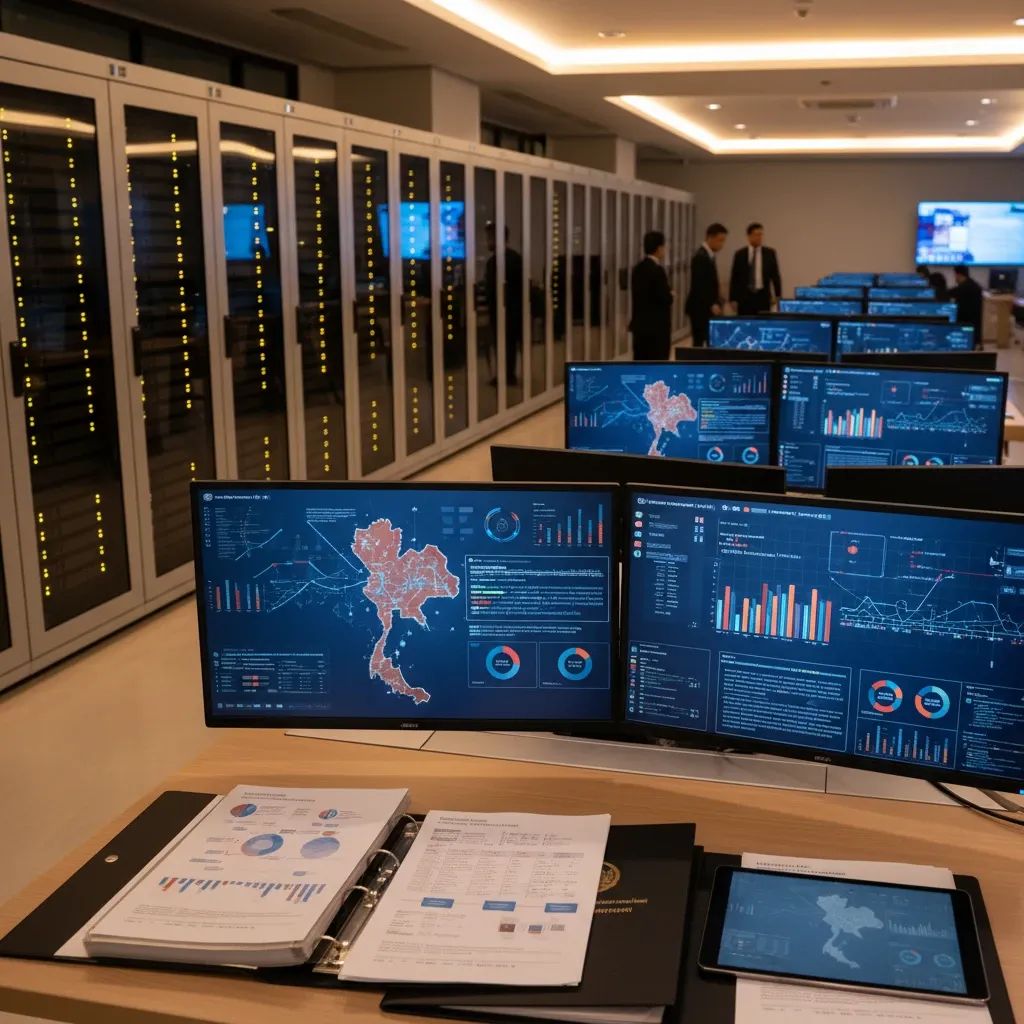
Thailand's Energy Department reports LPG consumption reached 18,000 tonnes per day in early 2026, a 4.2% increase driven largely by the country's unique reliance on bottled gas for everything from family dinners to roadside noodle stalls. While most developed nations cook with piped natural gas, Thailand's 70 million residents depend overwhelmingly on portable cylinders—a system that balances convenience with growing safety and environmental concerns.
Why This Matters
• Household use accounts for 33% of Thailand's total LPG consumption, with street food vendors consuming a substantial but unquantified additional share.
• A new carbon tax on LPG launched in 2025 is gradually increasing cooking fuel costs for families and small businesses.
• Street food generates ฿332.1 billion ($10.3B) annually, making vendor fuel costs a significant economic factor.
• Gas-related safety incidents involving street vendors have been reported in 2026, highlighting ongoing risks in the system.
The Cylinder Economy
Walk through any Thai neighborhood and the bright orange or blue LPG cylinders are impossible to miss. Stacked outside family kitchens, strapped to the back of food carts, or loaded onto delivery trucks, these portable fuel sources power an estimated 60% of all cooking across the kingdom. Thailand's household LPG consumption rose 1.7% year-on-year in Q1 2026, reflecting steady demand even as energy prices climb globally.
The system works through a well-established supply chain: international suppliers deliver bulk LPG to coastal terminals, where it's bottled and distributed through thousands of retail points. For rural families and urban street vendors alike, the portability of cylinders eliminates the need for expensive pipeline connections. A household can receive a fresh cylinder within hours of calling a local distributor, and vendors can operate anywhere with just a cart and a gas bottle.
This stands in stark contrast to countries like Japan, South Korea, or much of Europe, where underground natural gas pipelines feed directly into residential buildings. Thailand's natural gas infrastructure exists primarily to serve power plants and heavy industry—approximately 60% of the nation's electricity comes from gas-fired generation. But extending that network to millions of individual homes and mobile food vendors would require infrastructure investment the government has consistently deemed uneconomical.
The Street Food Factor
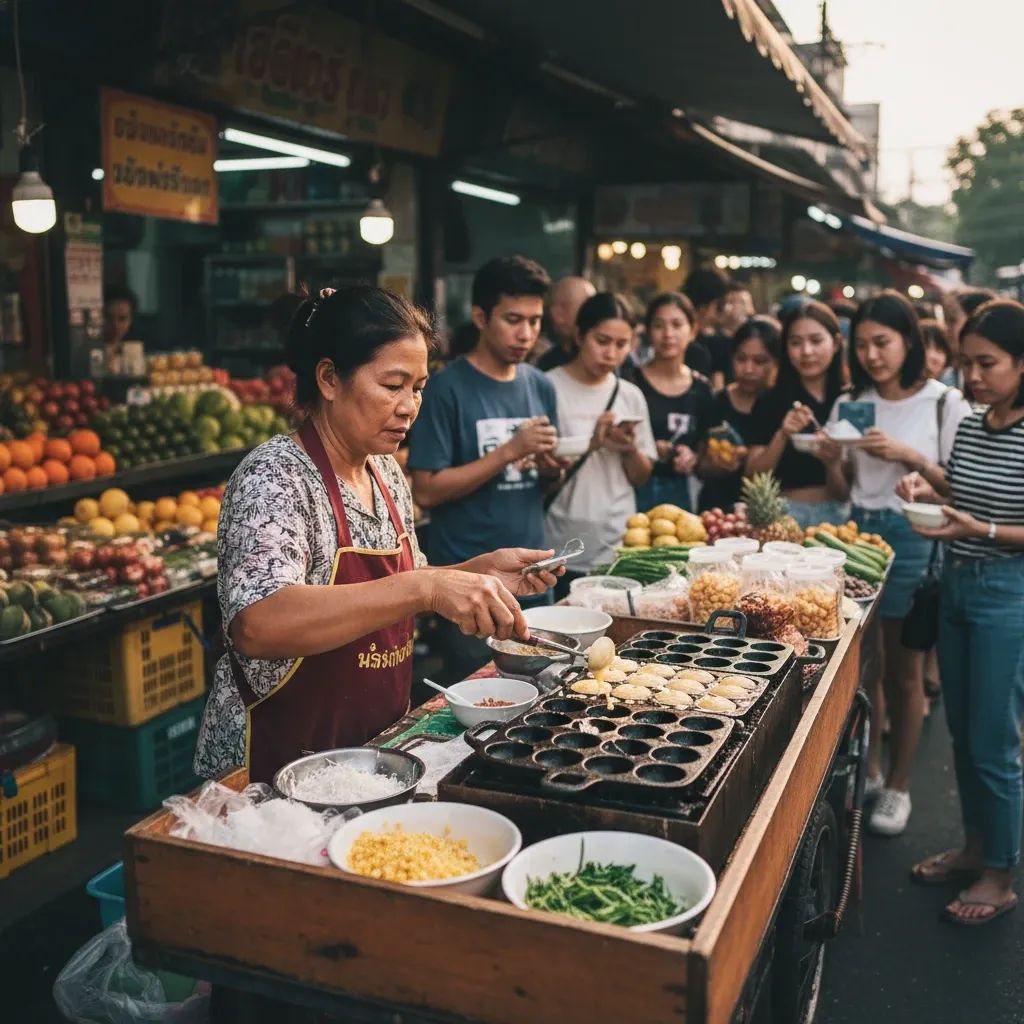
Thailand's street food sector generated over ฿332 billion in 2025, according to June 2026 research from Deloitte, making it the largest single component of the country's food service market. Every som tam vendor, every grilled chicken stand, every boat noodle operation depends on those ubiquitous gas cylinders.
The Thai Restaurant Association petitioned the government in March 2026 to freeze LPG prices specifically for the food service sector, arguing that rising fuel costs threaten the viability of small operators. Unlike restaurant chains that can absorb cost increases or negotiate bulk supply contracts, individual street vendors operate on razor-thin margins where a 10% fuel price increase can eliminate their daily profit.
Tourism sector growth further drives demand. As international arrivals rebound, hotels, resorts, and the restaurants serving them consume increasing volumes of LPG. The government has promoted LPG as a cleaner alternative to charcoal or wood, particularly for commercial kitchens, though environmental advocates point out it remains a fossil fuel contributing to greenhouse gas emissions.
Safety in a Mobile Kitchen
The flexibility of LPG comes with inherent risks. Street food vendors who rely on portable gas cylinders face potential safety hazards, particularly when equipment is not properly maintained or when improper refilling practices occur. Multiple incidents involving gas-related accidents in the street food sector have raised concerns about safety standards.
Thailand's Ministry of Industry responded to rising concerns by proposing in May 2025 that gas canisters be classified as controlled products. The move followed a dangerous trend: vendors refilling disposable butane canisters with cheaper LPG, a practice that can cause catastrophic pressure failures. A new voluntary standard, TISI 4449-2568, now requires explosion prevention features including pressure relief valves and temperature-sensitive shutoffs.
Since December 2018, ministerial regulations have prohibited restaurants from placing cooking gas directly on customer tables—targeting the popular mookata (Thai BBQ) format where diners previously cooked over tabletop burners. The Bangkok Metropolitan Administration enforces these rules alongside broader vendor regulations covering stall dimensions, designated vending zones, and pedestrian clearance.
The Department of Energy Business oversees LPG as a hazardous substance, requiring gas leak detectors in certain facilities and prohibiting the illegal refilling of household cylinders at service stations. Authorities in October 2025 warned that unauthorized refilling carries severe legal penalties and explosion risk, yet enforcement remains challenging given the informal nature of much street vending.
Economic Realities vs. Pipeline Dreams
Thailand's domestic natural gas reserves in the Gulf of Thailand have been declining for decades, forcing the country to import expensive liquefied natural gas (LNG) subject to global price volatility. This makes expanding piped natural gas to residential users economically unattractive—the infrastructure cost per household connection would far exceed what most families currently pay for LPG cylinders.
For consumers, LPG remains cost-effective for low to moderate usage. A typical household cylinder costs ฿350-400 and lasts several weeks. Connecting a home to a hypothetical natural gas network would require installation fees, monthly service charges, and meter costs that wouldn't pencil out unless consumption reached commercial levels.
Rural areas face even steeper barriers. Extending pipelines to dispersed villages would require trenching, compressor stations, and maintenance infrastructure across terrain ranging from mountainous north to island south. Cylinder delivery, by contrast, reaches virtually anywhere a truck or boat can travel.
The Environmental Calculation
Thailand committed to carbon reduction targets that include the energy sector, launching a carbon tax in 2025 covering LPG among other fossil fuels. While LPG burns cleaner than coal or oil, producing less particulate matter and sulfur dioxide, it still releases CO₂ and nitrogen oxides contributing to Bangkok's notorious air quality problems.
Electric induction cooktops represent the most immediate alternative for urban households with reliable electricity. Operating at up to 90% efficiency, induction eliminates indoor air pollutants entirely and increasingly competes on price as units become more affordable. However, cultural preferences for high-heat wok cooking and concerns about electricity grid stability during peak hours slow adoption.
Biogas and biomethane show promise in rural areas, where agricultural waste and animal manure can be converted to cooking fuel. Thailand has substantial theoretical capacity to produce compressed biomethane gas equivalent to significant LPG volumes, though the technology requires initial investment and technical knowledge beyond most small farmers' reach.
Solar cookers, electric pressure cookers, and other alternatives exist but remain niche products. The Ministry of Public Health's "Clean Food Good Taste" program promotes food safety for street vendors but doesn't specifically address energy transition, focusing instead on hygiene, ingredient quality, and waste disposal.
What This Means for Residents
For the foreseeable future, Thailand's cooking infrastructure will remain centered on LPG cylinders. The system's convenience, established supply chains, and relatively low consumer costs outweigh alternatives for most households and virtually all street vendors. Prices will likely continue rising as the carbon tax phases in and global LPG markets remain volatile.
Safety awareness matters more than ever. Residents should verify their cylinder suppliers are licensed, check hoses and connections for wear, and never attempt to refill disposable canisters. Street food enthusiasts can continue enjoying Thailand's culinary treasures with confidence that regulatory attention to gas safety is increasing, even if enforcement faces practical limitations.
The larger question—whether Thailand will transition to cleaner cooking fuels at scale—depends on infrastructure investment, electricity grid reliability, and political will to subsidize alternatives for lower-income households. Until those factors align, the distinctive sight of orange gas cylinders will remain as quintessentially Thai as the food they help create.