
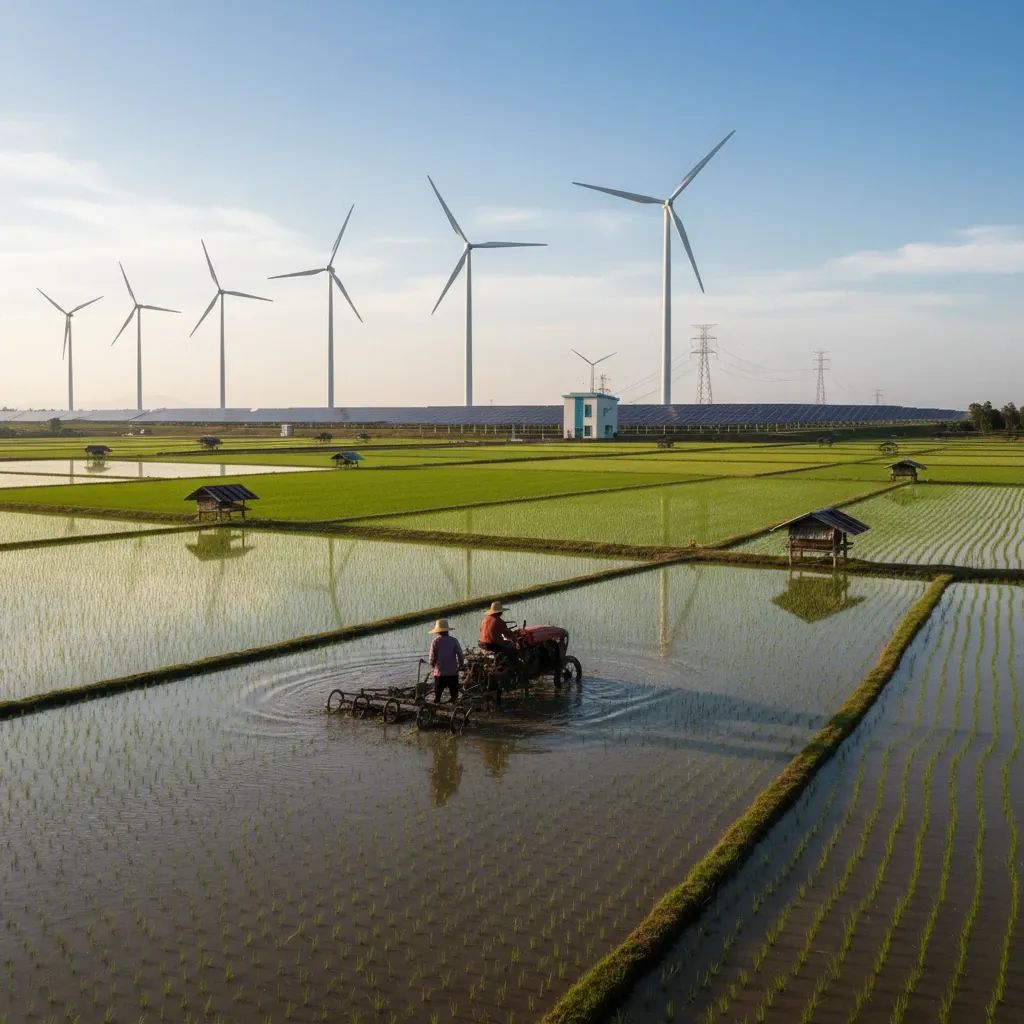
The Thailand Energy Regulatory Commission is receiving calls from researchers to authorize community-scale production of waste-derived fuels, as diesel prices hovering near 30 baht per liter strain household budgets and agricultural margins across the kingdom's rural heartland.
Why This Matters
• Diesel subsidy unsustainable: The Oil Fuel Fund is currently subsidizing diesel at 15.45 baht per liter to hold retail prices at 29.94 baht—a mechanism unlikely to last beyond March 17.
• Farmers bearing the brunt: Those irrigating or plowing large plots consume over 20 liters daily, pushing monthly fuel bills to approximately 18,000 baht per growing season—equivalent to one metric ton of cassava at prevailing farmgate prices.
• Proven technology stalled by red tape: Pyrolysis systems converting rubber waste into usable fuel have operated successfully in lab and field trials but remain illegal at commercial scale due to refinery-grade licensing requirements.
What This Means for Residents Right Now
Immediate:If you operate agricultural machinery or drive diesel vehicles outside Bangkok's mass-transit footprint, budget for a 15–20% increase in monthly fuel expenditure by late April. The subsidy extension beyond March 17 is politically likely but fiscally constrained; incremental hikes of 1–2 baht per week represent the probable compromise.
Medium-term:Watch for potential regulatory reform by Q3 2026. The Thailand Office of the Energy Regulatory Commission is reviewing amendments to create a "community micro-refinery" license tier for facilities processing under 500 liters per day, with draft language circulated in February proposing emissions monitoring and liability insurance requirements. No formal decision is expected before mid-2026.
Strategic:If you manage a farm or fleet, explore Bank for Agriculture and Agricultural Cooperatives (BAAC) green-tech loans offering 3.5–4.5% annual interest for solar-powered irrigation or biogas digesters. The National Innovation Agency (NIA) has earmarked 180 million baht in 2026 grants for clean-energy start-ups, with specific carve-outs for waste-valorization technologies. Grant applications close April 30.
The Three-Year Stalemate
A pilot project at Khon Kaen University's Faculty of Science demonstrated that pyrolysis—thermal decomposition in the absence of oxygen—can break rubber waste into diesel and gasoline substitutes. Researchers have run the output through motorcycles, water pumps, and generators without mechanical failure. Yet the initiative has been frozen since 2023, caught between Thailand's Energy Industry Act B.E. 2550 and ancillary fuel-quality mandates written for large-scale refineries, not decentralized waste-to-energy micro-plants.
"The chemistry works. The economics work if you're using discarded tires or off-spec latex. What doesn't work is the legal classification," one faculty member explained, adding that unlocking regulatory pathways would enable controlled community energy enterprises under environmental oversight rather than outright prohibition.
Technical challenges remain. Carbon residue accumulates faster than in petroleum diesel, and cetane ratings fall short of the 51 minimum set for automotive use. Blending ratios below 40% with conventional diesel mitigate most issues, a threshold confirmed in engine-dyno testing published in July 2024.
The Sakon Nakhon Precedent
A regulatory barrier in 2022 prevented a Sakon Nakhon mechanic from commercializing a rubber-diesel blend priced significantly below pump rates after the Thailand Department of Energy Business flagged licensing violations. The inventor licensed the formulation to a Lao partner, where it now operates in three villages across Savannakhet, supplying irrigation co-operatives and rice mills at substantially lower delivered costs. Thai officials cited safety concerns; critics pointed to institutional inertia and the lobbying power of petroleum distributors.
Diesel Dependency in the Provinces
Across Thailand's northeastern plateau, where cassava and rubber dominate cropping patterns, mechanization has made diesel the second-largest input after labor. A typical 10-rai plot requires 15–25 liters for plowing, another 10–15 liters daily during the three-month irrigation window. At today's retail rate, a mid-sized family farm spends 18,000–25,000 baht per growing season on fuel alone—one metric ton of cassava at prevailing farmgate prices.
The Thailand Cabinet's emergency price cap, announced March 2 and funded through the Oil Fuel Fund, is projected to cost the treasury 1.2 billion baht per week. Fund reserves stood at 3.8 billion baht as of March 10, sufficient for approximately two more weeks without additional transfers from the general budget. If Middle East tensions persist and Brent crude holds above $85 per barrel, analysts expect the retail floor to lift toward 33–35 baht by mid-April, absent a policy pivot.
Ground-Level Realities
In Khon Kaen's Nam Phong district, a farmer cooperative has stockpiled 40 tons of scrap tires, waiting for legal clarity to fire up a donated pyrolysis reactor. The unit sits idle under tarpaulin, with members estimating potential output at 150 liters per day—enough to meet the group's irrigation and transport needs with surplus for barter trade.
"We already paid the electricity deposit. We built the shed. We trained operators. All we lack is a piece of paper from Bangkok saying we won't be arrested," the co-op's treasurer noted. The sentiment is widespread: technical capacity and economic rationale align, but regulatory paralysis blocks deployment.
Next Steps for Stakeholders
For policymakers: Accelerate the micro-refinery licensing consultation. Clarity enables compliance and taxation.
For farmers: Join or form co-operatives. Collective bargaining strengthens negotiating position with fuel distributors and positions groups for priority access to green-credit facilities and NIA grants.
Key deadline to watch: The NIA grant applications close April 30, representing an immediate opportunity window for eligible waste-valorization projects.
The fundamental question—whether Thailand will empower decentralized energy innovation or preserve centralized control—remains unresolved. Residents in diesel-dependent sectors should monitor regulatory commission statements and April deadlines for clarity on whether relief is coming.


