
A sea of orange campaign shirts, flashing camera phones and the grinding bass of a hip-hop DJ greeted commuters stepping out of the MRT at Samyan over the weekend. In the middle of the din stood Natthaphong Ruengpanyawut, the People’s Party standard-bearer who is spending the final fortnight of Thailand’s national campaign urging undecided voters to treat the ballot box as a referendum on whether the country clings to yesterday’s playbook—or writes a fresh one.
Snapshot for the busy reader
• Natthaphong frames the ballot as a choice between “old politics” and a forward-looking agenda
• Eight campaign caravans will fan out to every region until polls open
• Key pledges: end blanket conscription, rewrite the charter, tighten anti-graft rules, audit the Social Security Fund
• Party says it must finish roughly 30–40 seats ahead of the runner-up to block an alternative coalition
• Overseas ballots and their timely arrival once again spark concern
Why this race feels different
For Bangkok residents long accustomed to scripted stump speeches, the choreography at Siam Square offered something else: a prime-ministerial hopeful speaking less about rivals and more about the electorate’s impatience. “People are tired of the rinse-and-repeat cycle,” one university student told us while waving a flag emblazoned with the party’s minimalist logo. Natthaphong’s team is leaning into that fatigue, pitching the election as a binary—either Thailand moves beyond patronage politics or it does not.
What “new politics” would look like
The party’s policy book reads like a checklist of grievances that have built up since the 2014 coup:
Scrap universal conscription in favour of a volunteer force rated on modern-combat readiness rather than headcount.
Draft a new constitution through an elected assembly rather than one appointed by the military or Senate.
Empower the National Anti-Corruption Commission with stronger prosecutorial teeth and public-access databases.
Shine a light on the 2.3 T Social Security Fund, publishing real-time investment data to calm fears over mismanagement.
“These are not slogans,” Natthaphong insisted, adding that the first Cabinet meeting under a People’s Party government would table enabling legislation for at least two of the four items.
On the road: eight caravans, one message
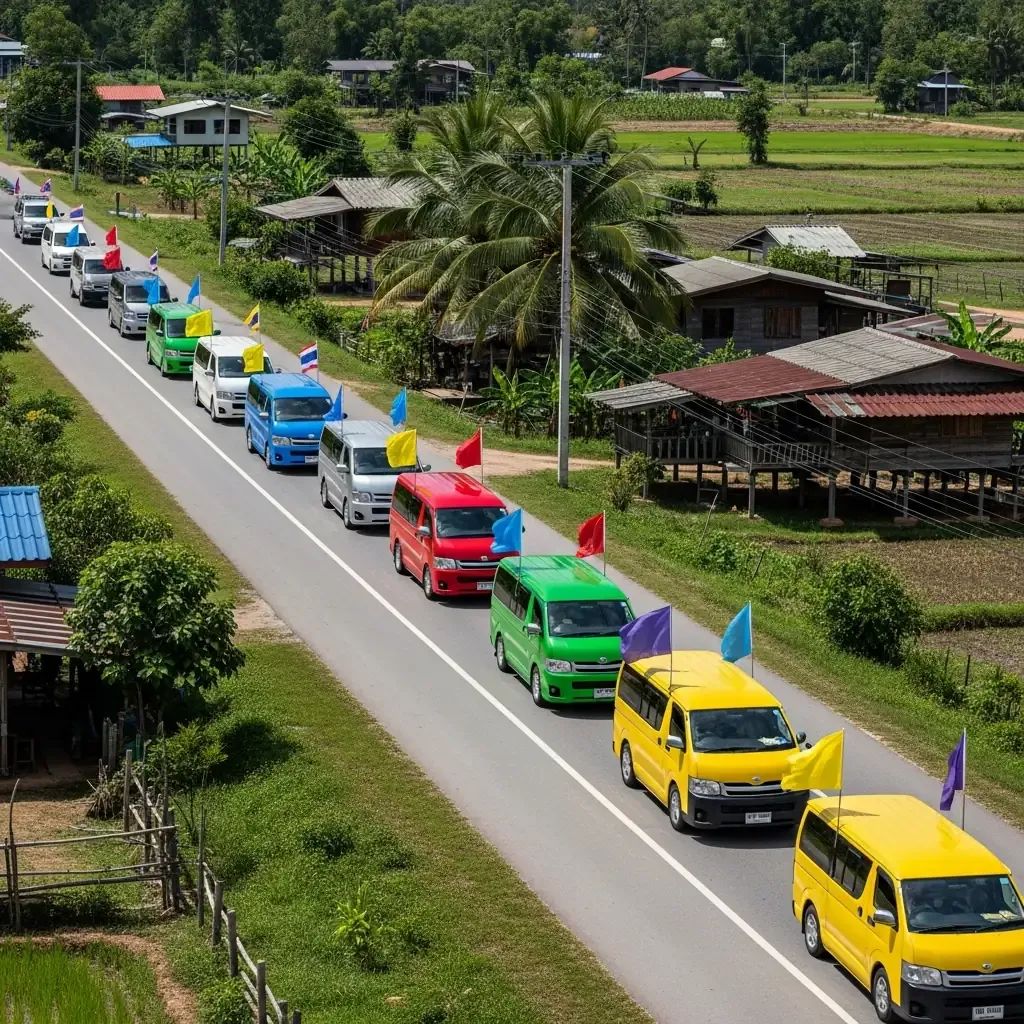
To translate urban enthusiasm into rural votes, the campaign has rolled out eight colour-coded caravans criss-crossing 76 provinces. Each motorcade is fronted by a marquee candidate and live-streamed on TikTok, Facebook and the emerging Thai platform Banter, where younger voters congregate. The strategy borrows from South Korean K-pop fandoms that mobilise online first, then appear offline in waves.
The arithmetic of power
Political veterans note that winning the most seats does not guarantee the premiership. Sena-selected senators still hold a say in electing a prime minister. Natthaphong’s answer has been blunt: finish at least 30 – 40 seats ahead of the runner-up and the maths becomes prohibitive for an opposing coalition. Anything less, and horse-trading could return Thailand to the fractious alliances of the past decade.
Ballot-box logistics: déjà vu for overseas Thais
Roughly 1 M Thais live abroad, many of whom registered for absentee voting after 2019’s delays left thousands of unopened envelopes stuck in airports. The People’s Party has asked the Election Commission to publish a transparent chain-of-custody plan—flight numbers, hand-off times and contingency protocols—within days. While the EC says it has “upgraded procedures,” it has yet to release the full timetable.
How rivals are responding
Conservative blocs have stepped up calls for “nation-protecting unity,” urging sympathetic voters to coalesce behind a single large party to prevent what they describe as risky experimentation. Natthaphong counters that tactical voting is precisely what he wants—only in the other direction: “If you truly want to retire the old guard, you cannot split your ticket.”
What to watch in the countdown
Barring a late-stage bombshell, analysts will track three indicators:
• Turnout in first-time voter districts, particularly the industrial zones of Chonburi and Rayong where many conscription-age men work.
• Peripheral provinces on the Laos and Myanmar borders, where security issues could test the party’s defence stance.
• Senate rhetoric, as any overt signalling of preferred prime-ministerial candidates may sway undecided centrists.
Bottom line for Thailand-based readers
Natthaphong’s promise boils down to one line: give us a clear mandate, or face another scrambled coalition that dilutes reform. Whether voters in Bangkok condos and Isaan rice paddies see their futures converging under that banner will determine not just who forms the next government but how quickly Thailand can shake off a decade of stop-start politics.


