
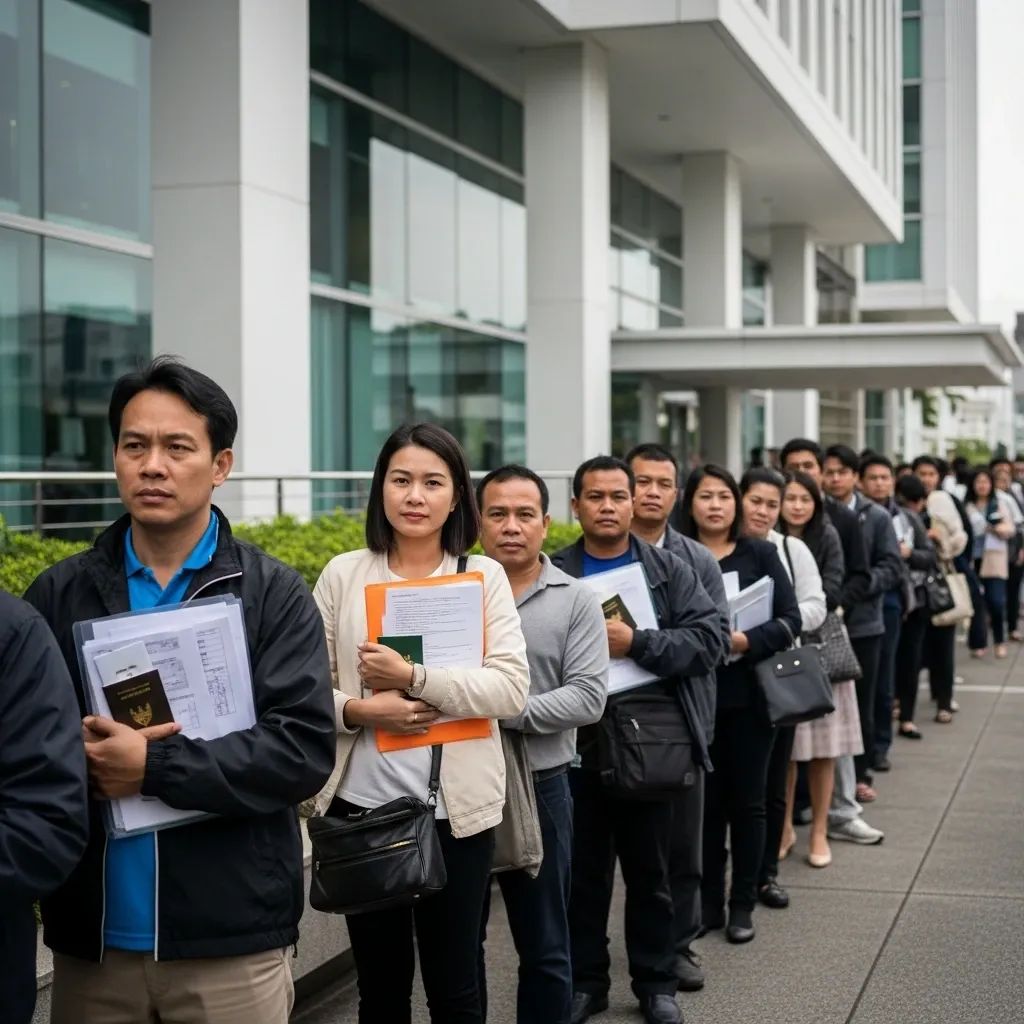
Thai families preparing for reunions in the United States woke up this week to an unsettling message: all new applications for U.S. immigrant visas from Thailand are on hold until further notice. Washington’s abrupt freeze, which lumps Thailand with 74 other nations in a sweeping review of so-called “public-charge” rules, has left prospective green-card holders scrambling and Bangkok’s diplomats demanding answers.
At a Glance
• Immigrant visas—those leading to permanent residence—are the only category affected; tourist, student and work visas remain unchanged.
• The suspension takes effect 21 January 2026 and has no stated end date.
• U.S. officials cite the need to ensure newcomers will not rely on American welfare programmes.
• Thailand argues that illegal Thai migration is comparatively low and Thai businesses create U.S. jobs rather than drain resources.
• Bangkok has asked Washington for clear criteria, a time-frame and country-specific data before accepting the decision.
What triggered Washington’s freeze?
The Biden administration kept many of Donald Trump’s immigration tools intact, including the toughened “public charge” test. In early January the State Department ordered consular posts worldwide to halt immigrant-visa issuance for citizens of 75 countries while it recalibrates that test. The review focuses on whether applicants might later claim food stamps, Medicaid or other safety-net benefits. A senior U.S. official told the Bangkok Post the move reflects an “evidence-based audit” rather than political retaliation. Still, the lack of advance notice has irritated governments across Asia and Africa.
Who is actually affected?
Only people seeking a green card—spouses of Americans, family-reunification cases, employment-based transferees and winners of the Diversity Visa lottery—are in limbo. Those holding or applying for B1/B2 visitor visas, F student visas, J exchange visas or H-1B work permits can proceed as usual. Dual-nationals who hold a passport from a non-listed country are exempt. Crucially, immigrant visas already printed will not be revoked; the pause applies only to cases awaiting final approval after 21 January.
How big is the Thai footprint in America?
Roughly 300,000 Thai nationals live in the United States, according to the latest Pew estimates. More than 70 % reside legally, many running restaurants, spas and high-tech start-ups in California, Nevada and Texas. Thai conglomerates such as Charoen Pokphand Group and PTT have poured billions of dollars into American factories, retail chains and renewable-energy ventures, supporting tens of thousands of U.S. pay-cheques. That economic heft underpins Bangkok’s argument that Thailand should not be painted as a drain on the U.S. treasury.
Diplomatic pushback from Bangkok
Foreign Affairs Minister Sihasak Phuangketkeow summoned the U.S. embassy’s chargé d’affaires this week, requesting a written explanation, detailed metrics and a fast-track waiver process. He noted that Thailand is Washington’s oldest treaty ally in Asia, dating back to 1833, and warned that the suspension sends a contradictory signal at a time when both capitals boast of an “alliance for the next century.” Embassy officials admitted they were still awaiting full cables from Washington and pledged to relay Bangkok’s concerns “within days.”
Tips for Thais with U.S. plans on hold
Prospective immigrants who already have a case number should:
Keep monitoring the National Visa Center portal for status changes.
Retain medical and financial documents—they remain valid for 12 months.
Consider switching to a non-immigrant category (e.g., an F-1 student visa) if study or training can meet short-term goals.
Avoid selling property or quitting jobs in Thailand until a new interview date is confirmed.
Consult licensed U.S. immigration attorneys, not unregistered “visa fixers,” for personalised strategies.
Scholars decode ‘America First’
Political scientists say the freeze is the latest illustration of economic nationalism outlasting the Trump presidency. By tying immigration stricter to self-sufficiency, Washington hopes to shield domestic welfare budgets and appease voters anxious about rising federal deficits. Critics counter that the policy risks alienating middle-income partner nations like Thailand that have historically co-invested in U.S. growth. Dr. Somchai Phasuk of Chulalongkorn University warns that prolonged uncertainty could divert Thai talent to Canada, Australia or Japan, where permanent-residence channels remain open.
Looking ahead: what could change?
State Department insiders hint that the review may close by mid-2026, but no guarantee exists. Diplomatic observers believe country-by-country carve-outs are possible if governments supply robust data on immigrant self-reliance. Thailand’s foreign ministry has already begun compiling statistics on Thai tax contributions, business ownership and community volunteering in the U.S.—evidence it hopes will prompt an early exemption. Until then, families awaiting green cards face an uncomfortable pause, a reminder that in American politics, domestic optics often override foreign goodwill.


