
Why This Matters
• A manhunt is underway: Pattaya police are searching for a man called "Boss" following a serious neck wound injury to Prayaphat, a 30-year-old transgender woman, in the early hours of May 26. The incident stemmed from a financial dispute, but raises urgent questions about intimate partner violence affecting Thailand's transgender population.
• Intimate partner violence often goes unreported: Transgender individuals in Pattaya face distinct barriers when seeking help—fear of police mistreatment, legal gaps in domestic violence protections, and precarious work situations that trap victims in abusive relationships.
• Support networks exist but remain underfunded: Organizations like Sisters Foundation and HON provide confidential counseling and legal referrals, yet many transgender residents remain unaware these services operate in Pattaya.
A Night of Violence and the Pursuit
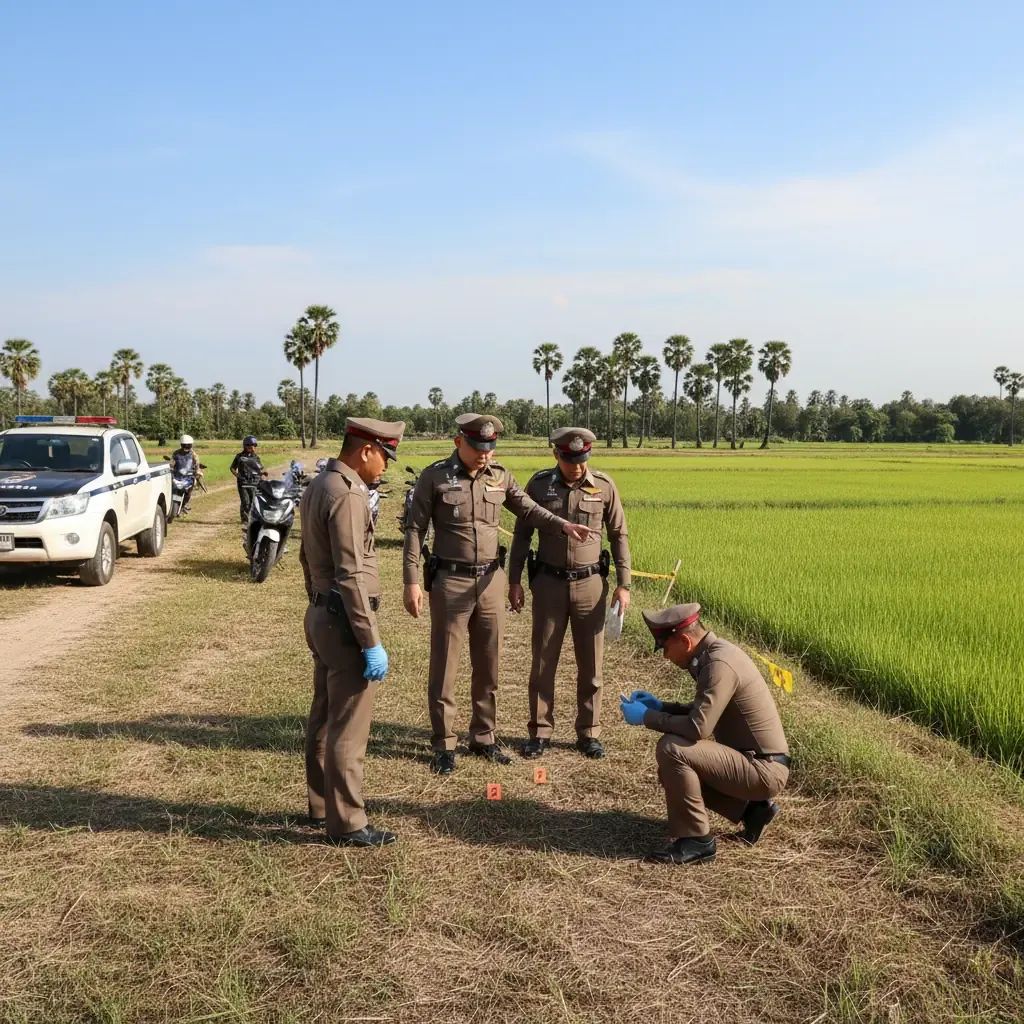
In the earliest hours of May 26, emergency services received a report from Soi Land Office 3, a modest residential area in South Pattaya. Rescuers arriving at a third-floor apartment found Prayaphat, a 30-year-old transgender woman, lying beside her bed with a severe neck laceration and in critical condition. Medical teams stabilized her before transport to hospital, where she was admitted for urgent surgical intervention.
The sequence of events emerged slowly as investigators pieced together witness statements and reviewed building surveillance footage. An 18-year-old acquaintance identified as Tae had visited Prayaphat earlier that evening and observed her boyfriend present in the room. When Tae returned hours later, he discovered Prayaphat unconscious and immediately alerted building management to contact Pattaya City Police. The call came through at 12:36 AM.
CCTV recordings showed a man identified as "Boss" departing the apartment shortly after the assault. Police have categorized him as the primary suspect and launched an active manhunt that includes surveillance of his known haunts and monitoring of potential escape routes using the city's network of traffic cameras. As of late May, no arrest had been made.
The Disputed Account and Economic Triggers
Witness accounts suggest the violence erupted during a dispute over 700 baht—approximately equivalent to a full day's wages in Pattaya's service sector. Tae reported that "Boss" had allegedly taken money without permission, sparking the confrontation. However, investigators have cautioned against treating this as the only motive. The circumstances surrounding the attack—its ferocity, timing, and apparent premeditation—suggest additional factors may have escalated tensions, though the precise triggering events remain unclear as the investigation continues.
This financial precipitant is far from unique in intimate partner violence cases involving transgender individuals in Thailand. Economic desperation and dependence intertwine with relationship dynamics, creating situations where a partner's control over money becomes a mechanism of control. When one party relies entirely on another for financial survival, disagreements over resources can spiral into violence with devastating speed.
Systemic Vulnerabilities: Why Transgender Residents Remain at Risk
Transgender women in Pattaya often arrive from provincial areas or neighboring countries seeking employment and economic stability. The city's tourism-driven economy offers immediate income through hospitality, bar work, and service sector roles, but these positions typically lack formal contracts, job protections, or dispute resolution mechanisms. Many workers operate in legal gray zones with no recourse against wage theft, termination without notice, or exploitation.
When an intimate partner controls finances or accommodations, they hold extraordinary power. Victims cannot easily leave without facing homelessness or destitution. They cannot access credit, rent independently, or establish stable housing. The economic precarity that drives migration to Pattaya becomes the cage that keeps victims trapped in abusive relationships.
Social isolation amplifies this vulnerability. Many transgender residents have limited family ties in the city and may lack peer networks offering practical or emotional support. Rural family members back home may have disowned them after learning of their gender identity. These fractures leave victims psychologically vulnerable and physically exposed.
Additionally, many transgender workers lack documented legal status. Some entered Thailand on tourist visas and overstayed; others migrated through informal channels. This undocumented condition creates a secondary trap: victims fear reporting abuse because police could initiate deportation proceedings. An abusive partner may explicitly threaten this outcome, knowing the victim has far more to lose by involving authorities than by remaining silent.
The Trust Barrier: Police and Institutional Skepticism
Only weeks before Prayaphat's assault, in early May 2026, authorities in Pattaya conducted what they termed a "security sweep" targeting the Walking Street tourism district. Police and city administrators detained 31 transgender individuals for background verification and record-checking. Official statements framed the operation as routine prevention; transgender advocacy groups condemned it as discriminatory profiling designed to intimidate and control.
Such operations create lasting psychological consequences. When state actors treat an entire category of people as inherent suspects, victims in that group internalize the message that reporting crimes will invite scrutiny rather than protection. According to advocacy organizations working in Thailand, transgender people who experience crimes frequently avoid filing reports, citing concerns that police engagement could result in harassment, bribery demands, or retaliation.
Thailand's criminal code does not explicitly criminalize sex work, yet police regularly use prostitution-related statutes selectively against transgender individuals, often without evidence. Advocacy groups have documented instances where transgender residents reported assaults only to face police interrogation, accusations that the victim "provoked" the attacker, or pressure to drop charges.
A Legal Framework with Serious Gaps
Thailand has made symbolic progress on LGBTQ+ rights. Same-sex marriage became legal in 2024, attracting international media attention and celebratory statements from government officials. Yet this legislative achievement has not translated into protections for transgender people experiencing violence.
Thailand's Anti-Discrimination Act of 2015 prohibits discrimination based on sexual orientation but remains ambiguous regarding gender identity. Courts have found interpretive flexibility that allows employers, healthcare providers, and others to circumvent protections by claiming preference rather than unlawful bias. The statute contains no hate crime provisions. This means assaults motivated by a victim's gender identity receive no sentencing enhancement, carry no special investigative protocols, and generate no separate statistical category.
Critically, transgender residents cannot legally change their gender marker on identity documents. This creates cascading friction throughout official systems. When Prayaphat's name or identity document appears in police records, it may list a male designation or a legal name she does not use. Healthcare providers refuse to honor treatment preferences because the chart says otherwise. Employers use the legal name as justification for termination, claiming they cannot employ someone whose "documents don't match."
These legal lacunae mean that crimes against transgender people remain essentially invisible to policymakers. Without central data collection, without hate crime classifications, without gender recognition statutes, state institutions have no systematic understanding of patterns or prevalence. Advocacy groups must conduct their own surveys and document incidents independently.
Organizations like Trans Pride Thailand and the Thai Transgender Alliance (ThaiTGA) have lobbied for years to pass comprehensive gender recognition legislation and hate crime statutes. Amnesty International, which launched its "Resist With Pride" campaign during Pride month 2026, has specifically urged the Thailand Ministry of Justice to mandate training for police and prosecutors on gender-based violence and to establish specialized investigative units. Progress has been minimal. Legislative committees defer to "further study" committees. Ministry officials cite resource constraints and competing priorities. Meanwhile, each year passes without reform.
Data and the Hidden Prevalence
Hard statistics on transgender violence in Thailand remain scarce because official systems do not collect them. Yet available evidence paints a concerning picture. A 2019 survey conducted by the United Nations Development Programme found that 61% of transgender women in Thailand reported verbal abuse or ridicule; 22% experienced sexual assault; 11% were beaten; and 8% faced police threats. Advocacy organizations operating in Thailand suggest these figures undercount actual incidents, given persistent under-reporting driven by institutional mistrust and fear of retaliation.
Within Thailand, Pattaya has been identified by advocacy groups as a location where transgender violence occurs, with the city combining high concentrations of transgender workers, significant numbers of transient male visitors, and comparatively weak law enforcement capacity relative to Bangkok or other major centers. In 2025, the city saw the murder of a transgender woman in a case that sparked regional concern but did not trigger immediate legislative response.
Support Services: Limited Reach, Chronic Funding Gaps
For those seeking help, Pattaya hosts several organizations focused on transgender welfare and advocacy. Sisters Foundation operates a drop-in center offering counseling, HIV/STI testing, legal referrals, and connections to pro bono attorneys. The organization maintains relationships with sympathetic police officers and can, in specific cases, facilitate communication between victims and authorities. Health and Opportunity Network (HON) specializes in healthcare for transgender individuals living with HIV and provides confidential medical consultations. Service Workers In Group Foundation (SWING) runs a peer support center for hospitality and service workers of all genders and orientations.
For emergencies, callers can reach the Tourist Police at 1155 (with English-language operators, though advocacy groups report inconsistent sensitivity training). The Social Crisis Hotline at 1300 operates 24/7 for domestic violence, child abuse, and exploitation reports in Thai and English. Skylight PRIDE Clinic at Bangkok Hospital Pattaya offers LGBTQ+-affirming healthcare, including hormone consultation and sexual health services.
In theory, this network should provide comprehensive support. In practice, each organization operates independently, faces chronic funding shortages, and relies heavily on volunteer labor. Collective capacity remains inadequate to meet demand. None offers free legal representation, though all maintain referral networks to attorneys willing to work at reduced fees through international NGO partnerships. Awareness of these services among vulnerable populations remains low—many transgender residents, particularly those new to Pattaya, are simply unaware such support exists.
The Accountability Question: What Comes After the Manhunt
Prayaphat's hospitalization and the ongoing pursuit of "Boss" will likely conclude one of three ways: arrest and prosecution; suspect flight and case closure; or death of the suspect. In the majority of cases—historically, across Thailand—intimate partner violence charges result in relatively light sentences. Assault causing grievous bodily harm carries penalties of up to 10 years imprisonment, yet actual sentences are frequently suspended or reduced when courts accept claims of remorse, accidental escalation, or provocation by the victim.
Even if "Boss" faces prosecution, his conviction and incarceration would address only the individual incident, not the structural vulnerabilities that enabled it. Advocates argue that meaningful accountability would require systemic change: comprehensive hate crime legislation applicable regardless of the perpetrator-victim relationship; legal gender recognition so transgender people can update identification without judicial hurdles; mandatory police training on gender-based violence; specialized prosecutors and judges equipped to try such cases; accessible legal aid for low-income victims; and sustainable funding for safe houses and counseling services.
To date, Thailand's cabinet, parliament, and individual ministries have not prioritized this reform agenda. The government has instead celebrated marriage equality as sufficient progress, leaving transgender residents navigating systems designed without their safety or dignity in mind.
The Broader Context: Precarity, Invisibility, Resilience
Prayaphat's case reflects predictable outcomes when vulnerable populations lack legal protections, face institutional skepticism, and live in economic desperation. Yet it also represents a moment where public attention may create pressure for institutional response.
Community organizations have begun coordinating quietly to protect members, share safety information, and document incidents even when police do not. Young activists on social media challenge stereotypes and build transgender solidarity across geographic boundaries. International donors have increasingly funded transgender-led advocacy initiatives after decades of exclusion from funding flows.
The question of how Pattaya's authorities respond to this case—whether it becomes a catalyst for systemic reform or a brief news cycle—remains open. Advocacy groups including Sisters Foundation, ThaiTGA, and allied organizations are positioned to channel current concern into concrete demands. The window for action exists, though history suggests that sustained pressure from civil society, international observers, and affected communities themselves will be essential to drive meaningful legislative and institutional change.
Prayaphat's recovery, and the city's institutional response, will signal whether Pattaya is prepared to move beyond tourism industry rhetoric celebrating LGBTQ+ inclusion toward actual protection of the people whose labor and presence define the city's international reputation.


