
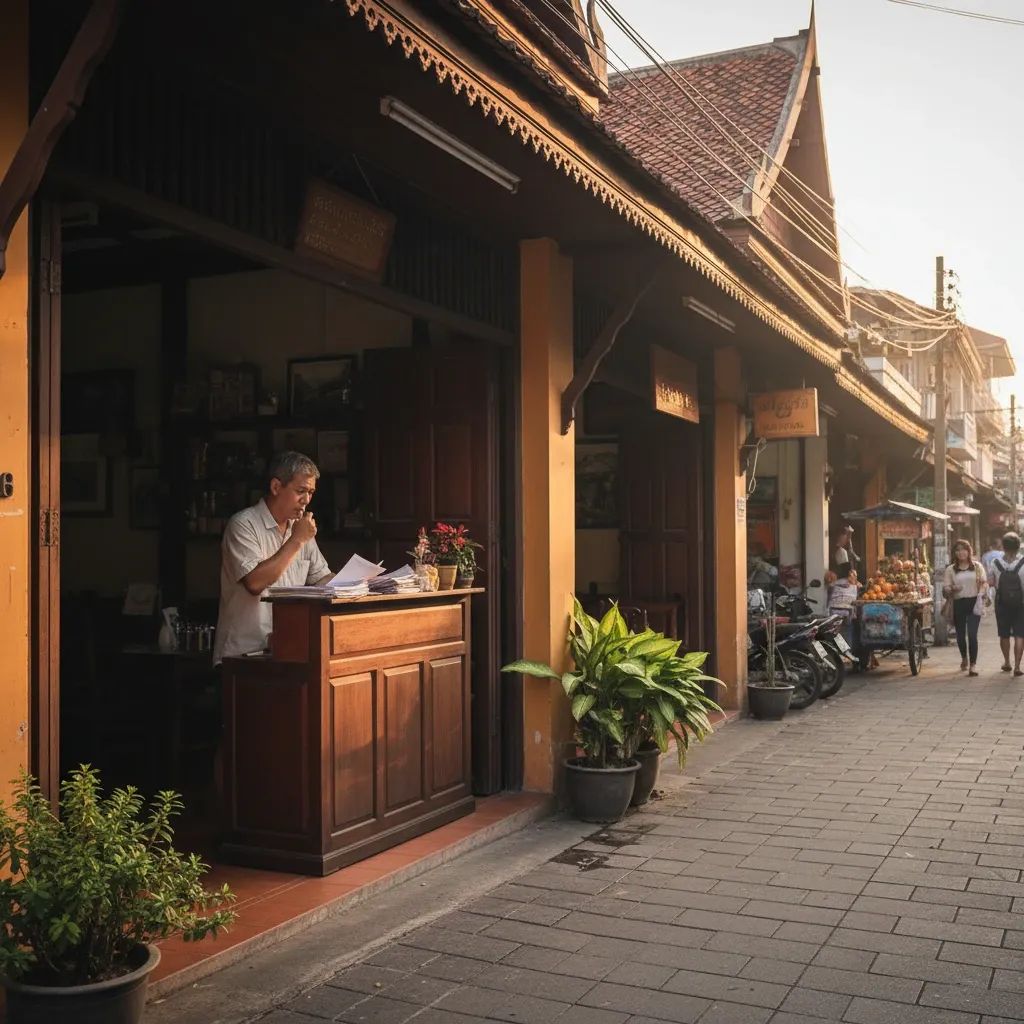
Thailand's tourism sector is deliberately shifting direction in 2026, moving away from volume-driven growth toward a value-focused strategy that prioritizes fewer, higher-spending visitors. This strategic pivot coincides with a 3.4% year-over-year decline through late April—a slowdown that reflects both challenging global market conditions and the government's intentional recalibration. The 11.36 million arrivals recorded thus far have delivered approximately THB 555.6 billion in spending, a figure meaningful in absolute terms but marking a deliberate departure from the previous decade's volume-maximization approach.
Key Takeaways
• Revised 2026 target now 30-34M arrivals, down from initial 36.7M projection—an 18% reduction representing a deliberate strategic choice, not merely external market failure.
• Chinese market volatility dominates: Weekly swings exceeding 37% reflect dependency on single source and exposure to global economic shifts beyond Thailand's control.
• Government pivoting to premium tourism: New strategy explicitly targets fewer, higher-spending visitors through visa changes (still under consideration) and the "Amazing 5 Economy" framework focused on wellness, niche segments, and sustainable dispersal.
• Flight capacity constraint emerging as critical bottleneck: Airlines adjusting frequencies due to fuel costs; capacity management critical to achieving revised targets.
The Strategic Recalibration: From Volume to Value
The gap between previous forecasts and current performance has triggered a fundamental reset in tourism policy that was partly planned and partly market-driven. The Tourism Authority of Thailand (TAT) has shifted from volume-maximization toward what officials call a "value-over-volume" transition—a deliberate trade-off: fewer beds filled, but at higher nightly rates; fewer airport arrivals, but more spending per visitor; reduced foreign exchange inflows from budget tours, but higher profit retention in upscale establishments.
This philosophical pivot reflects careful economic calculation. Government economists determined that sustaining a 3-4% annual decline while chasing ever-more visitors would yield diminishing returns. Rising costs—labor, utilities, infrastructure maintenance—mean that occupancy rates dropping from 80% to 65% translates directly into margin compression that hotels cannot absorb indefinitely. The math of traditional volume tourism has deteriorated, making a shift toward premium segments economically rational.
The framework driving this reorientation is the "Amazing 5 Economy," which organizes tourism experiences into five categories: Life Economy (wellness retreats, longevity tourism, medical procedures), Sub-Culture Economy (film tourism, sports events, specialized communities), Night Economy (illuminated heritage districts, innovative entertainment), Circular Economy (sustainable practices, secondary-city distribution), and Platform Economy (digital integration, seamless transactions). Each pillar targets distinct income brackets and visitor behaviors, designed to attract travelers with higher spending power and genuine engagement.
Market Concentration and the Chinese Dependency Trap
Thailand's current visitor composition reveals acute vulnerability. The top five source markets—China (1.84M), Malaysia (1.23M), Russia (849K), India (805K), and South Korea (466K)—collectively account for approximately 57% of all arrivals through late April. This concentration creates inherent fragility: when Chinese outbound travel surges, Thailand's entire sector feels the lift; when it pauses, economic stress ripples across hotel operators, transport providers, and restaurant staff.
The week of April 20-26 exemplified this dynamic. Chinese arrivals spiked to 102,493—a 37.31% increase from the prior week—driven by several converging factors. Labor Day extended holidays in China permitted workers to combine paid leave with weekends, creating multi-day travel windows. Improved infrastructure in Thailand and the "Trusted Thailand" safety certification campaign, formally launched in November 2025, gained traction within Chinese social media, reassuring potential visitors. Government ease-of-travel initiatives, including the transition from paper-based TM6 immigration cards to the digital TDAC (Thailand Digital Arrival Card) system, reduced perceived bureaucratic friction.
Yet the same week illustrated fragmentation within the broader market. Russian arrivals declined 15.32%, despite being the third-largest source market, while Taiwanese visitors fell 41.93% despite ranking higher overall. This choppiness suggests geopolitical and economic anxiety is fragmenting travel patterns rather than producing synchronized recovery.
The 37% spike also underscores a cautionary reality: a single holiday or geopolitical disruption can reverse gains overnight. Airlines operating China-Thailand routes operate near capacity constraints; fuel price volatility threatens profitability; and economic slowdowns in key source markets would ripple immediately into Thailand's occupancy rates.
Visa Policy Changes: The Strategic Trade-Off Between Access and Quality
Central to the value-over-volume transition is a proposed visa policy shift currently under consideration by the Ministry of Tourism and Sports. The ministry is evaluating narrowing Thailand's visa-exemption framework from the current 93 countries (with 60-day visa-free access) to potentially 57 nations with a shortened 30-day visa window. No final implementation date has been announced; the policy remains in the proposal stage and subject to further consultation.
The stated rationale centers on immigration control and revenue generation. Government officials argue that 60-day visa-free access has enabled unintended long-term usage: digital nomads, students, and semi-permanent residents exploiting tourism permits for undeclared work; the distinction between "tourist" and "long-stay migrant" blurring in practice. Beyond filtering visitor profiles, the Ministry is designing an Electronic Travel Authorization (ETA) system paired with a THB 300 tourism fee for air travelers (THB 150 for overland/sea entry). This framework would generate revenue estimated at approximately THB 3.4 billion annually at current arrival volumes while establishing pre-arrival screening similar to systems in Australia and Canada.
For residents and workers: The implications differ by employment sector and location. Most business travelers, retirees, and affluent tourists will pass through visa screening unchanged. Budget backpackers, digital nomads, and budget-conscious travelers represent the population most affected. In popular destinations like Chiang Mai, Bangkok, and island provinces, reduced budget tourism could decrease demand for small guesthouses, street food vendors, and lower-margin hospitality services. Guides, drivers, and hospitality staff dependent on this market segment face genuine income uncertainty.
However, opportunity exists in premium segments. Higher-spending visitors create demand for upscale accommodations, wellness services, and specialized tourism experiences—sectors offering relatively better-paying, more stable employment. The strategic shift creates a sectoral divide: contraction in budget tourism employment, potential expansion in premium tourism roles.
The "Trusted Thailand" Certification: Building Confidence Through Curation
Recognizing that geopolitical perceptions shape travel decisions, the government launched the "Trusted Thailand" initiative in November 2025, targeting over 5,000 establishments across four categories: hotels and accommodations, restaurants, attractions and entertainment, and shopping centers. The program operates as a trust signal—a certification that reduces information asymmetry and reassures travelers, particularly Chinese visitors, who faced negative press coverage regarding safety and service standards in 2025.
Participating establishments are evaluated against four core safety pillars: general security measures, secure payment systems, multilingual emergency communication protocols, and travel safety procedures. Upon certification, businesses gain promotional placement on major platforms—Trip.com, Agoda, TAT's official channels—a tangible competitive advantage. For Thailand's mid-market and secondary-city hospitality sector, this represents a direct economic lifeline.
The Trusted Thailand framework also creates employment indirectly. Security consultants, translators, and digital marketing specialists supporting the certification process generate jobs in service-oriented roles. Early traction has been notable, with government estimates suggesting over 5,000 establishments would be evaluated by early 2026. If certifications correlate with increased bookings, the program creates self-reinforcing incentives for broader participation.
Flight Capacity: The Binding Constraint on Recovery
Perhaps the single most important limiting factor on Thailand's tourism recovery is aircraft seat availability. Thai Airways International and Thai AirAsia, burdened by elevated jet fuel costs linked to Middle East geopolitical tensions, adjusted flight frequencies and fares in early 2026. Higher airfares disproportionately affect budget travelers while barely impacting wealthy tourists—a dynamic that inadvertently aligns with the government's premium tourism strategy.
International carriers have selectively expanded capacity to Thailand, reflecting airline confidence in demand. Chinese carriers and regional low-cost operators have added routes from secondary Chinese cities like Chongqing, Chengdu, Hangzhou, and Nanjing directly to Thai destinations beyond Bangkok, expanding access for provincial Chinese travelers. This network expansion democratizes Thailand access, opening the kingdom to new visitor segments with rising disposable income.
Capacity from Europe, the Middle East, and South Asia remains constrained, reflecting external headwinds beyond Thailand's control. The Thailand Civil Aviation Authority has prioritized removing barriers to new routes and frequency expansion, with the Airline Focus Strategy explicitly targeting Thailand-China capacity expansion. For 2026, the kingdom expects approximately 11.66 million long-haul arrivals—a figure critically dependent on sustained flight expansion and global demand stability.
What This Means for Residents and Workers: Sectoral and Geographic Breakdown
For people working in Thailand's tourism and hospitality sectors, the industry's trajectory directly determines employment stability, wage growth, and regional economic health. Hospitality, food and beverage, transportation, retail, and entertainment collectively employ millions in formal and informal roles. The strategic shift creates differentiated impacts across sectors and regions:
Sectors Facing Contraction Risk:
• Budget accommodation (small guesthouses, hostels): Reduced backpacker traffic directly decreases occupancy and employment
• Street food and casual dining: Lower volume of budget tourists reduces patronage
• Ground transportation (tuk-tuk drivers, tour guide services): Budget tour segments employ more guides and drivers per dollar spent
• Informal retail and street vending: Concentrated in backpacker zones where reduced traffic triggers income losses
Sectors Positioned for Growth:
• Upscale hospitality (luxury resorts, wellness centers): Premium tourism strategy prioritizes these segments
• Medical and wellness tourism: Explicitly targeted within the "Amazing 5 Economy"
• Specialized tour services (niche adventure, cultural experiences): Higher per-person spending power
• Digital and administrative services: Tourism fee collection, ETA processing, and digital platform management create new job categories
Geographic Impacts:Regions like Phuket, Krabi, and island provinces benefit from their premium beach tourism positioning. Chiang Mai, positioned as a wellness and digital hub, aligns well with premium tourism targeting. However, secondary beach destinations, small provincial towns, and backpacker-dependent communities face higher contraction risk without obvious alternative employment.
Timeline considerations: Visa policy changes (if implemented) would take effect 3-6 months after formal announcement, providing a potential planning window. Premium tourism infrastructure development typically occurs over 12-18 months, meaning employment opportunities may lag employment losses in traditional segments.
For residents making decisions now:
• Workers in budget tourism sectors should consider retraining or sectoral shifts toward premium hospitality or digital services
• Government support programs and retraining initiatives have not been widely publicized; workers should proactively contact local employment offices
• Regional economic impact will likely be most severe in Q3-Q4 2026 if the strategic shift proceeds as planned
Geopolitical Headwinds and Global Economic Uncertainty
Despite weekly recovery signals and late-April Chinese surge, structural headwinds persist. Middle East conflicts have suppressed European and Arab travel to Thailand, markets historically valuable for their high per-capita spending and extended stays. Global economic uncertainty—including elevated interest rates, weakened consumer confidence in developed markets, and regional currency fluctuations—makes discretionary travel less appealing, particularly for budget and middle-income segments.
Oil price volatility remains a persistent threat. Crude typically represents 25-35% of airline operating costs; elevated prices translate to higher ticket fares and potential route rationalization if demand softens. The current oil price substantially exceeds pre-2022 averages, creating structural pressure on the entire aviation ecosystem.
The 30-34 million revised arrival target for 2026 represents a realistic calibration in this uncertain environment. Achieving this figure requires execution across multiple fronts: sustained Chinese and Asian source market expansion, successful Trusted Thailand certification implementation, stable geopolitical conditions, and continued airline capacity additions. Failure on any single front jeopardizes the target.
Administrative Modernization: TDAC and ETA Systems
The Thailand Digital Arrival Card (TDAC), mandatory since May 1, 2025, forms the backbone of Thailand's modernized entry process. All arriving travelers must complete the digital form within 72 hours before arrival, replacing paper-based TM6 card filing. The transition has reduced immigration queue times and eliminated substantial paper waste.
The proposed ETA system, bundling the THB 300 tourism fee with the TDAC application, would further streamline processes while generating revenue earmarked for tourism infrastructure, safety initiatives, and promotion campaigns. For residents, these administrative changes carry subtle implications: fewer queuing delays improve hospitality staff experience and guest satisfaction, while revenue from tourism fees could fund public-facing infrastructure improvements in tourist zones.
The Path Forward: Conditional Optimism and Risk Factors
The Thailand Ministry of Tourism and Sports projects modest recovery through Q2 and beyond, contingent on several factors aligning: Chinese market momentum sustained through summer travel season, global economic stabilization supporting discretionary travel, airline capacity maintained despite fuel price volatility, and visa policy changes implemented smoothly without spurring international resistance.
The transformation from volume-driven to value-driven tourism represents a decade-long strategic reorientation with genuine potential but also significant risks. If executed successfully, Thailand could reposition itself as a premium destination commanding higher margins and attracting more affluent, lower-impact visitors. If mismanaged—if visa restrictions prove counterproductive, if premium tourism fails to materialize, or if global economic conditions deteriorate—the sector could face prolonged contraction and structural employment losses in traditional tourism economies.
For residents employed in tourism and hospitality, the coming 12-18 months will clarify whether this strategic bet creates sustainable, higher-quality employment in premium sectors or generates structural dislocation without clear alternative opportunities. Workers should monitor airline capacity announcements, visa policy finalization timelines, Chinese outbound travel trends, and government support program launches as leading indicators of whether tourism will stabilize as a reliable economic pillar or become increasingly volatile.
The sector's next phase will determine not just economic growth rates, but the viability of livelihoods for millions of Thai workers whose employment hinges on persistent international mobility and discretionary spending patterns shaped by forces spanning continents.


