
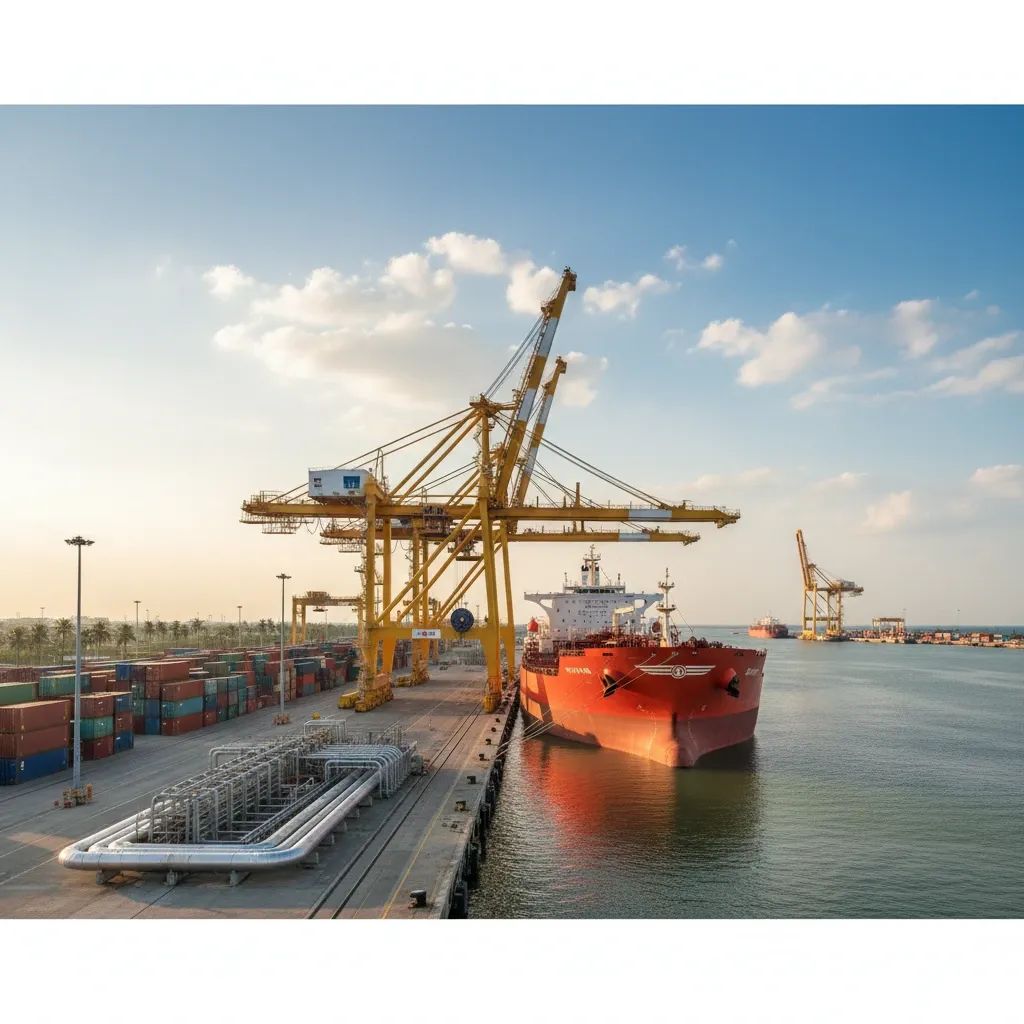
The Thailand Energy Department has increased national petroleum reserves, pushing coverage from roughly 60 days in early March 2026 to 95 days by March 1—a move aimed squarely at insulating the country from Middle East supply shocks and global price volatility. But the surge comes with friction: major oil retailers are resisting a government mandate requiring them to triple their mandatory stockpiles from 1% to 3% of annual sales, citing cost burdens and logistical strain.
Why This Matters:
• Reserve buffer extended: Thailand now holds enough crude and refined products (including in-transit shipments) to cover 95 days of consumption, according to the Department of Energy, up from 60 days.
• Retailer resistance: Fuel distributors are opposing the order to raise legally mandated reserves from 1% to 3%, warning of cash flow and storage pressures.
• Export paradox persists: Despite heavy import dependence, Thailand continues shipping refined fuel to Laos and Myanmar—nations it depends on for hydropower and natural gas.
• Price controls active: The government is using the Oil Fuel Fund to freeze diesel prices for 15 days while it monitors geopolitical flashpoints, particularly around the Strait of Hormuz. Current diesel prices remain stabilized at approximately 27–28 baht per liter as of March 2026.
The Reserve Surge: Strategy vs. Reality
As of March 1, Thailand held a combined 7.66 billion liters of crude oil, refined petroleum products, and confirmed in-transit deliveries, according to the Department of Energy. That figure translates to approximately 60 days of national consumption under normal demand patterns. Within days, however, the Thailand Ministry of Energy announced the total had climbed to 95 days, crediting accelerated procurement from non-Middle Eastern suppliers—including sources in South America, Southern Africa, and Malaysia—and higher stockpiling by domestic fuel traders.
The expansion is no accident. With Iran intermittently threatening to close the Strait of Hormuz, through which a substantial share of Asia's crude passes, Thailand's vulnerability to supply disruptions has never been clearer. The government opened an Energy Emergency Monitoring Center in early March to track developments in real time and coordinate contingency responses spanning both volume and pricing. Residents can access real-time supply updates through the Ministry of Energy's public dashboard at energy.go.th.
Yet the new 95-day cushion is not without controversy. Prime Minister's orders now compel fuel retailers to lift their statutory reserves incrementally: from 1% to 1.5% by the end of March, and to 3% by the close of April 2026. Industry players—particularly smaller distributors—warn the mandate will tie up capital, require expensive new storage infrastructure, and squeeze margins at a time when global benchmark prices remain elevated.
Why Thailand Exports Fuel While Importing Crude
For residents and outside observers alike, one question recurs: why does Thailand ship refined petroleum products abroad—nearly 5 million liters per day to Laos alone, according to PTT Public Company Limited—when the country itself imports the vast majority of its crude?
The answer lies in industrial capacity and regional economics. Thailand operates some of mainland Southeast Asia's most advanced refining complexes, concentrated in Sriracha, Rayong, and Map Ta Phut. These facilities can process far more crude than the domestic market absorbs. Star Petroleum Refining runs a 175,000-barrel-per-day plant in Rayong; Thai Oil's integrated complex handles 275,000 barrels daily and ranks among the most efficient in the Asia-Pacific region, according to industry sources. Together, they generate a persistent surplus of gasoline, diesel, jet fuel, and LPG—products that command steady demand across the border.
Laos relies on Thailand for roughly 90% of its fuel needs, lacking any meaningful domestic refining infrastructure. Thai exports flow northward through border crossings in Nong Khai, Mukdahan, and Nakhon Phanom, while Myanmar receives smaller but still significant volumes. In March 2026, even as Thailand imposed a temporary export ban on most refined products to safeguard domestic supply, Laos and Myanmar were explicitly exempted from the freeze. The rationale is straightforward: energy interdependence. Thailand imports substantial hydropower from Laos—currently under contract for 10,500 megawatts—and natural gas from Myanmar, both critical to stabilizing the national electricity grid. This means restrictions on exports to these countries could reduce the electricity and gas flowing back to Thailand, potentially creating domestic shortages.
This reciprocal flow is not charity; it is system architecture. Thailand provides refined fuel; Laos and Myanmar supply electricity and gas. Disrupting one link risks destabilizing the entire network.
What This Means for Residents
For anyone living in Thailand, the reserve expansion and export controls carry direct, near-term consequences:
Pump prices remain artificially stable—but only temporarily. The Oil Fuel Fund is absorbing the gap between global benchmarks (currently around 70–75 USD per barrel) and retail diesel rates, holding prices steady for a 15-day window ending March 16, 2026. If Middle East tensions persist or escalate, the government will likely extend subsidies or introduce targeted compensation schemes. However, the fund's capacity is finite; prolonged support will eventually require either tax adjustments or subsidy cuts. Residents should monitor government announcements closely after March 16.
Panic buying has spiked in specific provinces. Reports indicate long queues at service stations in Nakhon Phanom, Nong Khai, and Mukdahan—border provinces historically vulnerable to supply disruptions—as well as rural areas in Isaan and Northern Thailand. The Thailand Energy Ministry has ordered inspections to prevent hoarding and expedited deliveries to areas experiencing localized shortages. Authorities insist supply remains adequate nationwide, but perception often matters more than inventory data when drivers are deciding whether to top up their tanks. For most residents: panic buying is unnecessary. Current reserves support normal consumption for nearly three months.
Fuel retailers may pass costs downstream. The mandate to triple reserves imposes significant capital and infrastructure burdens on distributors. While the government has not announced direct compensation, expect retailers to seek margin relief through other channels—potentially including price adjustments once subsidy mechanisms expire.
Cross-border fuel trade is under stricter scrutiny. Thailand has tightened controls to prevent fuel shipped to Laos from being diverted to third countries, a practice that would undermine both pricing policy and regional stability. Exporters now face enhanced documentation requirements and spot audits.
The Regional Energy Web
Thailand's energy security cannot be understood in isolation. The country sits at the center of a tightly woven regional grid in which electricity, natural gas, and refined fuels flow in multiple directions simultaneously.
The Lao PDR-Thailand-Malaysia-Singapore Power Integration Project (LTMS-PIP), restarted in January 2026 after a political hiatus, exemplifies this interdependence. Laos now exports 100 megawatts of hydropower to Singapore via transmission lines running through Thailand and Malaysia. Thailand collects wheeling fees—charges for transmitting this electricity through Thailand's national grid infrastructure—which help offset the country's energy import costs. Plans call for doubling that capacity to 200 megawatts, further expanding these revenue flows.
Similarly, Myanmar supplies natural gas to Thailand from offshore fields, while Thailand's Provincial Electricity Authority (PEA) sells electricity to Myanmar through five border crossings under agreements dating to 1996. PTT, Thailand's state energy giant, is actively exploring expanded gas production in Myanmar's offshore blocks.
These arrangements create mutual vulnerability—but also mutual insurance. When one country faces a supply shock, neighbors can partially offset the impact through cross-border flows. The system works as long as all parties honor their commitments and refrain from using energy as a geopolitical weapon.
Price Paradox: Why Export Fuel Costs Less
A recurring complaint among Thailand motorists is that fuel exported to Laos sometimes appears cheaper than petrol sold domestically. The discrepancy stems from tax structure, not subsidy or favoritism.
Exported fuel leaves refineries at the Singapore benchmark price for petroleum products, with no domestic excise, VAT, or Oil Fuel Fund levies attached. Fuel sold within Thailand, by contrast, carries excise taxes, local fees, and mandatory fund contributions that can add several baht per liter to the pump price. The same product thus commands different retail prices depending on where it is consumed.
Regional pricing across Southeast Asia generally tracks Singapore's refining benchmarks, with final pump prices diverging based on national tax policy and subsidy programs. Thailand's relatively high excise burden—intended to fund infrastructure and dampen consumption—means domestic motorists pay more per liter than their counterparts in some neighboring markets, even when the underlying commodity cost is identical.
Risks and Contingencies
Thailand's 95-day reserve cushion offers breathing room, not immunity. Several risk factors remain in play:
The Strait of Hormuz remains a chokepoint. Roughly one-third of seaborne crude traded globally passes through this narrow waterway. Any sustained closure or disruption would send global prices soaring and force Thailand to lean heavily on alternative suppliers—many of whom lack the logistical infrastructure to ramp up shipments quickly.
Refinery maintenance schedules are being delayed. The Department of Mineral Fuels has ordered postponement of planned maintenance at key gas production platforms in the Gulf of Thailand to maximize output during the current uncertainty. While this keeps supply flowing in the short term, deferred maintenance can increase the risk of unplanned outages later.
Coal and hydro plants are running at full capacity. To reduce reliance on imported gas and oil for power generation, Thailand has instructed coal-fired and hydroelectric facilities to operate at maximum output. This strategy works in the near term but leaves little reserve margin if demand spikes or a major plant trips offline.
Strategic Petroleum Reserve legislation is still pending. The government began drafting a Strategic Petroleum Reserve (SPR) law in October 2024, intending to create a dedicated mechanism—separate from the Oil Fuel Fund—for managing price volatility and supply shocks. The SPR would function as a government-owned inventory buffer, independent of commercial fuel stocks. As of March 2026, the legislation remains in committee, and no firm timeline for passage has been announced.
The Long Game: Exploration and Diversification
Beyond immediate crisis management, Thailand is pursuing a multi-year strategy to reduce import dependence and diversify energy sources.
The Department of Mineral Fuels plans to open bidding round 26 for petroleum exploration and production rights in the Andaman Sea, an area believed to hold significant untapped reserves. The government hopes to attract major international operators by mid-2026. Separately, Thailand is advancing development in the Thailand-Malaysia Joint Development Area, with plans to extend the productive life of existing gas fields and apply carbon capture and storage (CCS) technology to new production-sharing contracts. CCS is a process that captures carbon dioxide emissions from industrial operations or directly from the air, then stores them permanently underground or in products—reducing greenhouse gas emissions.
Domestically, Thailand continues expanding renewable capacity—particularly solar and wind—while negotiating additional hydropower imports from Laos and exploring offshore wind potential in the Gulf of Thailand. The goal is to reach carbon neutrality by 2050, a target that requires both cleaner generation and sustained investment in grid infrastructure.
Yet for the foreseeable future, Thailand will remain a net importer of crude oil and a net exporter of refined products. That duality—refinery hub and import-dependent consumer—defines the country's energy profile and dictates its vulnerability to global shocks. The 95-day reserve cushion is a tactical buffer, not a strategic solution. Real energy security will require years of investment, regional cooperation, and political will to prioritize long-term resilience over short-term expedience.


