
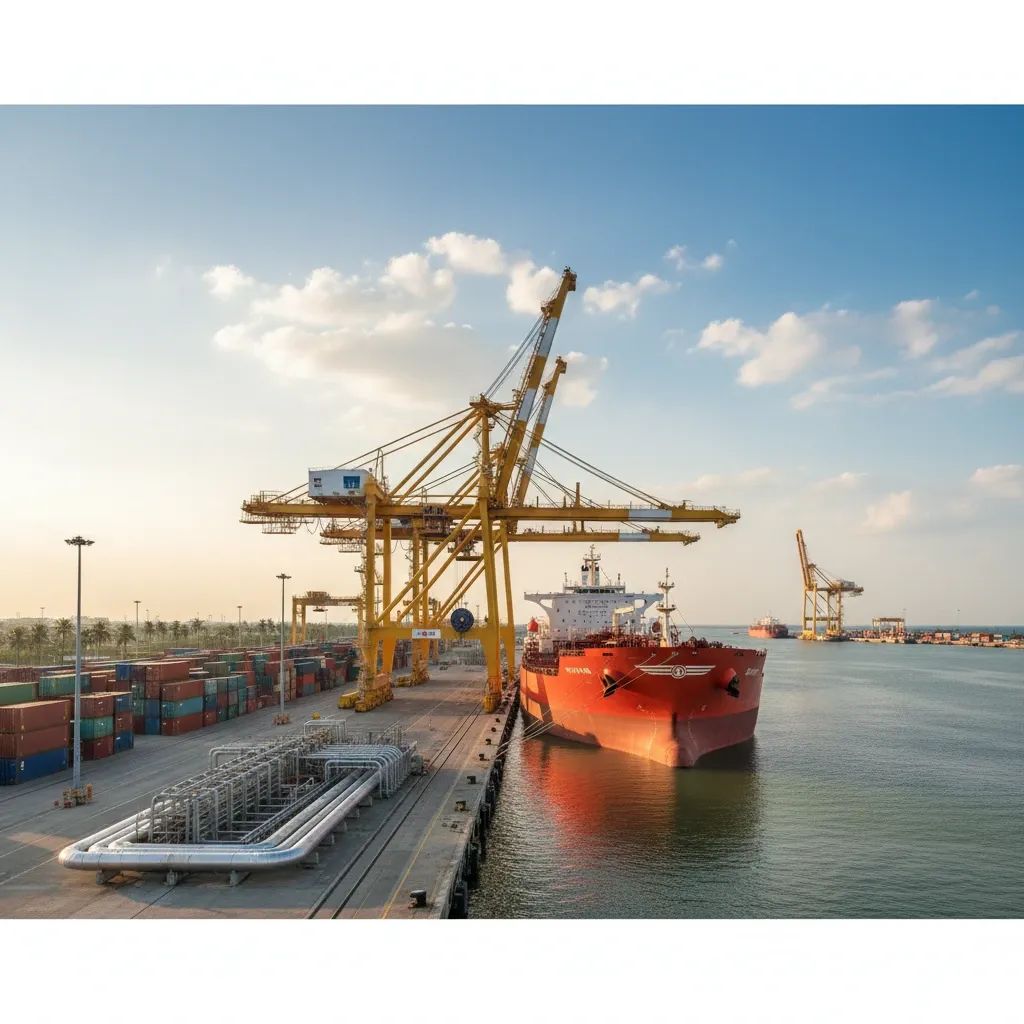
Thailand's energy authorities have moved into contingency mode following the closure of a critical Middle East shipping corridor, forcing a dramatic recalibration of import logistics and forcing accelerated investment in alternative fuel sources. The situation exposes structural weaknesses in how Asia's second-largest economy secures its fossil fuel supply.
Why This Matters
• Diesel prices frozen at ฿29.94 per liter for 15 days (through March 20), shielding supply chains and household budgets from immediate fuel shock.
• Thailand's usable oil reserves span 95 days when combined with secured shipments from non-Middle Eastern producers—sufficient to meet IEA minimums but trailing regional powers like Japan (254 days) and South Korea (208 days).
• Export restrictions tightened while mandatory inventory buffers triple, forcing refineries to absorb stockpiling requirements and compress profit margins.
• PTT procurement teams are finalizing orders from U.S. shale fields, West African producers, and Malaysia's offshore zones to establish supply redundancy by April.
The Supply Shock and Thailand's Response Framework
On March 5, Energy Minister Auttapol Rerkpiboon convened an emergency briefing with Prime Minister Anutin Charnvirakul after cabinet-level deliberations focused on fuel contingency protocols. The government revealed that Thailand's previously announced 60-day reserve actually represents 65 days of operationally available stock. When supplemented by confirmed purchase commitments equivalent to 30 additional days sourced beyond the Persian Gulf, the combined buffer reaches 95 days of supply coverage. Officials emphasized this figure will be updated progressively as additional cargoes complete transit and dock at Thai terminals throughout April and into May.
The corridor disruption has severed approximately half of Thailand's conventional petroleum inflow. Historically, the Thailand Energy Regulatory Commission has approved contracts with Texan and Oklahoma shale operators, Nigerian producers, and offshore concessions in the Malaysia-Thailand Joint Development Area (JDA). The state-owned PTT Public Company Limited is expected to announce firm procurement agreements by mid-March. Domestic refineries—Thai Oil, Bangchak Corporation, and IRPC—currently operate above domestic demand levels, meaning the Thailand Cabinet's export moratorium (excluding shipments to Laos and Myanmar) will require deliberate production cuts to allow oil traders to accumulate the mandated 3% strategic reserve buffer, tripled from the standard 1% baseline.
Natural gas dynamics present greater complexity. Roughly 50-60% arrives via regional pipelines, while the remainder enters as liquefied natural gas (LNG) sourced predominantly from Qatar. With Qatari shipping schedules now unreliable, the Thailand Electricity Generating Authority (EGAT) is accelerating contingency arrangements: expanded hydroelectric imports from Laos and fast-tracked extraction from the JDA, where production contracts have been extended through 2039. The energy minister publicly insisted shortages would not materialize, though the urgency of alternative sourcing suggests underlying contingency planning for adverse scenarios.
Regional Reserves: How Thailand Compares
Thailand's 95-day cushion aligns with the International Energy Agency (IEA) floor of 90 days prescribed for net oil-importing nations. Thailand maintains associate status with the IEA and satisfies the baseline requirement. Yet comparative regional analysis reveals harsh truths about energy vulnerability. Japan maintains 254 days of reserves; South Korea safeguards 208 days; China holds approximately 200 days. Moving down the tier, India manages around 74 days of combined strategic and commercial stocks, though some refiners privately contend that liquid reserves are tighter. Southeast Asian neighbors present a more sobering picture: Vietnam claims only 15 days, Indonesia approximately 20 days, and the Philippines roughly 60 days.
Thailand's current 95-day position reflects a decade of policy recalibration following commodity shocks in 2008 and 2014, when inadequate reserves amplified domestic inflation and forced painful fiscal adjustments. The present crisis exposes how concentrated supplier geography remains. In 2025, 57% of crude originated in the Middle East, 12% from East Asian producers, and 24% from the United States and Africa combined. Domestic production—primarily aging fields in the Gulf of Thailand and the JDA—covers merely 7% of total demand, leaving the economy acutely exposed to any prolonged disruption through the Strait of Hormuz, which handles roughly 20% of global petroleum trade annually.
Ground-Level Impact: Price Stability and Business Operations
Diesel motorists and transport operators encounter prices held at ฿29.94 per liter for 15 days (through March 20), courtesy of the Oil Fuel Fund's price-smoothing mechanism. Gasoline receives partial subsidy support through the same channel. Beyond March 20, if global Brent crude remains elevated or the Persian Gulf situation deteriorates, the government will reassess whether to extend price caps or permit market dynamics. The fund, historically deployed to dampen short-term volatility, now serves as the primary defense against inflation spiraling as international benchmarks test multi-year peaks.
Manufacturers and logistics firms absorb sharper headwinds. The export ban—with narrow exceptions for Laos and Myanmar, which depend on Thai refinery output—means domestic supply now supersedes export commitments. Refineries adjusting production downward to meet the 3% inventory mandate face operational friction; smaller facilities may reduce shifts or defer maintenance schedules. Energy-intensive sectors—petrochemicals, cement, steel, food processing—are bracing for cost pressures, particularly if the Middle East crisis extends into the second quarter, when regional cooling demand peaks.
Electricity supply remains stable for now. EGAT is running coal-fired plants at full capacity, intentionally reducing reliance on gas turbines despite climate commitments. The Energy Regulatory Commission approved three additional spot LNG cargoes scheduled for March and April, though rerouting around the Cape of Good Hope—necessitated by the disruption—adds approximately two weeks to transit times and inflates shipping costs by millions of baht per cargo. Emergency hydropower imports from Laos are being expedited, leveraging existing interconnectors along the Mekong corridor.
Accelerated Renewable Transition and Long-Term Energy Architecture
Thailand's renewable energy roadmap, already underway before the Hormuz disruption, is now advancing at a faster pace. The Thailand Ministry of Energy plans to phase out Gasohol 91, 95, and E85 gasoline variants by 2027, consolidating transport fueling around E20 (20% ethanol blend) and B7 biodiesel. A new regulatory mandate—the Sustainable Aviation Fuel (SAF) standard—takes effect this year requiring a 1% blend in all commercial jet fuel, marking the first enforceable decarbonization requirement in regional aviation. Excess domestic ethanol production, previously a fiscal burden, will be converted to SAF through alcohol-to-jet technology (ATJ), creating export revenue streams as global airlines face emissions mandates.
B100 biodiesel, derived from palm oil feedstock, is being repositioned as a strategic energy reserve and long-term import substitute. The National Oil Fuel Fund Office intends to terminate all biofuel price subsidies by end-2026, compelling producers and smallholder farmers to adapt to commodity-grade pricing dynamics. Officials argue that elevated crude prices render biofuels cost-competitive without government support, though palm growers worry commodity volatility could undermine rural incomes. The subsidy phase-out will strain the Oil Fuel Fund's finances—historically absorbing billions in annual transfers since 2005—but create efficiency incentives throughout the production chain.
The broader energy infrastructure is shifting structurally. Thailand's National Energy Plan (NEP) targets 50% renewable penetration in new generation capacity, with solar and biomass dominating the pipeline. The updated Power Development Plan (PDP), extended to a 25-year horizon through 2050, incorporates small modular reactors (SMRs) and carbon capture and storage (CCS) as prospective long-term hedges against future supply disruptions. For 2026 alone, installed renewable capacity is projected to reach 57,549 megawatts, with solar leading expansion under government initiatives including the "Big Lot" and community solar farm programs targeting underutilized agricultural land.
Practical Planning for Residents and Businesses
Motorists should treat ฿29.94 diesel pricing for 15 days (through March 20) as a temporary reprieve; post-deadline pricing depends entirely on geopolitical developments and crude trajectories. Households connected to EGAT or regional utilities should anticipate stable electricity tariffs in the near term, though prolonged LNG supply disruptions could trigger a fuel adjustment surcharge in Q2—typically announced 30 days before implementation.
Professionals in freight, manufacturing, and supply chain sectors should prepare for elevated logistics costs. Tanker rerouting around African waters is adding 10-15 days to typical transit windows, compounding inventory planning challenges. Sectors dependent on heavy fuel oil or diesel for industrial power generation—petrochemicals, cement, food processing—face the steepest margin compression if the crisis extends beyond Q1 2026.
Expats and long-term residents should treat the 95-day reserve as a baseline contingency, not a guarantee. The timeline hinges on PTT and the Energy Regulatory Commission executing procurement agreements precisely and shipments arriving on schedule. Any escalation in the Middle East, secondary disruptions to alternative supply chains, or delays in LNG tanker dispatch could compress the buffer materially. Government assurances of "no shortages" reflect current modeling assumptions, not stress-tested scenarios where multiple supply channels fail simultaneously.
Diversification Strategy and International Positioning
Thailand's pivot toward the United States, West Africa, and Malaysia mirrors strategies deployed by India, South Korea, and Japan during previous Middle East disruptions. American shale producers have become Thailand's second-largest fuel supplier, accounting for ฿184.9 billion (12.83%) of total energy imports in 2025—encompassing crude, LNG, and refined products. The U.S. Energy Department has prioritized Thailand as a regional LNG distribution hub, with senior officials visiting Alaska in May 2025 to finalize long-term contracts involving PTT, EGAT, and EGCO Group. Malaysia's role centers on the JDA gas fields, which hold proven reserves with contract extensions confirmed through 2039. The partnership provides a hedge against import volatility, though production volumes remain modest relative to total Thai consumption. West African suppliers—Nigeria, Libya, and Congo—offer crude grades compatible with Thai refinery configurations, yet shipping via the Cape of Good Hope introduces cost escalations and logistical complexity.
Thailand's capacity to sustain the 95-day reserve ultimately depends on whether these alternative corridors can scale sufficiently and swiftly to offset Middle Eastern deficits. The Hormuz closure is inadvertently accelerating Thailand's renewable transition by exposing the fiscal and security liabilities of fossil fuel dependency. Kasikorn Research Center projects steady renewable electricity sales growth throughout 2026, propelled by the European Union's Carbon Border Adjustment Mechanism (CBAM), which imposes tariffs on carbon-intensive imports beginning this year. Thai exporters in steel, aluminum, and chemicals are investing in RE100-certified power sources to retain European market access, indirectly bolstering the government's 50% renewable generation target.
Government Contingency Architecture and Structural Constraints
Beyond export suspensions and inventory mandates, the Thailand Energy Ministry is preparing additional contingency protocols for cabinet consideration on March 10. Specifics remain undisclosed, but historical energy crises have triggered public sector efficiency drives, peak-hour demand management schemes, and industrial load-shifting incentives. The ministry is simultaneously fast-tracking domestic gas production in the Gulf of Thailand, where aging fields have experienced declining output yet remain critical for baseload supply. Coal-fired generation—nominally slated for phaseout under climate pledges—is now running at maximum output to conserve gas and LNG for flexible peaking units. The irony is pronounced: decarbonization strategies assume stable fossil fuel availability during the buildout phase of renewables, an assumption now strained.
For residents and businesses alike, the 95-day reserve offers breathing room, not permanence. Thailand's energy resilience rests on a precarious equilibrium of alternative imports, domestic production, and policy interventions that function tactically but do not resolve underlying structural dependency on a volatile region. The Hormuz disruption serves as a stress test—one the kingdom is managing in the near term, but with minimal margin for compounding errors or unforeseen shocks in secondary supply channels.


