
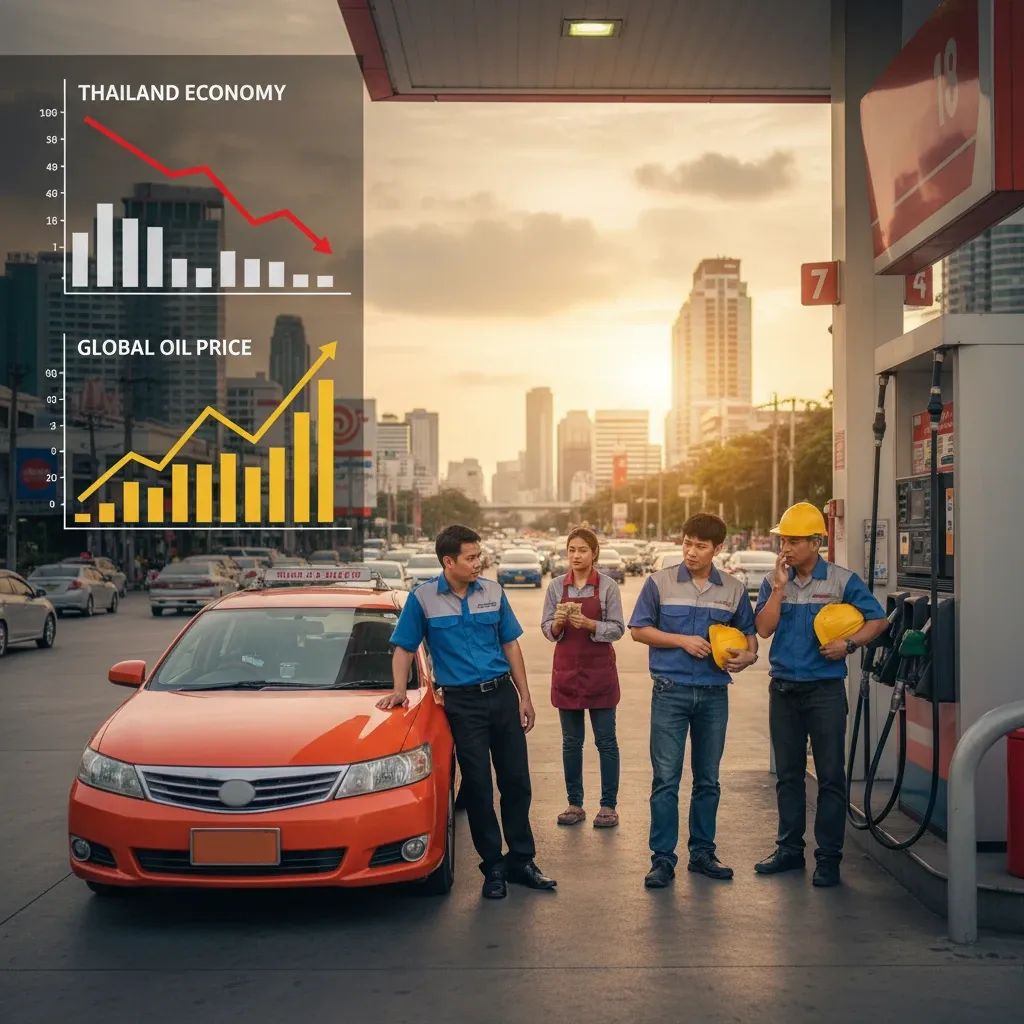
The Thailand Commerce Ministry has reported an unexpected contraction in consumer prices for March 2026, with the headline CPI slipping 0.08% year-on-year. But officials are warning residents to brace for a dramatic reversal: inflation could surge to 3.67% during the April-June quarter—and potentially as high as 5.78%—if global oil prices remain elevated.
Why This Matters:
• Electricity bills set to jump 2-18% starting in May, with the highest proposed rate at 4.59 baht per unit, up from the current 3.88 baht.
• Fuel subsidies are unwinding, meaning retail diesel and gasoline prices will track global markets more closely by mid-year.
• Food costs rising across the board: pork, chicken, eggs, and fresh vegetables all face upward pressure from drought and higher transport expenses.
• The Thai Baht's weakness against the dollar is amplifying import costs for crude oil and raw materials.
A Year of Deflation, but Not for Long
March marks the 12th consecutive month of negative headline inflation for Thailand, a streak that has set the kingdom apart from its Southeast Asian neighbors. Indonesia clocked 3.48% inflation in March, Vietnam hit a five-year high of 4.65%, and the Philippines is tracking toward 3.8%, according to regional data. Only Thailand has remained stuck in deflationary territory—until now.
The Trade Policy and Strategy Office (TPSO) under the Commerce Ministry pegged the March CPI index at 100.27, a marginal improvement from February's 0.88% decline. Month-on-month, however, the general index climbed 0.6% compared to February, driven by a reduction in Oil Fund subsidies, the end of promotional sales on cleaning products, and a spike in airfares.
Core inflation, which strips out volatile energy and fresh food, edged up to 0.57% in March from 0.56% in February—still well below the Bank of Thailand's 1-3% target band. For the first quarter of 2026 as a whole, average inflation registered at negative 0.54% year-on-year.
What's Driving the Looming Price Spike
The Commerce Ministry has revised its full-year headline inflation forecast to 1.5-2.5%, a sharp upward adjustment from the earlier 0.0-1.0% projection. The revision reflects a confluence of external shocks and domestic policy shifts converging in the second quarter.
Energy costs are the primary culprit. Global crude benchmarks have climbed on the back of geopolitical tensions in the Middle East, and Thailand—a net importer of oil—feels the impact directly. Retail fuel prices were artificially suppressed in early March through government stabilization measures, but those interventions are not sustainable. As subsidies taper, pump prices will align with international rates.
Compounding the issue, the Energy Regulatory Commission (ERC) has floated three scenarios for electricity tariffs covering the May-August billing period. The most aggressive proposal would lift rates by 18%, reflecting the need to repay outstanding fuel costs. Thailand sources roughly 60% of its electricity from liquefied natural gas, and LNG prices have surged in recent months.
A weaker Baht is magnifying the pain. As the currency depreciates against the dollar, the cost of importing crude and LNG rises proportionally. This dynamic feeds directly into production, logistics, and ultimately consumer prices. Major consumer goods manufacturers have already signaled price adjustments starting in April to offset higher raw material and shipping expenses.
Agricultural and Food Pressures Mount
Food inflation, while slower to materialize, is gathering steam. Extreme heat and drought have reduced crop yields for fresh vegetables and eggs, pushing prices upward. Pork and chicken are also expected to cost more as feed and transport expenses climb. Prepared food, non-alcoholic beverages, fish, seafood, white rice, and sugar-related products all registered increases in the first quarter and show no sign of abating.
The ripple effect of rising energy costs extends deep into the food supply chain. Fertilizer, agricultural raw materials, processing, packaging, and distribution all become more expensive when diesel and electricity rates climb. Even sectors insulated from direct fuel use—such as fresh produce—face indirect cost pressure through logistics.
Impact on Residents and Policy Response
For expats, retirees, and Thai households, the shift from deflation to inflation will be felt acutely in daily expenses. A projected 3.67% inflation rate in Q2 translates to noticeable increases at the supermarket, utility counter, and fuel pump. If the Commerce Ministry's worst-case scenario materializes—5.78% for a sustained three-month period—purchasing power could erode rapidly, especially for fixed-income earners.
The government is exploring several mitigation measures. Options under discussion include temporary oil tax cuts and loan guarantees for the Oil Fund to smooth the transition. The Commerce Ministry insists there are no signs of stagflation, citing continued growth in investment and exports, but the trajectory of inflation in Q2 will test that optimism.
The Bank of Thailand, which had previously projected 2026 headline inflation at 0.3-0.8%, acknowledged in earlier assessments that inflation could reach 3% this year. The latest Commerce Ministry warnings suggest that threshold may arrive sooner—and stay longer—than initially anticipated.
Regional Context and Outlook
Thailand's deflationary spell has been an outlier in Southeast Asia. While neighbors battle price pressures, Bangkok's mix of government subsidies, subdued domestic demand, and a strong currency earlier in the cycle kept the CPI in negative territory. That equilibrium is now unraveling.
Looking ahead, the path of global crude oil prices will be the decisive variable. If geopolitical tensions ease and supply normalizes, the Q2 spike may prove short-lived. If not, Thailand could face sustained inflation through the second half of 2026, complicating monetary policy and household budgets alike.
For residents planning major purchases, locking in prices now—especially for durable goods and energy-intensive services—may offer a brief window before the full inflationary wave hits. The Commerce Ministry expects the general inflation rate to turn "significantly positive" by April, marking the end of a year-long period of falling prices and the start of a more volatile chapter for household finances.


