
Why This Matters
Foreign investors have yanked over $1 billion from Thailand's bond market in March 2026, marking the sharpest withdrawal in four years and signaling a fundamental reassessment of risk in emerging markets. For Thai residents, workers, and businesses, this capital exodus translates into immediate pressure: a weaker currency driving up import costs, tighter credit conditions, and reduced government flexibility to fund social programs—all just as economic growth is already projected to stall at 1.5% this year.
Key Takeaways
• Immediate currency impact: The Thai baht has weakened to 33 per US dollar, its softest level in nine months, making imported goods, fuel, and electronics measurably more expensive
• Trigger event: The US-Iran conflict that escalated in late February has pushed oil prices to $115 per barrel—a 61% surge from pre-conflict levels—forcing Thailand to absorb higher energy import costs
• Credit tightening ahead: The Thai Bond Market Association expects corporate bond defaults and repayment delays to increase this year as cash-strapped firms struggle with squeezed margins
• Central bank relief coming: The Bank of Thailand is widely expected to cut interest rates by 25 basis points in Q2 2026, but this modest relief may not offset broader economic headwinds
The Mechanics of Capital Flight
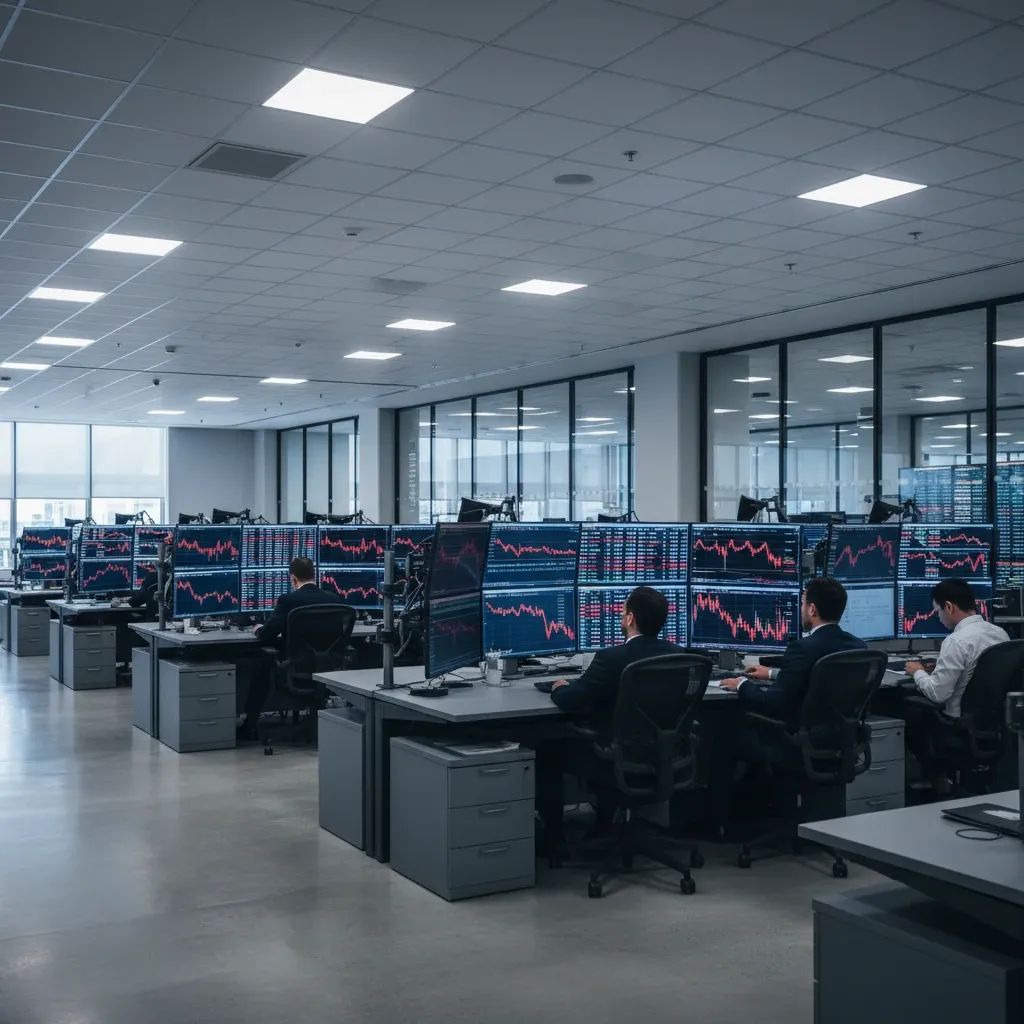
On March 20, a single trading session saw foreign investors pull $1.2 billion from Thai bonds—the largest daily withdrawal since early 2022. The same day, another $1.2 billion exited Thai equities, suggesting the pullback is not a bond-specific phenomenon but a broad-based flight from Thai assets altogether. These transactions occurred as overseas fund managers simultaneously liquidated emerging market positions across the region, recalibrating portfolios toward what they perceive as safer ground.
The catalyst is straightforward: geopolitical shock followed by investor panic. When the United States-Iran military confrontation intensified in late February, global oil markets spiked. Dubai crude jumped to $115 per barrel within weeks, and with that surge came a cascading repricing of risk across asset classes. Investors who had been comfortable holding Thai bonds—yielding roughly 3–4% on longer maturities—suddenly demanded reassurance. In an environment where global equity markets were volatile and oil-dependent economies faced stagflation risks, that reassurance never came. Instead, buyers simply exited.
The timing matters. This March exodus is happening four years after the last comparable withdrawal, which occurred during the Russia-Ukraine invasion. But the 2022 crisis unfolded differently. Foreign investors had dumped 56 billion baht during the second and third quarters of 2022, but that selloff was gradual enough that by year-end, sentiment had shifted back toward emerging markets, ultimately netting 46 billion baht in inflows as Western recession fears prompted a "risk-on" reversal. The current situation lacks that escape valve. The Middle East conflict shows no signs of resolution, oil prices remain elevated, and the global institutional investor class appears more cautious about emerging market risk.
Why Thailand's Bonds Are Particularly Vulnerable
Thailand's status as an energy importer compounds the problem. Rising oil costs ripple through the economy in multiple directions simultaneously. Shipping becomes more expensive, manufacturing input costs climb, and inflation pressures mount—all squeezing both consumer purchasing power and corporate profitability at once. The Thai current-account deficit is expected to widen as import bills swell while export demand softens in developed economies facing their own stagflation concerns.
The broader context reveals Thailand's structural vulnerability in this moment. In 2025, overseas investors had poured 72.4 billion baht into Thai bonds, a sign of confidence in the market. But even during that inflow period, foreign fund managers were shortening their average holding maturities—a subtle signal of reduced conviction. They were betting on Thai assets but hedging their bets by staying in shorter-duration instruments, reducing exposure to long-term interest rate risk. That caution proved prescient. When the decision to exit came in March, it was swift and severe, unencumbered by commitments to longer-term positions.
The Thai bond market's attractiveness to foreign investors has historically relied on a combination of yield differential—the additional return Thai bonds offered compared to developed market alternatives—and perceived stability. When geopolitical uncertainty spikes, both factors weaken. Yields may still be higher, but the risk premium investors demand also rises dramatically. Suddenly, the math that made Thai bonds attractive no longer works.
Ripple Effects Across Thailand's Economy
The bond market selloff is not an abstraction confined to trading floors. Thai households are feeling it in grocery stores and gas pumps. Imported goods—electronics, raw materials for manufacturing, refined petroleum products—become more expensive as the baht weakens. A consumer goods company that sources packaging materials from abroad faces a choice: absorb the higher costs and accept lower profit margins, or pass the increase to customers and risk losing sales. Most choose a combination, resulting in slower consumption growth and factory closures in sectors already struggling through uneven recovery.
The tourism sector, which accounts for roughly 12% of Thai GDP, faces a double squeeze. Higher jet fuel costs reduce airline profitability, pushing some carriers to increase ticket prices or reduce capacity on Thailand routes. Simultaneously, fewer tourists from Europe and the Middle East—two historically significant markets—are traveling due to recession concerns and geopolitical anxiety in their home regions. Hotels and restaurants that depend on steady visitor flows are cutting staff and deferring maintenance investments.
For employees at these businesses, the impact is tangible. A hotel worker in Bangkok faces the prospect of reduced hours or wages as occupancy rates drop. A manufacturing plant supervisor sees production schedules compressed as export orders weaken. A small business owner operating a restaurant discovers that both her ingredient costs and her customer traffic have declined. None of this is captured in bond yield statistics, but it is the mechanism through which financial market dysfunction becomes personal economic hardship.
Credit Markets Strain Under Pressure
Corporate Thailand is heading into a tightening credit environment precisely when debt stress is already visible. The Thai Bond Market Association forecasts that corporate bond issuance will reach 900 billion baht in 2026, maintaining rough stability compared to recent years. But the Association is simultaneously warning that risks of corporate defaults and repayment delays are expected to increase due to weak economic momentum and tighter cash flows, particularly in sectors experiencing choppy recoveries.
What this means in practical terms: companies that need to refinance existing debt or raise capital for operations will face higher borrowing costs and stricter lending conditions. Smaller firms lacking access to international bond markets will depend on bank lending, and Thai banks—exposed to the same risks—are becoming more cautious with credit. The result is a vicious cycle where businesses struggling under higher input costs find it harder to access affordable financing, making contraction the path of least resistance.
For Thai individuals with mortgages or personal loans tied to variable interest rates, there is one piece of good news. The Bank of Thailand is broadly expected to cut its policy rate by 25 basis points in Q2 2026, bringing the benchmark to 1%. Retail borrowers on variable-rate mortgages will see modest monthly savings. But this relief is limited in scope. A quarter-point rate cut reduces a 3 million baht mortgage payment by roughly 600 baht per month—meaningful but not transformative, especially when inflation from oil prices is eroding purchasing power across the board.
The government has acknowledged the depth of household financial distress by approving a 122 billion baht loan buyback program designed to help struggling borrowers. This initiative suggests that many Thai families are already stretched thin, juggling multiple debts at a moment when income growth has stalled. The program provides some breathing room, but it also signals economic fragility beneath the surface.
Government's Narrow Path Forward
Thailand's fiscal authorities face a genuine policy dilemma. Public debt reached 65.7% of GDP by the end of 2025—high enough to constrain new spending while not catastrophic enough to force immediate austerity. The government has rolled out a $1.4 billion food and services subsidy program to support consumption and prevent sharper economic slowdown. This stimulus addresses genuine hardship but comes at a time when the bond market is skeptical about emerging market fiscal sustainability.
The political context matters. Thailand held general elections in March 2026, and a new government is still forming coalitions and policy priorities. In normal times, this transition is manageable. In a moment of capital flight and economic weakness, political transition adds another uncertainty to an already crowded risk dashboard. Foreign investors watching Thai developments are not only pricing in energy costs and monetary policy but also assessing whether the new political leadership has the credibility and mandate to manage the coming slowdown without triggering wider instability.
Thai policymakers must walk a narrow line: provide enough economic support to prevent recession while maintaining enough fiscal discipline to convince nervous foreign investors that the country is not on an unsustainable trajectory. This balancing act is harder when that 900 billion baht in corporate bond issuance projected for 2026 must find buyers primarily among domestic institutional investors and retail Thai savers. If domestic appetite is weak, yields would spike—further tightening credit and deepening economic pain.
The Structural Reckoning Behind the Numbers
The March 2026 bond selloff is not merely a reaction to immediate geopolitical shock. It is part of a broader recalibration in how global capital views emerging markets. Investors are abandoning the assumption that emerging markets are a stable asset class distinct from developed market cycles. Instead, they are recognizing that geopolitical fragmentation, regionalized supply chains, trade weaponization, and rising nationalism have permanently altered the risk-return calculation.
In 2022, the Russia-Ukraine war triggered outflows from emerging markets, but the underlying belief in eventual normalization—and attractive valuations after declines—brought capital back by year-end. In 2026, there is less confidence in normalization. US-China competition over semiconductors and rare earths, EU-China tensions over industrial overcapacity, rising protectionist rhetoric across developed economies—these are not temporary disruptions but structural shifts. Thailand, sitting at a crossroads of global supply chains and dependent on open trade and capital mobility, is particularly exposed to this transformation.
For Thai residents, this structural reckoning means something important: the easy era of foreign capital flowing into Thai assets seeking yield and growth may be ending. The bond market did not just experience a temporary fright; it experienced a recalibration. Future capital flows will be more volatile, more conditional on geopolitical stability, and more skittish when uncertainty spikes. This requires a mental shift among Thai investors and policymakers alike. Domestic economic resilience, fiscal discipline, and political stability become not luxuries but necessities for maintaining access to international capital on reasonable terms.
What Comes Next
The trajectory for Thailand's bond and asset markets in the remainder of 2026 hinges on external factors beyond Bangkok's control. If Middle East tensions ease and oil prices retreat toward $80–90 per barrel, some foreign capital may return. A 25-basis-point rate cut from the Bank of Thailand would help reset yield expectations and could attract tactical buying. But the structural shifts underway suggest there is no simple reversion to pre-March conditions.
Thai institutions, businesses, and households should brace for a more difficult 2026 than initially projected. The 1.5% GDP growth forecast may prove optimistic if foreign capital remains scarce and corporate defaults rise. Households may face additional inflation from import costs even as income growth disappoints. The government's subsidy programs and loan buyback initiatives provide temporary relief but cannot solve the underlying problem: an economy that has become heavily dependent on continuous foreign capital inflows is discovering what happens when those inflows pause.
The road ahead requires discipline, pragmatism, and a recognition that Thailand's economic resilience now depends far more on domestic institutional strength and policy credibility than on favorable external conditions. For the ordinary Thai resident or worker, that translates into a year of cautious spending, careful debt management, and hope that the Bank of Thailand and the new government can navigate these treacherous waters without triggering a deeper downturn.


