
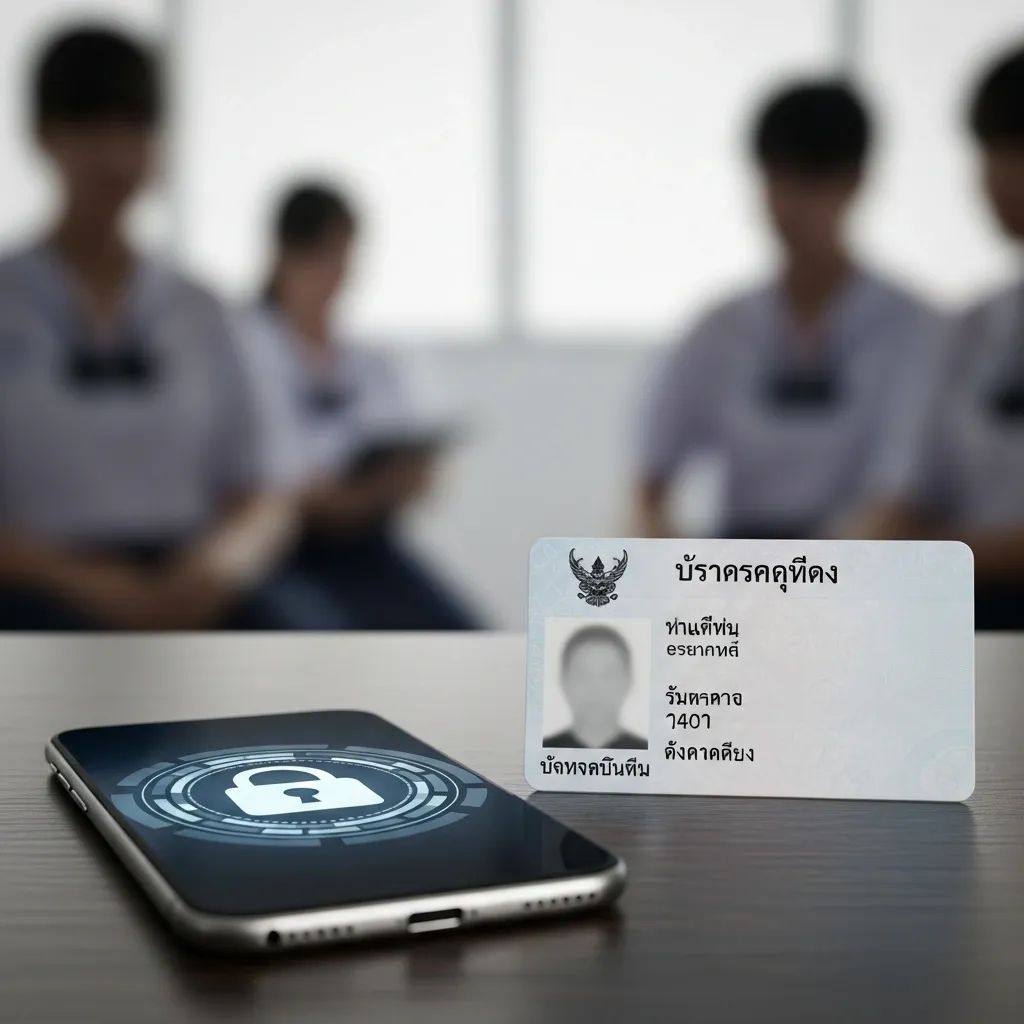
The Thailand Ministry of Digital Economy and Society is reviewing a proposal to ban social media access for anyone under 16, placing the kingdom at the center of a global experiment in digital parenting. But for thousands of families across the country, the policy debate is largely academic—the real struggle is playing out nightly over dinner tables and behind bedroom doors.
Why This Matters
• Policy in motion: The Thai Health Promotion Foundation (ThaiHealth) is studying a potential nationwide ban on social media for under-16s, similar to Australia's December 2025 law.
• Staggering exposure: 72.6% of Thai children aged 0–2 already spend more than one hour daily on screens, with the national average hitting 7 hours 54 minutes online per day.
• Mental health crisis: Over 10% of Thai youth are at suicide risk, and 53% of Gen Z report that social media harms their mental health.
The Home Front: Where Rules Meet Reality
For working parents in Bangkok, Chiang Mai, and provincial cities, smartphones have become the most contentious household item since the television remote. Many describe a pattern: establish a screen-time limit, enforce it for a few days, then watch consistency erode under the pressure of exhaustion, guilt, and their children's persistence.
Some families have attempted structured routines—devices surrendered at 9 PM, no phones during meals, weekend-only gaming. Others have found themselves negotiating in real time, weighing the relief of a quiet child against the nagging awareness that every additional hour correlates with increased anxiety and disrupted sleep.
The challenge intensifies for dual-income households. When both parents work late, smartphones double as babysitters. One survey sentiment captures the contradiction: parents acknowledge primary responsibility for digital discipline but simultaneously call for stronger government regulation to backstop their efforts.
What Deputy PM Songsak's Proposal Actually Means
Deputy Prime Minister Songsak Thongsri announced that ThaiHealth and the Ministry of Digital Economy and Society are examining whether Thailand should join Australia, the UK, France, Malaysia, and Indonesia in restricting minors' social media access. The proposal under study would prohibit platforms like Facebook, Instagram, TikTok, YouTube, and X from providing accounts to anyone under 16.
The impetus is statistical. Thailand's internet penetration exceeds 93%, and the average citizen spends nearly eight hours online daily. Among toddlers and preschoolers—ages 0 to 2—nearly three-quarters exceed the one-hour daily screen threshold that child development experts consider risky for learning, communication, and age-appropriate cognitive growth.
Beyond developmental delays, ThaiHealth has cataloged a lengthening list of online threats: cyberbullying, sexual exploitation, online gambling, and targeted ads for e-cigarettes. Each carries documented links to elevated stress, depression, behavioral changes, and suicidality.
Thailand also implemented identity verification requirements for social media advertisers beginning November 1, 2026—a measure targeting fraud and online scams. An under-16 ban would likely extend similar verification frameworks to all users.
Lessons from Australia's Six-Month Experiment
Australia's under-16 social media ban took effect in December 2025, making it the first major test case. By mid-2026, results are mixed at best.
Over 85% of Australian adolescents under 16 reported still using restricted platforms three months post-ban, with more than half maintaining their own accounts. Daily use among 12–13-year-olds remained stable; 14–15-year-olds showed only marginal reductions. Circumvention methods proved trivial: self-declared birthdates, fake accounts (15–19% of users), uploaded selfies easily spoofed, and private browsers.
Platforms did respond—Meta, TikTok, and others revoked roughly 4.7 million accounts flagged as underage. But the cat-and-mouse dynamic persists, with teens migrating to unregulated spaces or simply falsifying credentials.
Malaysia and Indonesia have adopted stricter enforcement. Malaysia's June 2026 rule requires MyKad or MyDigital ID verification—government-issued documents tied to biometric data. Indonesia shut down 4.1 million TikTok accounts and 600,000 YouTube accounts to comply with its March 2026 restrictions. Yet both countries face criticism over privacy risks and the absence of independent oversight bodies to prevent the regulations from becoming symbolic.
France took an indirect route, declaring contracts between platforms and under-15s legally void—sidestepping EU harmonization rules while attempting the same outcome.
The Privacy Trade-Off Thailand Must Weigh
Effective age verification demands data: national ID cards, passports, facial recognition, or digital identity systems. Extending Thailand's advertiser verification framework to all users, including children, would create a comprehensive digital identity registry.
The trade-off is stark. Stronger verification reduces underage access but increases surveillance, data exposure, and the risk of breaches. For a population already spending nearly eight hours online daily, the privacy implications extend far beyond minors.
Critics in Australia, the UK, and Europe argue that age verification systems shift the burden from platforms—whose algorithms intentionally maximize engagement—to families and governments. Rather than redesigning addictive features like infinite scroll or comparison-driven feeds, the policy response restricts access, leaving the underlying harms unaddressed.
What Expat and Thai Families Should Know
If Thailand proceeds with an under-16 ban, several scenarios merit consideration:
For Thai nationals and permanent residents:
• Account restrictions would likely apply to all platforms accessed within Thailand
• National ID (Thai ID card) would serve as the primary verification method
• Enforcement would begin with new account creation, followed by a grace period for existing users
For expat families and foreign residents:
• Unclear whether restrictions would apply to foreign passport holders or only Thai nationals
• International schools may develop separate digital policies independent of national law
• VPN use to access home-country accounts remains a gray legal area; parents should clarify with their embassy or legal advisor
• Foreign parents should document their residency status and passport information in case selective enforcement occurs
Critical distinction—LINE is not included:Unlike Western social media platforms, LINE (Thailand's dominant messaging app) would likely remain unrestricted. This is crucial for daily life, as LINE is integral to school communications, local business, and family coordination in Thailand.
Parents should expect:
• Increased circumvention attempts: Teens will use VPNs, fake IDs, or parents' credentials.
• Potential fines for platforms: Non-compliance penalties could lead to stricter verification, including biometric checks.
• No substitute for active parenting: Every country studied emphasizes that no law replaces consistent household rules and engaged supervision.
Actionable Steps Parents Can Take Now
While ThaiHealth completes its feasibility study, families in Thailand can implement practical measures:
1. Audit your own habits first: Children mirror adult behavior. If parents scroll through feeds during meals, rules for kids lose credibility. Model the digital discipline you expect.
2. Establish device-free zones: Designate meal times and bedrooms as phone-free spaces. This reduces sleep disruption and improves family interaction.
3. Build digital literacy skills: Equipping children with digital safety skills early—recognizing scams, understanding privacy settings, identifying manipulative content—prepares them for eventual full access rather than creating a "cliff-edge" at 16.
4. Explore Thai-language resources: Organizations like the Foundation for the Child and Thai Mental Health Foundation offer digital parenting guidance in Thai. International schools often provide English-language workshops on screen time management.
5. Offer genuine alternatives: For multilingual and bilingual families, connecting teens to local youth groups, sports clubs, and hobby communities provides the social connection and identity exploration they seek—without algorithmic amplification of harmful content.
The Mental Health Dimension
Thailand's 2023 Mental Health Epidemiological Survey found 10.6% of youth at suicide risk and 6.2% vulnerable to depression. A 2025 report revealed that 53% of Thai Gen Z believe social media harms their mental health, with 58% reporting pressure and negative comparisons. Despite this, 44% found quitting somewhat difficult, and 18% very difficult—evidence of addiction-by-design.
Yet social media also provides connection, identity exploration, and access to information, particularly for LGBTQ+ youth, ethnic minorities, and those in rural areas with limited offline support networks. A blanket ban risks severing these lifelines.
What Happens Next
ThaiHealth's feasibility study is expected to conclude by late 2026 or early 2027, though no official deadline has been publicly announced. If the government moves forward with a proposal, implementation would follow a notice period, giving platforms time to develop verification systems and families time to adjust.
In the interim, the battle inside Thai homes will continue. Some parents will enforce limits successfully; others will struggle. The outcome of this debate—whether policy, parenting, or platform accountability—will shape how the next generation of Thais grows up online, for better or worse.


