
A Loophole Exposed: How Thailand's Retirement Visa Became a Security Vulnerability
Four aging Chinese nationals—arrested on May 29 in Chon Buri and intercepted at Suvarnabhumi Airport—have exposed a vulnerability in Thailand's retirement visa system that authorities are now addressing. The quartet allegedly funneled approximately 18 million yuan (87–100 million baht) from compensation funds earmarked for property owners in Wuhan through forged documents and ghost accounts. Their scheme worked because the O-A retirement visa required only three things: proof of 800,000 baht in a Thai bank account, health insurance, and evidence of being at least 50 years old. No international background checks. No verification of fund sources. They simply arrived, rented a villa, and applied.
Why This Matters for Current Visa Holders
• Visa vetting gap closing mid-2026: The Thailand Immigration Bureau will begin requiring notarized proof of pension income from foreign sources, eliminating temporary bank deposit workarounds.
• Financial audits now enforced retroactively: Retirement visa applicants must maintain continuous deposits of 800,000 baht for three months before and after approval. This requirement is being enforced on existing holders in Chon Buri and Samut Prakan.
• Residential verification expanding: Unannounced house visits by immigration officers are becoming routine in coastal provinces to confirm residents live at registered addresses.
• Remote work now prosecuted: Employment in Thailand (including remote work for overseas employers) explicitly violates the O-A visa. The Immigration Police are now actively enforcing this prohibition.
The Wuhan Fraud: How It Worked
The suspects—Chen Wei (55), Yuan Ming (54), Fei Guang (51), and Luo Xin (54)—posed as legitimate claimants for land compensation from Wuhan development projects. They submitted fabricated paperwork to claim displacement benefits, funneled money into shell accounts, and disappeared into Thailand using one mechanism: a long-stay visa based on age and bank balance.
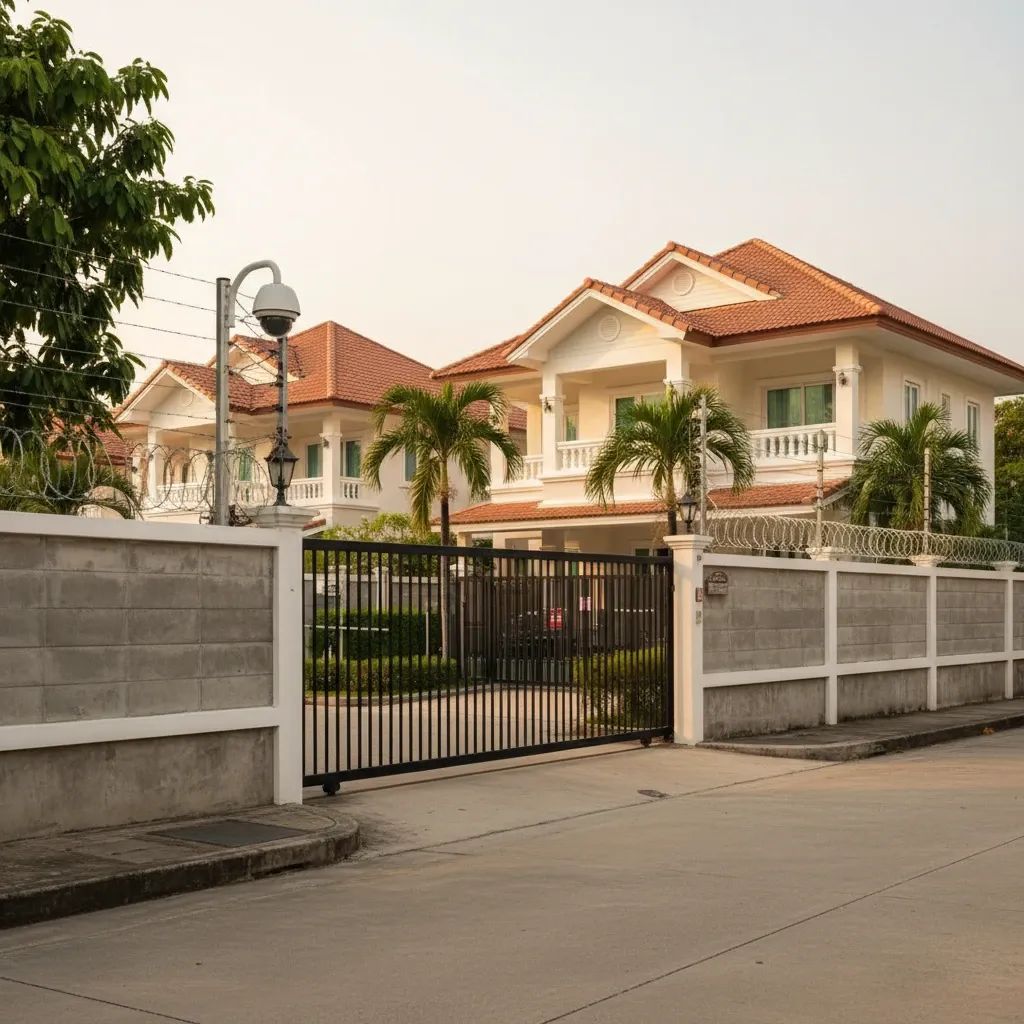
Coordination between the Wuhan Public Security Bureau and Thailand's Immigration Police eventually connected the dots. Officers apprehended three suspects at a rented villa in Bang Lamung district, Chon Buri. The fourth was caught attempting to board a flight.
What's Changing: The Compliance Burden Tightens
Bank statement audits are now forensic. The Thailand Immigration Bureau scrutinizes whether the 800,000 baht balance was maintained continuously for three months before approval and three months after. Retroactive reviews are routine. Deposits appearing days before application trigger renewal denials.
Insurance standards have risen. Health policies must now cover a minimum of 400,000 baht for inpatient care and 40,000 baht for outpatient services. Coverage must be issued only by insurers certified by the Thailand Office of Insurance Commission (OIC). This requirement applies to all visa renewals from early 2025 onwards, forcing existing holders to upgrade policies at their own expense.
What is TM30? The TM30 is Thailand's mandatory residence notification form. You must file it within 24 hours of moving to a new address or returning from abroad after 90 days away.
Residential verification is unscheduled. Immigration officers now conduct surprise visits to confirm visa holders live at registered addresses. File your TM30 promptly and keep landlord-certified rental contracts readily available.
Insurance requirement clarification: The new 400k/40k standards apply to all visa renewals from 2025 onwards, including existing holders. Policies covering less than these minimums will trigger renewal denial.
A Wider Pattern: Why These Changes Matter
Over the past three years, Chon Buri and Samut Prakan have become focal points for white-collar crime—suspect businesses operating with Thai nominees as legal fronts, drug trafficking networks, and tourist scam operations. This catalyst prompted the Thailand Royal Police to launch enforcement protocols and the government to accelerate visa system reforms.
The Ministry of Foreign Affairs is implementing institutional changes designed to close loopholes. The e-Visa platform (operational through 94 Thai embassies and consulates since January 2025) is being enhanced with: Interpol integration for automatic alerts when applicants match international criminal databases; automated renewal processing for compliant holders; and machine-learning algorithms to flag suspicious financial patterns.
Action Items for Current O-A Visa Holders
Verify bank documentation: Request three consecutive months of Thai bank statements showing the full 800,000 baht balance. File copies with your immigration records.
Update insurance coverage: Confirm your health insurance meets the 400,000 baht inpatient / 40,000 baht outpatient minimums from an OIC-certified provider.
File TM30 accurately: Ensure your residence is properly registered and your TM30 is current. Update within 24 hours of any address change or return from abroad.
Clarify employment status: If you work remotely for an overseas employer, consult an immigration lawyer. Remote work violates O-A visa conditions and carries penalties including visa cancellation.
Prepare for inspections: Keep rental contracts, insurance documents, and bank statements accessible in case of unannounced house visits.
Long-Term Policy Direction
The Cabinet has approved revisions to Long Stay visa criteria effective mid-2026. Future applicants will need notarized proof of pension or passive income from their home country, eliminating temporary deposit schemes entirely. Thailand's economy depends significantly on legitimate long-stay residents and retirees, collectively contributing an estimated 120 billion baht annually through housing rentals, healthcare, and consumer spending. The government has stated it welcomes retirees who meet criteria and contribute positively. Enforcement targets criminal activity, not compliant residents.
Extradition and Next Steps
The four arrested suspects remain at Bangkok Immigration Detention Center pending extradition to China under the 2003 bilateral extradition treaty. Legal experts anticipate repatriation within 60–90 days.
For residents who have adhered to visa rules, this shift brings institutional legitimacy: criminal networks are being dismantled and the integrity of long-stay categories is being restored. The message to all visa holders is clear: clean records, transparent finances, and strict adherence to conditions are now enforced through house visits, financial audits, and insurance verification.


