
Why This Matters
• Two adolescents aged 16 and 17 have been rescued from a massage facility in Bangkok's Bang Khun Thian district, triggering immediate placement in government protective custody under Thailand's anti-trafficking framework.
• The Thailand Anti-Human Trafficking Division has adapted enforcement methodology, using digital evidence including mobile communications records and messaging application logs to strengthen cases against trafficking operators.
• Property owners and operators face legal liability under Thailand's Anti-Trafficking in Persons Act if establishments on their premises operate with knowledge of exploitative practices; initial violations can result in substantial fines and penalties.
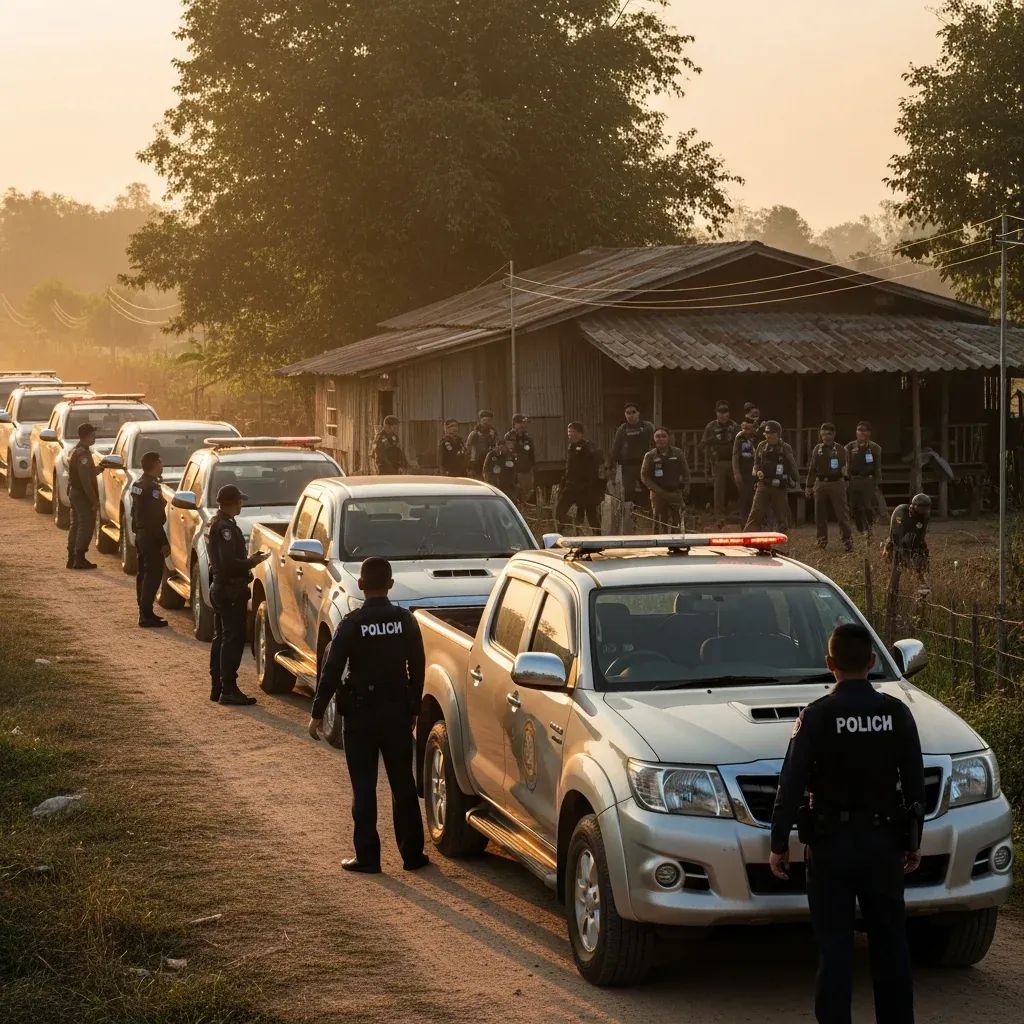
When the Thailand Anti-Human Trafficking Division (AHTD) conducted an operation at a massage facility in Bang Khun Thian district on June 6, officers executed an undercover operation with plainclothes personnel documenting services arranged through the Line messaging application. Two women—proprietor Dararat Thamwanich, 51, and receptionist Warin Promsopa, 37—now face charges of trafficking minors and procuring commercial sexual services. Two adolescents aged 16 and 17 were recovered.
Investigators documented evidence including four mobile phones and handwritten appointment ledgers recording client transactions. Digital communications records are providing law enforcement with timestamped documentation of arrangements that prosecutors can use in building cases. This represents an evolution in Thai anti-trafficking enforcement, moving beyond testimony-dependent cases to incorporate multiple forms of evidence.
Digital Investigation and Evidence
The AHTD operation demonstrates how enforcement has adapted to criminal methodologies. Line messaging records provided documentation of service negotiation, while mobile phone forensics revealed client contact information and transaction histories. The handwritten booking ledger demonstrates systematic operation and provides supplementary documentary evidence. This combination of digital and documentary evidence strengthens prosecution cases compared to approaches relying solely on witness testimony.
The two recovered adolescents were placed in government protective custody. Thailand's victim protection framework includes the National Referral Mechanism (NRM), a multi-agency coordination structure involving the Ministry of Social Development and Human Security, Thailand Royal Police, Ministry of Labour, immigration authorities, and provincial social welfare offices.
Trafficking victims can receive support through government facilities that provide medical care, psychological counseling, and skills training. Child victims can testify in specialized human trafficking courts—dedicated judicial venues in major cities including Bangkok, Chiang Mai, Phuket, Songkhla, and Khon Kaen—which allow testimony via closed-circuit video systems to minimize direct courtroom confrontation with accused perpetrators.
Legal Framework and Property Owner Liability
Residents and property owners should understand their legal obligations. Thailand's 2008 Anti-Trafficking in Persons Act extends culpability beyond direct traffickers to include landlords and property managers if prosecutors establish negligence regarding exploitation operations on leased premises.
Liability extends to property owners. Thai courts have increasingly interpreted the statute to impose due diligence obligations: owners of commercial space rented to massage parlors, karaoke establishments, guest houses, or other establishments must verify legitimate operations. Courts have assessed penalties against property owners who did not exercise reasonable oversight.
The Ministry of Labour conducts workplace audits to verify compliance. Inspectors demand production of government-issued work permits for all staff, age verification documentation, and signed employment contracts. Establishments unable to supply these materials face closure orders and fines starting at ฿100,000. Repeat violations escalate penalties to ฿300,000–฿500,000, with proprietors potentially facing criminal prosecution.
Reporting provides legal protection. The Royal Thai Police Anti-Trafficking Hotline (1191) operates continuously in Thai, English, and Burmese, accepting anonymous reports. Callers receive statutory protection against retaliation under Thailand's Witness Protection Act. Community vigilance generates actionable intelligence for law enforcement investigations.
The Broader Anti-Trafficking Effort
Thailand faces persistent challenges in combating trafficking networks. The government maintains dedicated anti-trafficking units and has established specialized courts to handle trafficking cases more effectively than general criminal courts. However, enforcement capacity varies across regions, with urban areas typically receiving more resources than rural provinces.
Trafficking prevention requires addressing root causes including economic disparities between regions, which create vulnerability to exploitation. When economic opportunities are limited and families face financial crises, recruitment offers may appear attractive. Sustainable prevention requires both effective enforcement against perpetrators and broader economic development strategies.
The June operation demonstrates institutional capacity in conducting sophisticated undercover operations and building cases with digital evidence. The effectiveness of these enforcement efforts in reducing trafficking over the longer term will depend on consistent resource allocation, inter-agency coordination, and supplementary prevention initiatives addressing trafficking's underlying economic drivers.
Residents should report suspected trafficking through the Anti-Trafficking Hotline (1191) and understand their legal obligations if they operate or lease commercial properties. Property owners should conduct reasonable inspections to verify legitimate operations and maintain required employee documentation to avoid legal liability.


