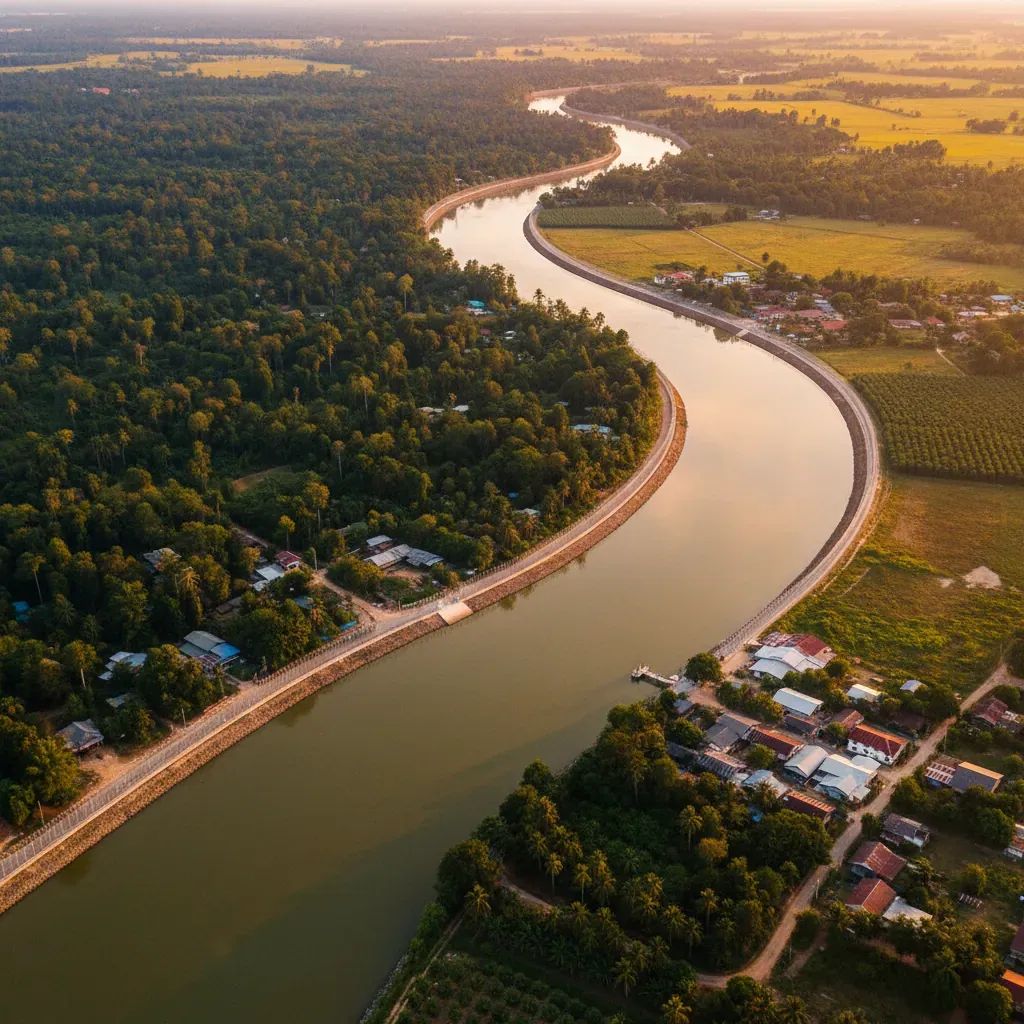
Thailand seized 415 million methamphetamine pills at the Thai-Lao border during 2025—the largest interdiction ever recorded along this frontier. This seizure signals a dramatic shift in trafficking corridors and a major escalation in government enforcement.
What This Means for You Right Now
If you live in a border province, prepare for intensified security checkpoints. The government has deployed new inspection points along the Mekong River and mountain passes in 31 frontier provinces, including Chiang Rai, Loei, Nong Khai, Nakhon Phanom, and Mukdahan. These operations will continue throughout 2026.
Practical guidance for border residents:
• Carry valid identification at all times when traveling near border areas
• Allow extra travel time; vehicle searches at checkpoints may cause delays
• Report suspicious activity to the ONCB hotline: 1386 (24 hours daily); caller anonymity guaranteed
• Know your rights: You can request the officer's name and badge number during searches; refuse searches without probable cause
• If enforcement feels abusive, file complaints with the Office of Ombudsman: 1375 or www.ombudsman.go.th
In Bangkok and other cities, entertainment venues face heightened police inspections through mid-2026. Nightclubs, massage parlors, and karaoke bars—especially in tourist areas—now operate under stricter oversight. Proprietors are held liable for on-premises narcotics activity.
Street-level impact: Methamphetamine tablets now sell for as little as 50 baht per pill in northern provinces, making the drug more accessible to low-income workers and youth. Schools and workplaces report rising drug-related absenteeism and accidents.
Why This Is Happening
The Thailand Royal Police and United Nations Office on Drugs and Crime (UNODC) confirm that methamphetamine production in Myanmar has surged, particularly in Shan State. The 2021 military coup destabilized central government authority, allowing armed ethnic groups and transnational crime syndicates to operate manufacturing facilities with minimal interference. Jungle terrain and remote geography provide near-perfect concealment for industrial-scale labs.
The corridor shift: Historically, most methamphetamine entered Thailand through the Thai-Myanmar frontier. But heightened enforcement in Chiang Rai and Tak provinces has pushed smugglers eastward. The Mekong River—which forms the Thai-Lao boundary across 1,800 kilometers—offers porous crossing points: informal boat landings, fishing villages, and remote trails ideal for trafficking networks. Between January and June 2026, Thai interdiction teams seized 997 million pills, 39.4 tons of crystal methamphetamine, and 2 tons of heroin, according to Ministry of Justice data (May 31, 2026).
Regional scale: Thailand alone accounts for 85% of East and Southeast Asia's methamphetamine seizures. In 2024, the region saw seizures climb 24% year-on-year, confirming production is accelerating faster than law enforcement can interdict.
Government Response and What Enforcement Looks Like
Prime Minister Anutin Charnvirakul declared narcotics control a national emergency priority, framing users as "patients requiring treatment" and traffickers as "criminals deserving punishment."
On the borders: The Northern Border Interdiction and Suppression Command deploys helicopter reconnaissance, thermal imaging drones, and riverine patrol boats along the Mekong in six northern provinces. Similar commands operate in the Northeast and Western regions. District chiefs and village officials conduct patrols at river crossings and mountain passes—they are your first-line enforcement contacts if you observe suspicious activity.
In cities: Bangkok launched "Operation 90 Days" on July 1, 2026, targeting retail distribution in entertainment districts and working-class neighborhoods through coordinated raids by the Metropolitan Police Bureau, Anti-Narcotics Police Division, and Probation Department. The emphasis is on freezing dealers' assets—bank accounts, real estate, luxury goods—and arresting street vendors.
Treatment instead of jail: The government expanded the "One District, One Rehab Center" program, offering mandatory treatment to users rather than automatic incarceration. However, access varies by province; urban centers offer medication-assisted treatment and counseling, while rural facilities often use abstinence-only models with limited medical supervision.
Bilateral Cooperation and Alternative Livelihoods
On June 10, 2026, Thailand and Laos co-chaired the 21st Bilateral Meeting on Drug Suppression in Pattaya, pledging accelerated intelligence sharing and border patrols. Laos committed to tracking 34 Thai fugitives sheltering in Lao territory; two major suspects were scheduled for transfer to Thai custody as of late July.
The two countries expanded the "Strong Twin Villages" program, pairing Thai and Lao border communities in economic development initiatives. This offers alternative livelihoods—fish farming, organic agriculture, handicraft production—to residents who might otherwise participate in smuggling.
Larger Picture: Production Still Outpacing Interdiction
Despite record seizures and 7.7 billion baht in asset forfeitures through May 2026, law enforcement acknowledges supply reduction alone cannot resolve the crisis. The 50-baht retail price reflects oversupply, not scarcity. Estimated annual profits for major networks exceed 100 billion baht, dwarfing confiscated assets.
Myanmar's civil conflict persists, leaving Shan State ungoverned. Laos, though cooperative, lacks resources to seal its borders or dismantle embedded trafficking syndicates. Beyond land borders, maritime routes through the Malacca Strait and Sulu-Sulawesi archipelago are absorbing overflow, feeding drug networks reaching Australia, New Zealand, and Japan.
What to Expect and Where to Get Help
Checkpoints will remain intensive through 2026. Border residents should anticipate periodic vehicle searches and possible travel delays.
For reporting or emergencies:
• ONCB Hotline: 1386 (narcotics-related tips, 24 hours, anonymous)
• Ombudsman: 1375 (complaints about enforcement abuse)
• Police Emergency: 191
For addiction support:
• Contact your district's rehabilitation center (listed at provincial health offices)
• Many programs are now free or subsidized under government initiative
The government's dual-track approach—harsh penalties for traffickers, treatment for users—represents a shift toward treating addiction as a health issue. Success will depend on sustained funding for rehabilitation, cross-border intelligence cooperation that survives political tensions, and long-term economic development in border communities. Residents remain essential as eyes and ears; the ONCB hotline conversion of tips into actionable intelligence continues to be among the most effective tools available.