
The Bust
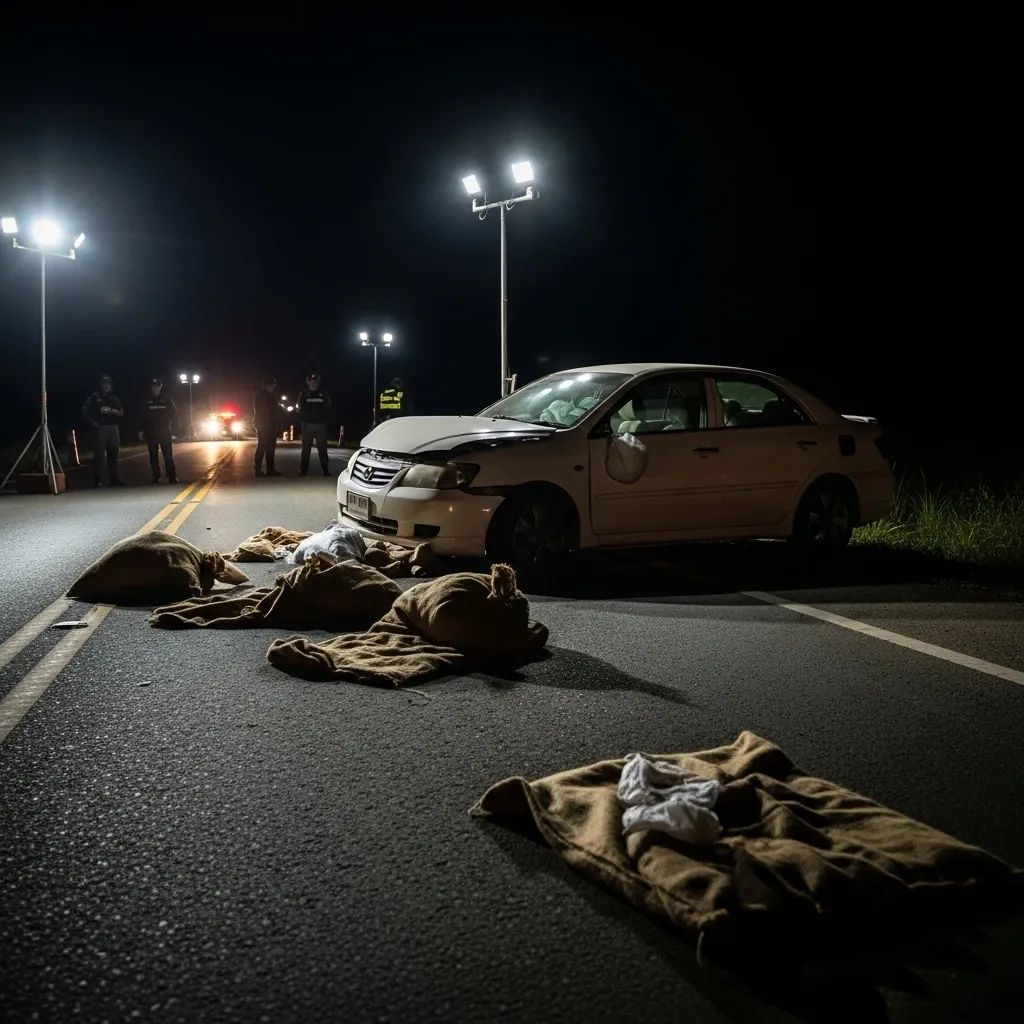
Officers at the Pu Kaeng border checkpoint near the Chiang Rai-Phayao provincial line flagged a white Isuzu pickup truck on the evening of March 13. The vehicle displayed a Bangkok registration plate, and its driver—a 45-year-old Bangkok resident identified as Amnuay—claimed to be transporting fresh garlic from northern farms to central markets.
Deeper inspection revealed the scheme. Beneath approximately 2 tons of fresh garlic sat 10 burlap sacks, each containing approximately 200,000 methamphetamine tablets. The total seizure of 2 million pills represents a significant interdiction along Thailand's northern trafficking corridor. Investigators later confirmed the narcotics originated from the Thailand-Myanmar frontier zone, specifically in Mae Fai Luang District. The intended destination was Ayutthaya Province and surrounding central plains areas.
The garlic served dual tactical purposes: visual camouflage and odor masking. Drug trafficking organizations have increasingly adopted this approach, leveraging Thailand's legitimate agricultural economy as cover for illicit shipments.
Why This Seizure Matters
This bust highlights how synthetic drugs move through Thailand's borders. Recent seizures including 6 million tablets destined for Ayutthaya and Nonthaburi provinces, 2.8 million tablets hidden in a sedan, and 1 million tablets at a bus terminal demonstrate networks operating at industrial scale. The estimated street value of this single shipment exceeds 60 million baht.
For residents across northern and central Thailand, these operations have direct consequences. Methamphetamine availability fuels demand in communities, strains public hospitals treating drug-related emergencies, and concentrates crime in specific regions. Schools report disciplinary challenges correlated with drug availability; families destabilize when members fall into addiction.
How the Northern Border Gateway Works
Chiang Rai Province functions as the primary entry portal for methamphetamine flowing from Myanmar into Thailand's domestic market. Myanmar's Shan State operates as the region's primary production hub. The United Nations Office on Drugs and Crime documented that synthetic drug manufacturing in Shan State expanded dramatically since 2021, driven partly by Myanmar's political fragmentation. Armed militia groups controlling border territory increasingly depend on narcotics revenue to sustain operations.
Thailand's Northern Border Command, operated jointly by the Royal Thai Army, Royal Thai Police, and the Office of the Narcotics Control Board, maintains permanent checkpoints across six northern provinces. The command deploys drones, night-vision equipment, mobile X-ray units, and analytical software. Yet officers acknowledge the fundamental limitation: every interdiction represents detection of only a fraction of actual flow. Methamphetamine seizures increased over 100% between late 2024 and early 2025, suggesting trafficking organizations are ramping up shipment volumes.
How Trafficking Networks Operate
Drug organizations employ increasingly sophisticated methods:
Modified transport infrastructure: Smugglers retrofit vehicles with hidden compartments beneath cargo beds or integrated into frames, reducing detection risk. These vehicles frequently carry legitimate cargo to withstand initial scrutiny.
Courier networks: Some operations deploy scout vehicles communicating checkpoint positions via encrypted messaging. Drivers receive real-time routing instructions to circumvent enforcement zones.
Temporary safe houses: Networks maintain waypoints across provincial towns to fragment shipments into smaller loads and allow driver rest periods.
Private parcel services: Approximately 1.1 million tablets have been concealed within commercial parcels routed through distribution centers. Parcels move through less scrutinized channels than personal vehicles.
Local labor exploitation: Investigators frequently apprehend individuals from indigenous hill tribe communities recruited through intermediaries. Many arrested individuals claim limited awareness of shipment contents.
What Happens Next
Amnuay faces charges under Thailand's stringent narcotics statutes, which provide penalties ranging from lengthy imprisonment to capital punishment. Police are pursuing the original consignor in Mae Fai Luang District and seeking to identify intended recipients in Ayutthaya. Higher-level organizers directing operations remotely from Myanmar or Laos typically remain insulated from direct legal exposure.
Whether this operation disrupts the broader network or merely forces temporary route modifications remains unclear. Historical enforcement patterns suggest most busts inconvenience trafficking operations rather than dismantle them. For residents, the seizure offers a concrete example of the drug war being fought on highways and checkpoints where ordinary people live and travel.


