
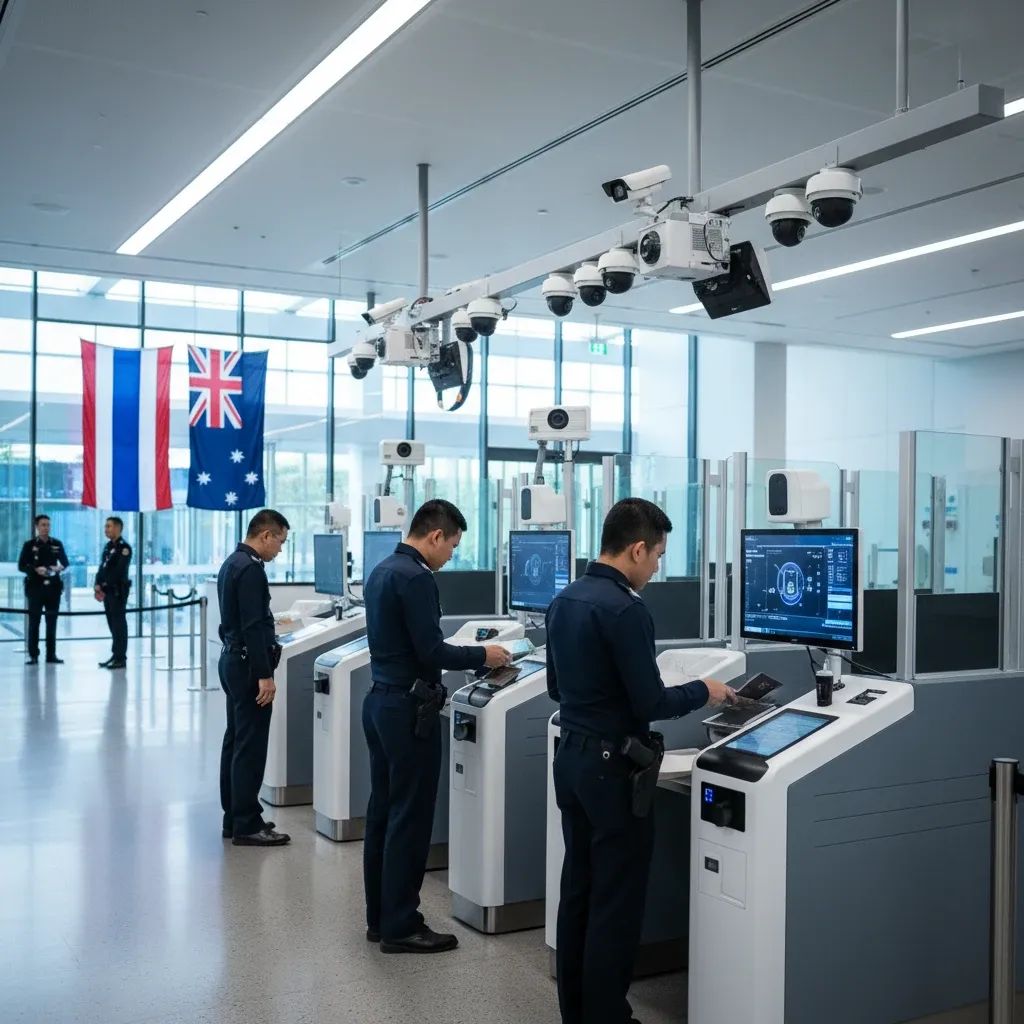
Thailand Immigration Police have captured a 69-year-old Chinese financier accused of orchestrating a 15.2 billion baht ($430 million) bank fraud scheme, ending a months-long manhunt that exposed how elite visa programs can become escape routes for wealthy fugitives. The arrest underscores Thailand's growing role as both a financial hub and a enforcement battleground for regional law enforcement cooperation.
Why This Matters
• Visa scrutiny intensifies: The case highlights vulnerabilities in Thailand's Privilege Visa program, which allowed a high-profile suspect to enter and hide despite an active international warrant.
• Extradition pathway clear: A 1999 bilateral treaty means Chen Tao will likely face Chinese prosecution within months, setting precedent for similar financial crime cases.
• Luxury condo alert: High-end Bangkok properties continue to attract fugitive capital, raising questions about landlord due diligence and regulatory oversight.
• Regional cooperation expands: The joint operation demonstrates how Thai and Chinese authorities are tightening collaboration on economic crime enforcement.
The Arrest Operation
Officers from Thailand's Immigration Bureau moved in on a condominium unit in Bangkok's Ramkhamhaeng district on May 8, apprehending Chen Tao after a coordinated investigation with Chinese counterparts. The Lanzhou Public Security Bureau had issued the original arrest warrant, identifying Chen as a operational leader in a sprawling fraud network centered on Lanzhou Bank.
Investigators discovered the suspect had rented the property under another person's name, a common tactic among fugitives seeking to obscure their movements. During the search, authorities recovered a Vanuatu passport, which Chen allegedly used after Chinese officials revoked his original travel documents. The secondary citizenship from the Pacific island nation provided him with a backup identity layer that complicated tracking efforts.
The Financial Crime Allegations
Chinese prosecutors allege Chen Tao played a central role in concealing and disguising assets obtained through criminal schemes linked to Lanzhou Bank. The financial institution suffered losses exceeding 3.2 billion yuan (roughly $430 million at current exchange rates), representing one of the more significant banking fraud cases to emerge from northwestern China in recent years.
Authorities describe Chen as more than a peripheral participant—investigators classify him as a key operational figure responsible for orchestrating the movement and transformation of illicit funds. The charges fall under China's expansive economic crime statutes, which carry severe penalties including lengthy prison terms and asset forfeiture.
For context, losses of this magnitude would be equivalent to approximately 210 months of minimum wage income for a typical Bangkok worker, illustrating the scale of the alleged fraud. The case also highlights how sophisticated financial criminals leverage international banking systems and multiple jurisdictions to distance themselves from their alleged offenses.
How He Evaded Detection
Chen Tao entered Thailand on November 11, 2025, using a Thailand Privilege 5-year visa—a premium residency program designed to attract wealthy foreigners through streamlined immigration processes. The visa requires substantial financial investment but offers extended stays without the bureaucratic friction of traditional visa renewals.
Once inside the country, Chen employed a methodical concealment strategy. He registered multiple residential addresses across Bangkok, creating a paper trail that obscured his actual location. Each registration provided temporary cover before he relocated, a pattern designed to frustrate surveillance efforts by both local authorities and international partners.
The investigation that ultimately located him required coordination between Thai Immigration Police and Chinese law enforcement agencies, who shared intelligence and tracked his movements through financial transactions and property records. The condominium where officers found him had been secured through a Thai national, adding another layer of separation between the suspect and official documentation.
What This Means for Residents
The arrest raises immediate questions about background screening in Thailand's elite visa programs. The Privilege Visa scheme, while economically beneficial for attracting wealthy long-term visitors, apparently lacks robust mechanisms to flag applicants with outstanding international warrants. Policymakers may face pressure to implement enhanced vetting procedures that cross-reference applicant data against Interpol databases and bilateral watch lists.
For landlords and property managers in Bangkok's luxury real estate sector, the case serves as a reminder of potential legal exposure. While property owners aren't typically liable for tenants' criminal histories, the pattern of fugitives hiding in high-end condominiums could trigger regulatory changes requiring more thorough tenant verification, particularly for units rented through intermediaries.
Residents should also note that Thailand's cooperation on financial crime extradition is expanding. The country has repatriated multiple Chinese nationals in recent months under the 1999 extradition treaty, which remains fully operational despite occasional diplomatic friction between the nations on other issues.
The Legal Path Forward
Chen Tao now faces a multi-step extradition process governed by Thailand's Extradition Act B.E. 2551 and the bilateral treaty framework. The Office of the Attorney General will review Chinese documentation to ensure legal sufficiency before forwarding the case to Thai Criminal Court for judicial examination.
Under treaty provisions, extraditable offenses must carry a minimum one-year prison sentence in both jurisdictions—a threshold Chen's alleged crimes clearly exceed. The court will evaluate whether the charges meet dual criminality standards and consider any grounds for refusal, including political motivation concerns or human rights risks.
Chinese prosecutors benefit from the rule of specialty, which permits prosecution only for the offenses specified in the extradition request. This legal safeguard prevents requesting countries from adding charges after a suspect's transfer, though it also limits the scope of potential prosecution.
Recent precedent suggests the process will move relatively quickly. A Chinese cybercrime suspect was extradited in April 2026, and courts upheld another high-profile case involving a cybercrime boss in November 2025. Unless Chen's legal team identifies procedural flaws or human rights concerns, extradition appears likely within a 6-8 month timeframe.
Regional Enforcement Trends
The capture fits a broader pattern of Southeast Asian nations increasing cooperation on transnational financial crime. Thailand's strategic position as a regional business hub makes it an attractive destination for fugitives with capital, but also creates pressure on authorities to demonstrate enforcement credibility.
For Thai officials, successful prosecutions and extraditions enhance the country's reputation with international financial institutions and trading partners. The government has repeatedly emphasized its commitment to combating money laundering and economic crime as part of broader efforts to maintain access to global financial systems and avoid gray-listing by international watchdog organizations.
The case also illustrates how secondary passports from Pacific island nations complicate enforcement efforts. Citizenship-by-investment programs in countries like Vanuatu provide legitimate travel documents that can obscure an individual's nationality and criminal background, creating headaches for immigration authorities worldwide.
Repatriation Timeline
Thai authorities have revoked Chen's permission to stay, formally designating him as a prohibited foreign national. Once judicial proceedings conclude—assuming no successful legal challenges—he will be transferred to Chinese custody under police escort. The Lanzhou Public Security Bureau will then assume jurisdiction, and prosecutors will move forward with formal charges under China's criminal code provisions governing fraud and money laundering.
The outcome will be closely watched by other fugitives currently hiding in Southeast Asian jurisdictions, as well as by law enforcement agencies seeking to strengthen regional cooperation on economic crime. For Bangkok's expatriate community, the arrest serves as a reminder that Thailand's reputation as a loose enforcement environment is evolving, particularly for suspects connected to major financial scandals.


