The Thai Baht tumbled to 33.640 per US dollar in July 2026—a 15-month low—as Thailand's trade account hemorrhaged dollars for oil imports, the Federal Reserve held rates well above Bangkok's policy floor, and Washington's new tariff threats chilled export confidence. Yet Thailand's $279B in foreign exchange reserves and revised GDP forecasts suggest the sell-off is a repricing of risk, not a currency crisis. This article analyzes economic conditions and projections for 2026, providing insights into how currency movements may affect Thailand's residents and those doing business in the country.
Why This Matters
• Imported inflation is rising: every 10-dollar jump in oil could shave 0.9% off GDP and force more dollar outflow.
• US rate advantage of 250–275 basis points over Thailand makes holding dollars structurally more attractive.
• The Fed's July 29 decision to hold rates at 3.50–3.75% removes any near-term catalyst for baht recovery.
• 12.5% US tariffs under Section 301 now threaten Thai goods, damping export receipts that once anchored the currency.
Five Forces Crushing the Baht
1. The Oil Bill That Won't Quit
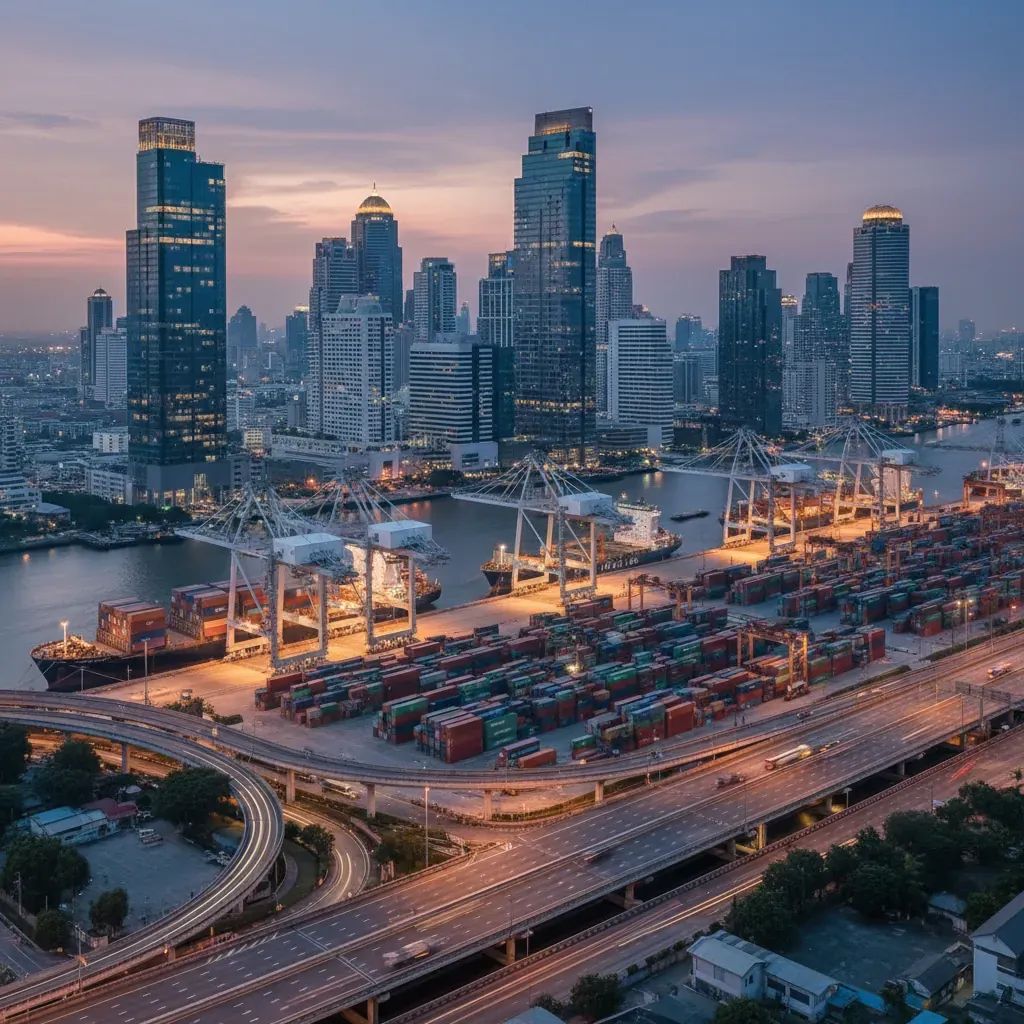
Thailand's April trade deficit hit a record $10B—the widest monthly gap ever—driven by a 169% surge in crude oil imports. Brent crude hovered near $88.50 a barrel through July, and Middle East tensions show no sign of abating. Because Thailand is a net importer, every cargo of diesel and jet fuel requires dollar settlement, draining foreign exchange faster than export receipts can replenish it. From January through May, the merchandise trade deficit reached THB 875.3B, with imports growing at more than double the pace of shipments abroad.
2. The Carry Trade Magnet
Washington's policy rate stands 250 to 275 basis points above the Bank of Thailand's 1.00% benchmark. That yawning gap makes dollar deposits, Treasuries, and US money-market funds far more lucrative than baht assets. Foreign portfolio managers have been rotating out of Thai equities and bonds, chasing yield in New York. The Fed's July 29 announcement—no change, five meetings running—cemented the structural advantage and removed any hope of convergence before year-end.
3. Trade in Reverse
Electronics, machinery, and automobiles still flow out of Thailand's ports, but imports are arriving even faster. Much of the surge reflects AI and data-center investments: servers, GPUs, and networking gear bound for manufacturing clusters that position Thailand as a regional tech hub. While that capital spending promises future export revenue, the immediate effect is a cumulative four-month deficit of nearly $19.5B and relentless demand for greenbacks to pay invoicing.
4. The Tariff Overhang
Washington imposed a 12.5% Section 301 tariff on Thai goods in early 2026, citing forced-labor concerns. Sixty economies face similar measures, but for Thailand the timing is brutal: exporters were counting on a rebound in US orders after a sluggish 2025. Instead, margins are squeezed and order books uncertain. Currency traders are marking down future baht demand because they expect fewer dollar receipts from American buyers.
5. A Current Account in Deficit
For years Thailand's current-account surplus acted as a natural currency prop. In 2026 that buffer vanished: the account swung to a deficit near $14B. Tourism is recovering—33 million foreign arrivals are forecast—but services income cannot offset the oil and capital-goods import surge. A deficit current account means net payments leave the country every quarter, a structural headwind no central bank can easily reverse.
What This Means for Residents
If you earn in baht and spend in baht, day-to-day price changes may feel muted—but imported goods are creeping higher. Fuel surcharges are embedding in logistics costs, lifting everything from food delivery to inter-provincial bus fares. Online shopping from Amazon, Lazada Global, or international retailers now costs more in baht terms, with the currency depreciation effectively adding 5% to imported product prices compared to January.
Expatriates remitting dollars or pounds enjoy better purchasing power: a dollar now buys 33.6 baht versus 32 at the start of the year. Conversely, Thai students studying abroad, medical tourists traveling for treatment, or businesses servicing dollar debt face a higher cost base. Headline inflation is running at 2.8 to 2.9%, driven largely by energy pass-through, so the baht's slide amplifies the pinch at the petrol pump and the electricity meter.
Investors holding Thai equities in foreign-currency terms have suffered a double hit: stock prices in baht may be flat, but converted back to dollars the portfolio has lost 5% on currency alone since January. On the upside, exporters with dollar receivables—hotels billing overseas travel agents, manufacturers invoicing in greenbacks—are seeing windfall baht revenue when they convert.
Central Bank Ammunition and the "No Crisis" Thesis
Thailand's foreign exchange reserves stood at $279.2B in June, slipping to $276B by late July. That is still among the largest war chests in Southeast Asia and roughly eight months of import cover—a comfortable margin by International Monetary Fund standards. The Bank of Thailand operates a managed float and has shown willingness to smooth excessive volatility; in December 2025 it tightened rules on large inbound foreign-currency flows to curb speculative "grey capital" that was whipsawing the baht.
Importantly, GDP growth forecasts have been revised upward. The Ministry of Finance now projects 2.5% expansion in 2026, up from an earlier 1.6%, citing stronger exports, private investment in tech sectors, and government stimulus. The Bank of Thailand sees 2.3%, while the World Bank and IMF sit at 1.6% and 1.9% respectively. Exports are forecast to climb 12.5% for the full year, a sharp upgrade from the initial 6.2% estimate, as global demand for electronics and autos rebounds. Private investment is expected to grow 9%, concentrated in "New S-Curve" industries—electric vehicles, robotics, medical devices.
These fundamentals distinguish a repricing from a rout. Reserves remain ample, growth is positive, and inflation—though elevated—is within the central bank's tolerance band. The baht is adjusting to a new equilibrium, not spiraling into a balance-of-payments emergency.
What Comes Next
Three catalysts could stabilize or reverse the baht's slide. First, oil prices: if Brent retreats below $80 and stays there, Thailand's import bill shrinks and the trade deficit narrows. Second, the interest-rate gap: any signal from the Federal Reserve that cuts will resume in late 2026 or early 2027 would narrow the carry advantage and draw capital back into emerging markets. Third, tariff resolution: a US–Thailand agreement to lift or phase out the 12.5% levy would restore export confidence and dollar inflows.
Conversely, downside risks linger. Persistent Middle East conflict could spike crude above $90. The Fed might tighten again if US inflation proves sticky. China's economy—Thailand's largest trading partner—remains fragile, and any deeper slowdown would hammer Thai exports. Domestically, household debt is elevated, SME credit access is constrained, and manufacturing competitiveness is eroding as Vietnam and Indonesia court the same foreign investors.
Currency forecasters are split. The Fiscal Policy Office expects the baht to average 32.5 per dollar for the full year, implying some recovery in the second half within a 32.0–33.0 range. Other models see a test of 35.91 by December if current pressures persist. The Bank of Thailand projects the current account will return to surplus in the fourth quarter as export momentum builds, which would ease dollar demand and support the currency.
The Bigger Picture
Thailand's baht weakness in 2026 is less a sign of economic collapse than a reflection of global monetary divergence and commodity-price shocks. The country is investing heavily in future growth—building data centers, upgrading ports, courting EV manufacturers—but those capital imports demand dollars today. Tourism is recovering but not fast enough to offset energy costs. The central bank retains policy space and reserve firepower, and GDP is expanding, albeit modestly.
For residents, the message is nuanced: prepare for higher imported-goods prices and factor currency risk into any cross-border financial decision. For investors, the baht's slide has created cheaper entry points into Thai assets—provided you believe the growth upgrades and expect oil prices to moderate. And for policymakers, the challenge is clear: accelerate export diversification, manage household debt, and keep one eye on Washington and the other on the oil market. The baht may be weak, but Thailand's financial plumbing remains sound.