
Why This Matters
• Late-night safety concern: A stabbing incident on April 2 at a Pattaya construction camp underscores risks associated with alcohol consumption in worker communities.
• Pattern of incidents: At least one prior significant clash occurred on March 16 involving multiple migrant workers, suggesting alcohol-fueled confrontations occur periodically in Pattaya's labor zones.
• Migrant worker vulnerability: Construction workers in Pattaya, many from Cambodia and Myanmar, often lack access to formal conflict mediation or mental health support when violence occurs.
• Tourism district implications: Violence in worker zones can affect the public spaces and safety reputation that matter to residents and visitors.
The Recent Incidents: A Pattern Emerges
On April 2, a 40-year-old Cambodian laborer suffered multiple stab wounds during an evening in a construction camp on Jomtien Second Road. The attack reflects a recurring scenario: after-work drinking, existing tensions, and alcohol acting as an accelerant that turns disagreement into violence.
The attacker remains at large, but the incident follows a familiar pattern. Three weeks earlier, on March 16, a more dramatic version unfolded when more than 20 migrant workers—primarily from Myanmar and Cambodia—clashed on Walking Street, one of Pattaya's most visible commercial corridors. Police detained 9 individuals and seized multiple bladed weapons. Eyewitness accounts traced the brawl to accumulated ethnic tensions and personal feuds, all influenced by alcohol.
These two incidents suggest a pattern worth understanding: when large numbers of workers live in close quarters with limited leisure alternatives, alcohol becomes a primary social outlet. In this environment, tensions escalate more readily.
The Underlying Conditions: Construction, Isolation, and Informal Alcohol Sales
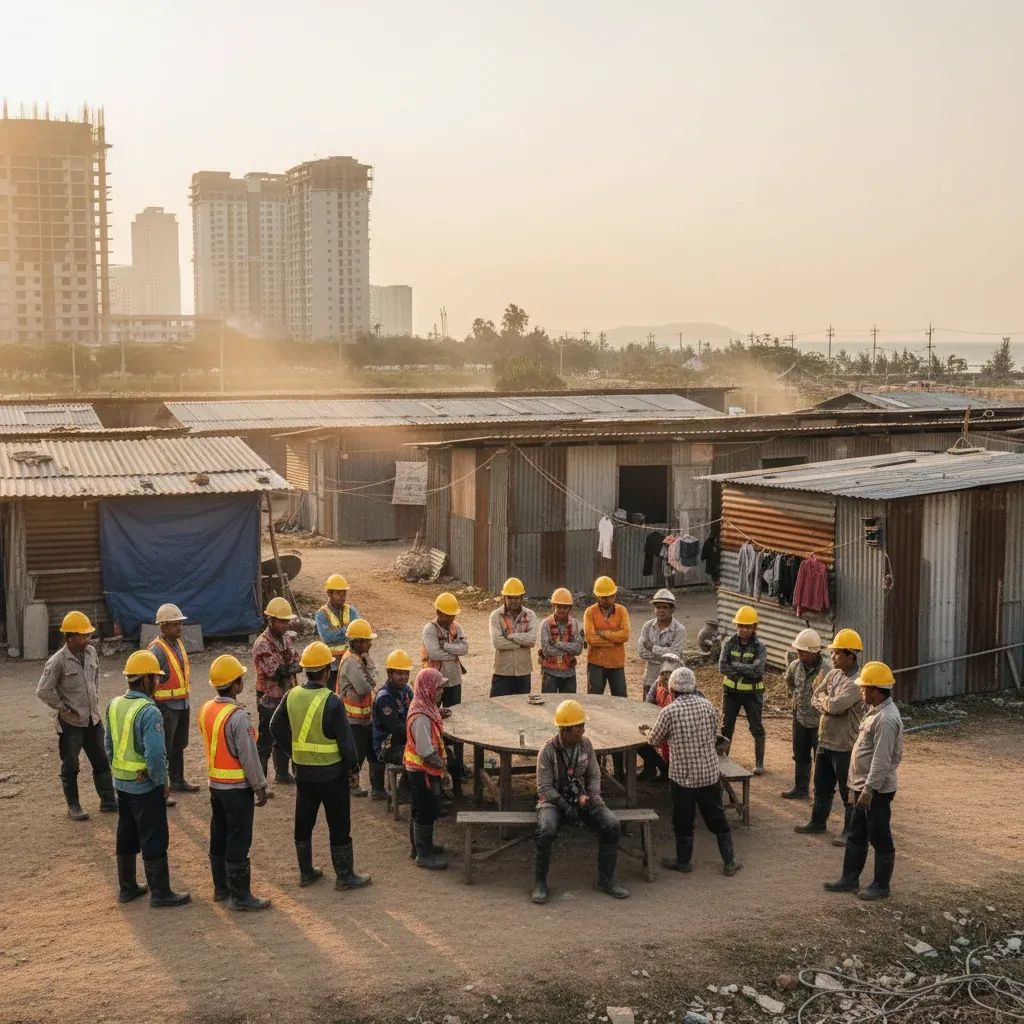
Pattaya's construction sector depends heavily on migrant labor from Cambodia and Myanmar. The industry creates conditions that concentrate risk: long workdays, segregated living quarters, minimal supervision during off-hours, and informal drinking cultures within worker communities.
A distinctive feature is the informal alcohol supply chain. Unlicensed vendors—often workers themselves—distribute spirits and beer directly to camps, operating outside formal retail oversight. A laborer can purchase alcohol at a camp with minimal regulatory supervision, bypassing sales restrictions that took effect in November 2025 at licensed establishments.
Thailand's Alcoholic Beverage Control Act introduced stricter rules on advertising, banned sales during certain hours, and increased penalties for violations. However, enforcement focuses primarily on licensed retailers downtown. These restrictions have minimal impact on informal distribution networks operating within worker camps.
The Migrant Worker Reality: Limited Support Systems
Most migrant workers arrived through semi-formal or informal channels. Housing is typically crowded, holding 8 to 12 workers per room. Language barriers prevent many from accessing legal information or formal complaint mechanisms. Mental health support is essentially absent. When conflict does occur, informal resolution through camp managers or senior workers is the only available pathway.
The Chonburi Immigration Office has intensified enforcement sweeps in recent months, partly in response to public pressure following high-profile clashes. However, these enforcement actions address symptom-level concerns rather than root causes.
Observers consistently point to a pattern: isolated workers without family, limited income, and few safe leisure alternatives develop heavy drinking habits as a coping mechanism. The combination of isolation, stress, and historical ethnic tensions (sometimes between different worker groups) creates a volatile baseline where any trigger—a debt dispute, personal jealousy, or prior quarrel—can escalate into violence.
What This Means for Residents and Businesses
For people living and working in Pattaya, late-night circulation near worker camps now warrants caution. The density of informal alcohol consumption, combined with volatile social dynamics, means confrontations can escalate rapidly. Practical safety measures include maintaining distance from alcohol-fueled gatherings after dusk, alerting police rather than intervening, and avoiding areas known for informal drinking activity, particularly on paydays and weekends.
For businesses operating in Pattaya—hotels, restaurants, and construction firms—worker safety represents both a moral and economic concern. The Tourism Authority of Thailand announced its 2026 strategy emphasizing "quality over volume" and family-friendly positioning. Worker violence in visible areas undermines this carefully crafted destination image and generates negative international coverage.
Construction companies with large worker camps could reduce incidents through voluntary measures: conflict-resolution services, basic health support, and clear codes of conduct around drinking. These investments reduce legal liability, lower insurance exposure, and improve workforce retention.
Current Gaps in Support Infrastructure
Despite documented alcohol-related violence in Pattaya's labor communities, the city lacks comprehensive prevention initiatives specifically targeting construction workers and migrant populations. The One-Stop Service Centers for migrant workers, operated by the Ministry of Labour, provide essential but limited services: work permit registration, health screening, basic orientation. They do not offer conflict mediation, substance-abuse counseling, or mental health support.
No employer-mandated mediation mechanism exists. No specialized community policing unit bridges language barriers between Thai law enforcement and migrant communities. The infrastructure to prevent violence before it escalates remains absent.
What Residents Should Know
The stabbing on April 2 and the brawl on March 16 highlight real but manageable risks in Pattaya's worker zones. These incidents are serious and warrant police response, but they occur within a contained environment—construction camps and specific commercial areas—not throughout the city.
Residents and business operators should remain aware that informal drinking cultures in worker communities can generate occasional violence. Practical vigilance around these specific areas during late hours is appropriate. Reporting suspicious activity or potential violence to police promptly is the most effective resident response.
For the broader community, these incidents signal a need for better support systems within worker communities: access to mediation before tensions escalate, mental health resources, and more consistent enforcement of existing alcohol regulations in informal zones.
The path forward requires sustained attention from employers, law enforcement, and local authorities—not just responding to incidents after they occur, but building prevention infrastructure that addresses underlying conditions.


