
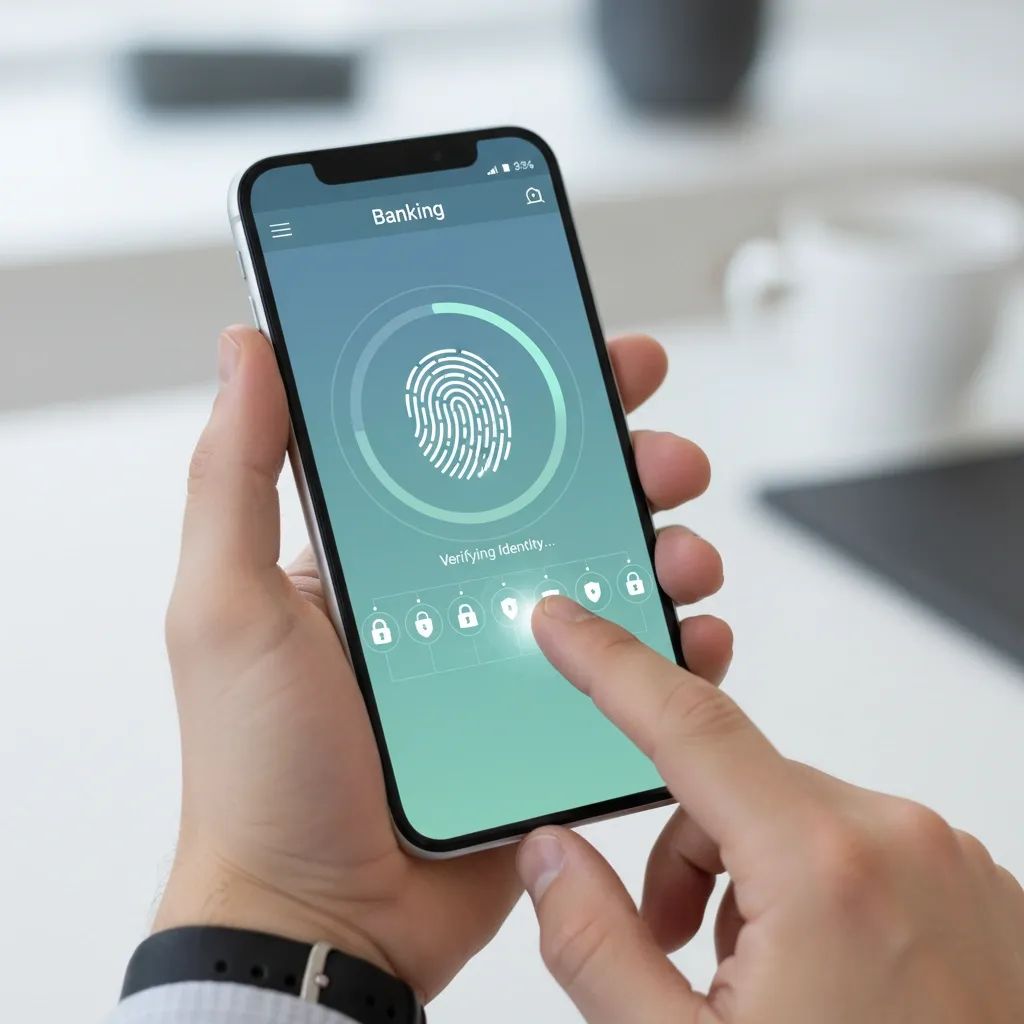
Singapore banks are confronting an unprecedented wave of fraud that is now spilling across borders and affecting customers throughout Southeast Asia, including those banking with Singaporean institutions from Thailand. A survey released in July 2026 found that 91% of banking executives in Singapore report daily increases in fraud attempts—a rate that exceeds both regional and global averages and signals heightened risk for anyone holding accounts or conducting transactions through Singaporean financial institutions.
For Thailand-based residents and expats, this surge represents a particular concern. Many maintain accounts with Singapore banks to facilitate international business operations, manage regional investment portfolios, and handle cross-border transactions. The limited reimbursement protections and evolving nature of fraud means that victims in Thailand may face compounded challenges in seeking recourse across borders.
Why This Matters
• Financial exposure is climbing: 75% of Singapore bank leaders reported rising fraud losses in 2026, outpacing the 67% regional average and 60% global figure.
• Limited reimbursement: Only 27% of Singaporean banks reimburse more than half of scam-related losses, far below the 44% global average. Just 1% cover between 76% and 100% of losses.
• Social engineering dominates: Over half of compliance professionals ranked social engineering scams—manipulative tactics that trick customers into authorizing fraudulent payments—as the top threat.
• Cross-border implications: Expats and business owners in Thailand with Singapore banking relationships face potential exposure, particularly those conducting regular international transfers or managing investment portfolios.
The Scale of the Problem
Singapore's fraud losses reached S$734 million (US$573 million) in 2025, according to the Nasdaq Global Financial Crime Report 2026. The report breaks down 2025 losses into S$423M from consumer and business scams, S$311M from unauthorized bank fraud, and S$324M from elder victim fraud. Early 2026 data suggests the trajectory is worsening, with fraud attempts continuing to escalate across all major banking channels.
The Nasdaq Global Financial Crime Report 2026 reveals the persistent and evolving nature of financial crime in one of Asia's most sophisticated banking hubs. Investment scams, fake friend calls, impersonation of institutions, and e-commerce fraud continue to proliferate, affecting not only Singapore residents but also expats holding accounts from abroad.
What alarms fraud experts most is not just the volume but the sophistication of attacks. The BioCatch survey—polling 100 fraud-management, anti-money laundering (AML), and compliance leaders at Singaporean banks—found that financial institutions in Singapore are now more worried about direct financial risk than reputational damage, a distinction shared by only two other countries in the 12-nation study.
How AI is Fueling the Surge
Artificial intelligence has become the accelerant behind 2026's fraud epidemic. An earlier survey across the Asia Pacific found that 86% of financial institutions believe AI tools have increased the sophistication of fraud schemes, while 81% reported year-over-year increases in fraud attempts and 78% experienced growth in losses.
Attackers are deploying AI to craft hyper-realistic phishing messages, generate deepfake audio and video to impersonate senior executives, and automate vulnerability scanning at unprecedented scale.
Deepfakes represent a particularly insidious new vector. Fraudsters have successfully impersonated C-suite executives to authorize wire transfers, and the technology is now sufficiently advanced that even trained compliance officers struggle to detect manipulated video calls in real time.
What This Means for Residents and Expats
For anyone in Thailand maintaining accounts with DBS, UOB, OCBC, Standard Chartered, or GXS—Singapore's five major retail and digital banks—the risk profile has changed. Authorized push payment (APP) scams, which 42% of banking leaders consider their most substantial challenge, involve customers being manipulated into initiating transfers themselves, often under time pressure or emotional duress.
Common scenarios include:
• Fake notifications claiming your account has been compromised, with instructions to transfer funds to a "safe" account.
• Investment opportunities promoted via WhatsApp or Telegram, promising returns that require immediate wire transfers.
• Impersonation of government agencies or educational institutions demanding urgent payment.
• Romance or friendship scams that gradually build trust before requesting financial assistance.
The limited reimbursement practices in Singapore mean that victims often bear the majority of losses themselves. Unlike jurisdictions with mandatory compensation frameworks, Singaporean banks retain significant discretion over refund decisions, and the survey data suggests most institutions cover less than half of scam-related losses.
The Defense: Technology and Collaboration
The Monetary Authority of Singapore (MAS) and Singapore Police Force have responded with a multi-pronged strategy that combines regulatory pressure, technological innovation, and cross-border information sharing. Between January and February 2026, the Anti-Scam Centre (ASC) worked with the five major banks to foil over 300 scam attempts and prevent approximately S$24M in losses through rapid SMS alerts and real-time data exchange.
A groundbreaking AI/ML Proof-of-Value initiative launched by MAS pools historical transaction data across banks to identify higher-risk transactions and accounts before fraud occurs. By analyzing patterns across institutions, the system can flag anomalies that single-bank models might miss.
Behavioral biometrics—technology that analyzes keystroke dynamics, mouse movements, and interaction patterns—is gaining traction as a defense. While 36% of Singaporean banks have already deployed these solutions, 75% of those without the technology are actively evaluating it for 2026-2027 implementation.
Other measures include:
• Fund locks and transaction delays: Some banks now hold high-risk transactions for 24 hours or reject them outright if an account shows signs of rapid drainage.
• Enhanced multi-factor authentication (MFA): Singapore is phasing out the use of National Registration Identity Card (NRIC) numbers for authentication by the end of 2026, forcing institutions to adopt stronger alternatives.
• Deepfake detection protocols: Following special information papers issued by MAS in 2025 and 2026, banks are implementing robust identity verification procedures and behavioral safeguards specifically designed to counter generative AI threats.
• Customer education campaigns: The "ACT" framework—Add security features, Check for signs, Tell the authorities—encourages adoption of the ScamShield app, two-factor authentication, and immediate reporting.
Banks have also ceased sending clickable links via SMS and advise customers to only use official apps and never share one-time passwords (OTPs) or PINs under any circumstances.
Enforcement and Accountability
The regulatory response extends beyond prevention. In July 2025, MAS imposed composition penalties totaling S$27.45M on nine financial institutions for breaches of anti-money laundering and countering the financing of terrorism (AML/CFT) requirements tied to a major money laundering case from August 2023. In Q1 2026, MAS issued prohibition orders against individuals convicted of fraud and money laundering offenses, signaling zero tolerance for internal misconduct.
Financial crime enforcement remains a top priority, with sustained focus on strengthening the AML framework and introducing new legislation to address emerging fraud risks. MAS has also elevated technology risk management to board-level accountability, requiring cybersecurity to be treated as a core business strategy rather than an IT afterthought.
Practical Steps for Account Holders
For Thailand-based residents and expats banking with Singaporean institutions, taking immediate security action is especially critical given the distance from your bank and potential complications in cross-border fraud resolution:
• Enable all available security features, including biometric login, transaction alerts, and fund locks.
• Verify requests independently: If contacted by someone claiming to represent your bank or a government agency, hang up and call the institution directly using a number from their official website.
• Be skeptical of urgency: Legitimate institutions rarely demand immediate action without providing time for verification.
• Monitor account activity daily: Set up real-time transaction alerts and review statements for unauthorized activity.
• Report suspicious contact immediately: Use official reporting channels—Singapore Police Force hotline at 1800-255-0000 or the ScamShield app—rather than engaging with suspected fraudsters.
The convergence of AI-driven attacks, cross-border financial flows, and limited reimbursement policies creates a challenging environment for customers. While Singapore's regulatory framework and technological defenses are among the most advanced in Asia, the fraud ecosystem is evolving faster than institutional safeguards can fully contain. For anyone with financial exposure to Singapore's banking system, vigilance has become a daily necessity.


