
The Thailand Food Safety Department has dispatched extra teams to Koh Samui after a foreign visitor was filmed plucking ice cubes from her drink with bare hands, a move that has triggered stricter hygiene audits and could drive up compliance costs for beach-side eateries.
Key Takeaways
• ฿100,000 maximum fine under the Food Act for contaminated ice or improper handling.
• Public Health Ministry standards require zero E. coli and under 2.2 coliform per 100 ml in commercial ice.
• ฿310 M upgrade in Phuket City Municipality’s waterworks rolls out UV disinfection and activated-carbon filters.
• Order mai sai nam-khaeng (no ice) or sealed bagged ice to sidestep hygiene risks.
An Unexpected Hygiene Wake-Up Call on Koh Samui
A TikTok video by @2brunesenasie captured a guest at a Koh Samui restaurant dipping her bare fingers into a glass to fish out ice, captioned in French as an unmistakable jab at Thailand’s resort norms. Comments poured in—locals chided her for skipping the simple “no ice” request, while health advocates warned that bare hands can introduce Staphylococcus or norovirus more readily than factory-made cubes. In response, the Koh Samui City Municipality Food Safety Office confirmed it will increase spot checks at beachfront bars through the end of high season.
Navigating Thailand’s Ice Standards
Under Public Health Ministry Notification 78 (1984), all edible ice must match drinking-water quality: free of E. coli, low in coliform bacteria, and made from potable water. Ice factories and in-house makers must:
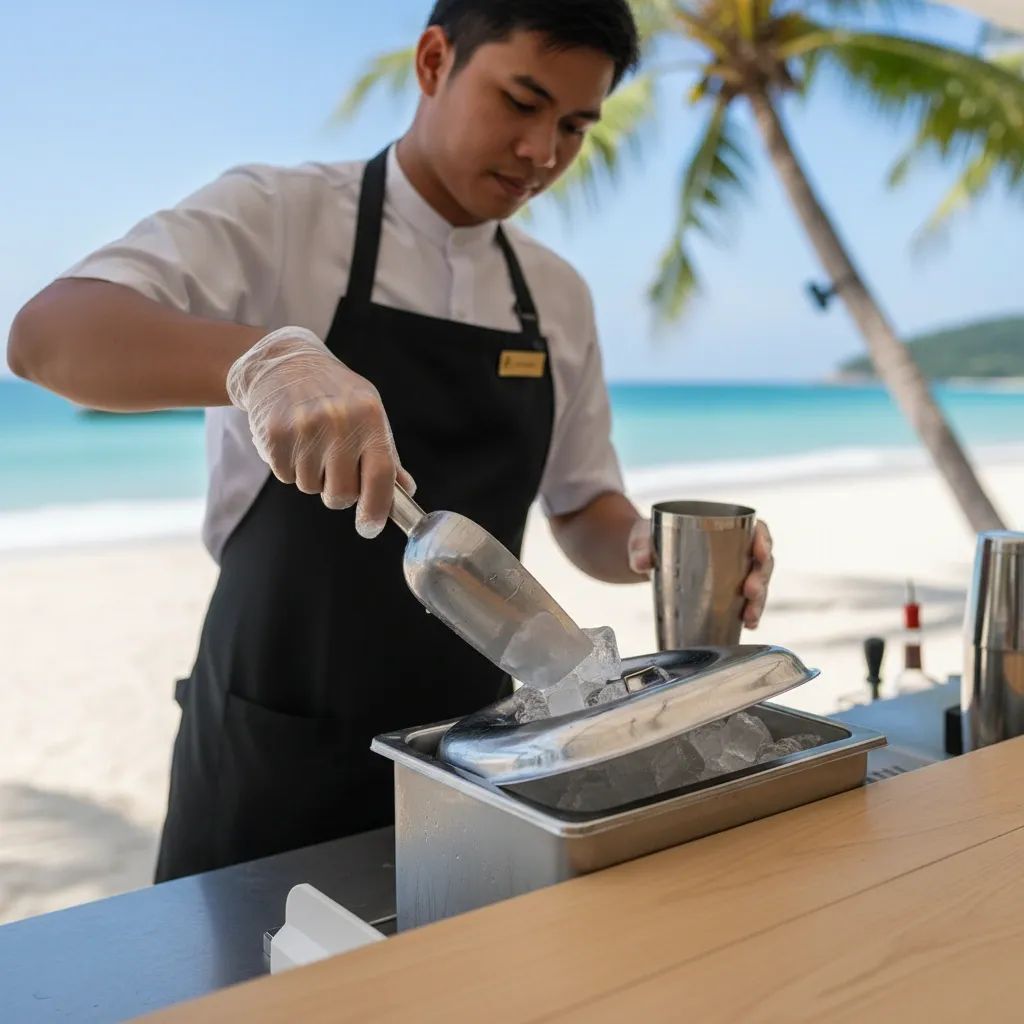
• Use dedicated, sanitised scoops and store cubes in covered containers at least 60 cm above floor level.
• Maintain daily cleaning logs for machines and bins to prevent biofilm buildup.
• Record residual chlorine levels at production points when distributing to restaurants.
Inspectors from the Thailand Department of Disease Control note that while only 6% of foodborne illness clusters in 2025 involved ice, lapses in storage hygiene create the perception of risk that dents tourism confidence.
Financial & Operational Ripples for Local Vendors
With fines climbing to ฿50,000 per violation and potential licence suspensions for repeat offences, small bars face new pressures. Venue owners on Samui are now:
• Displaying food-safety certificates at cashier counters.
• Offering sealed bagged ice at ฿8/kg rather than standard tray cubes.
• Training staff in multilingual service—English, Mandarin, French—to propose mai sai nam-khaeng effortlessly.
According to a local hospitality association, a single 1-star review mentioning “dirty ice” can slice 10% off monthly revenue, making proactive hygiene measures a direct contributor to the bottom line.
Upgrading Phuket’s Tap Water Network
While Koh Samui contends with ice controversies, the Phuket City Municipality Waterworks Division is racing to finish a ฿310 M retrofit of its distribution system by late 2026. Key components include:
• Activated-carbon filtration to remove organic contaminants and chlorine by-products.
• UV disinfection units at pumping stations to neutralise bacteria and viruses.
• Continuous real-time monitoring of turbidity and microbial counts, ensuring compliance with Department of Health thresholds.
Deputy Mayor Suphot La-ongphet points out that once operational, hotels could cut bottled-water costs by ฿25,000 per room annually, savings likely passed on to guests through lower mini-bar prices or upgraded amenities.
What This Means for Residents
Local consumers and workers stand to gain from these shifts:
• Ask for factory-sealed ice or no-ice options to reduce gastric upset from accidental contamination.
• Look for sanitised scoop stations—a stainless-steel utensil indicates better practices than an ad-hoc ladle or cup.
• Hospitality staff should display hygiene certificates prominently and offer ice service in discrete, covered bins.
• Monitor the rollout of tap-water upgrades in Phuket: once certified safe, residents can brush teeth or fill bottles straight from their taps, trimming household spending on bottled drinks.
These measures underscore a broader push by Thailand’s authorities to align tourism-sector hygiene with international expectations, keeping both stomachs and reputations intact.


