
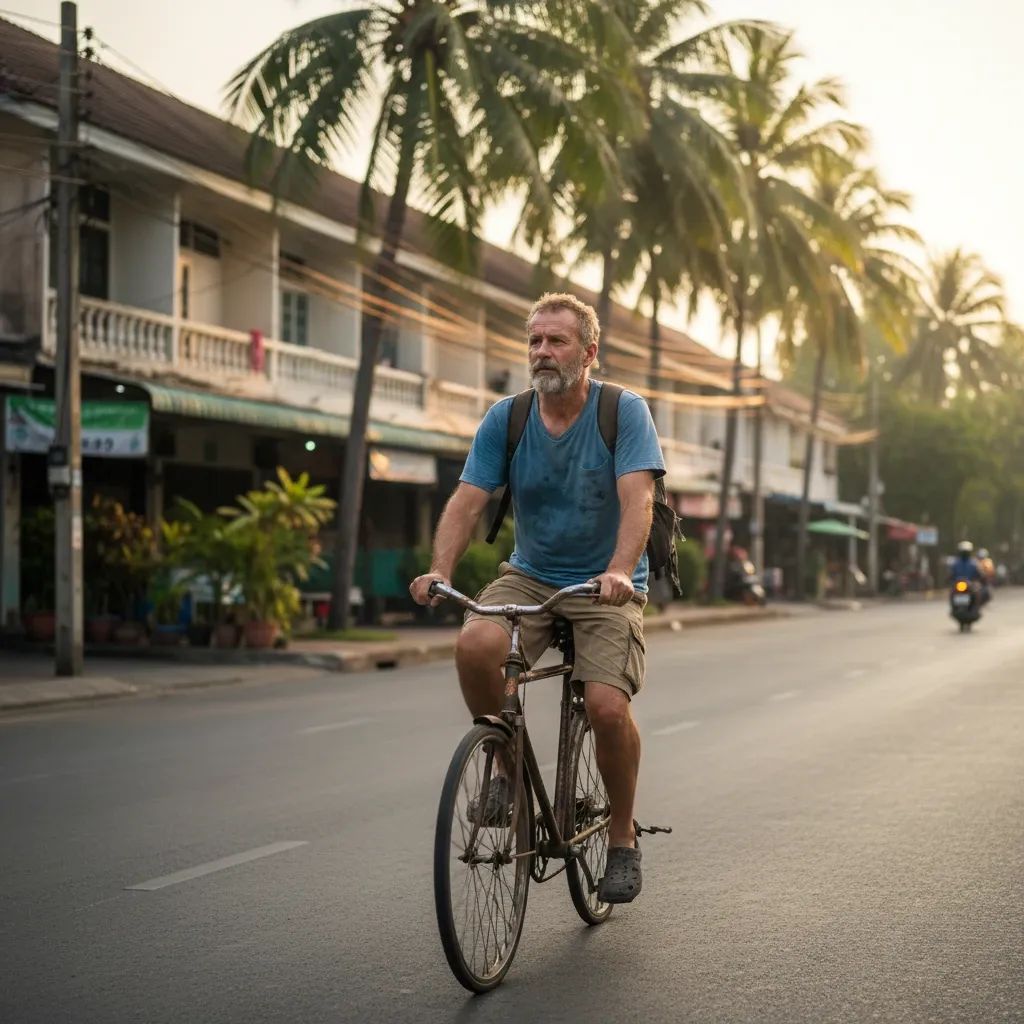
The Tourism Authority of Thailand (TAT) celebrates Pattaya as a premier beach destination, yet the city is facing a sharp backlash from long-term international visitors as living costs surge to levels more commonly associated with affluent Asian capitals—yet wages and service standards remain static or declining. The disconnect is reshaping the city's reputation among expatriates and repeat tourists who once viewed the coastal resort as a reliable, budget-friendly escape.
Key Cost Takeaways for Residents
| Category | Pattaya | Bangkok | Chiang Mai | Da Nang (Vietnam) ||----------|---------|---------|-----------|-------------------|| Hotel (budget) | $36/night | $30/night | $25/night | $20/night || Mid-range meal | 500 baht | 400 baht | 300 baht | 200 baht || Monthly rent (studio) | 12,000–18,000 baht | 15,000–22,000 baht | 6,000–8,000 baht | 4,000–6,000 baht || Daily tourist budget | 1,177–3,729 baht | 1,000–3,000 baht | 800–2,500 baht | 700–2,200 baht |
Why This Matters
• Price-Value Gap: Hotel rooms near Beach Road now average 1,300 baht ($36) per night for basic accommodation, while mid-range restaurant meals hit 500 baht—pricing that rivals destinations with double or triple the local wage.
• Labor Economics: Tourism sector employees in Pattaya earn roughly 300–400 baht per day, yet some international fast-food chains charge more than their counterparts in Western cities where hourly wages exceed daily pay in Thailand.
• Tourist Flight Risk: Visitor numbers from China—once 15,000–20,000 daily pre-pandemic—have crashed to 5,000 as of April this year, with travelers citing cost inflation and safety concerns.
The Wage-Price Disconnect Widens
Frustration among foreign visitors centers on what many describe as a fundamental imbalance: Pattaya's cost structure is edging closer to metropolitan norms without the accompanying rise in purchasing power or quality. A standard three-course dinner for two at a mid-tier restaurant runs approximately 988 baht, while roadside Thai dishes—once emblematic of Thailand's value proposition—now start at 50–100 baht per plate.
The disconnect is particularly stark for service workers. The Thailand Ministry of Labour raised the minimum daily wage to 400 baht for certain sectors effective January 1, 2025, including 4-star and higher hotels with 50+ employees. Yet many tourism workers—servers, cleaners, drivers—remain near the bottom of that scale, earning between 10,000–15,000 baht monthly ($280–$420), according to industry surveys.
Foreign residents point to fast-food outlets as a flashpoint. Meals at international chains in Pattaya occasionally exceed prices in North America or Europe, where hourly wages average $15–$20 compared to Thailand's daily rate of roughly $11. The perception of being overcharged in a developing economy has soured sentiment among price-conscious travelers.
What This Means for Residents and Investors
For expatriates and property investors, the cost escalation is triggering strategic recalibrations. Some long-term residents report abandoning plans to purchase condominiums in Pattaya, citing fears that rising operating costs—electricity, maintenance fees, property taxes—will outpace any capital appreciation.
Monthly living expenses for a single person in Pattaya now range from:
• 25,000–35,000 baht for a frugal lifestyle
• 35,000–50,000 baht for moderate comfort
• 50,000–80,000+ baht for a Western standard of living
The Thailand Revenue Department data shows rental yields in Pattaya have stagnated around 4–5% annually, well below the 7–8% seen in emerging beach markets like Da Nang, Vietnam, or Sihanoukville, Cambodia. This has pushed some foreign buyers to redirect capital toward Chiang Mai, where studio apartments in residential neighborhoods cost 6,000–8,000 baht monthly, or even out of Thailand entirely.
Regional Competition Intensifies
Pattaya's pricing squeeze coincides with external headwinds that are siphoning off visitor volume. Middle East conflicts have driven global oil prices higher, raising airline ticket costs and operational expenses for hotels dependent on diesel generators and air conditioning. A weaker Thai baht—down against the US dollar in early 2026—has made inbound travel marginally more expensive for Western tourists, though it benefits those earning in stronger currencies.
Yet the most acute challenge comes from regional rivals. Vietnam has emerged as a formidable alternative, offering coastal resorts with comparable infrastructure at 20–30% lower costs. Chiang Mai in northern Thailand continues to lure digital nomads and retirees with its combination of cultural depth, cooler climate, and affordability: hotel rates average 98 USD ($3,400 baht) per night compared to Pattaya's 117 USD ($4,100 baht) in peak season.
Chinese tourists—historically Pattaya's largest single demographic—have pulled back dramatically. Negative portrayals in films like No More Bets, which depicted Southeast Asia as a hub for kidnapping syndicates, combined with high-profile crime incidents, have dented confidence. The Tourism Authority of Thailand is targeting 36.7 million international arrivals in 2026, but analysts warn that Pattaya's share is shrinking as travelers opt for Phuket, Koh Samui, or islands like Koh Lipe and Koh Chang, where the trade-off between price and experience feels more equitable.
The Operator's Dilemma
Business owners are caught in a vise. The minimum wage hike added approximately 12–18% to labor costs for hotels and restaurants, according to the Pattaya Business and Tourism Association. Energy bills have risen in tandem with global fuel prices, and many establishments also face mandatory service charges and 7% VAT, which inflate final bills beyond advertised menu prices.
Smaller operators—guesthouses, family-run eateries, independent tour agencies—report the thinnest margins. A mid-tier hotel paying 15,000–25,000 baht monthly per front-desk employee, plus utilities and maintenance, has little room to absorb cost shocks without passing them to guests. Larger chains have responded with dynamic pricing and loyalty schemes, but that strategy alienates walk-in travelers seeking spontaneous deals.
Some entrepreneurs argue that foreign complaints overlook the reality of Thailand's economic structure: wages reflect local purchasing power, and tourists who find Pattaya expensive are free to choose cheaper destinations. Yet that retort ignores a critical truth—Pattaya's growth was built on its reputation as an accessible playground for middle-income travelers. If that niche erodes, the city risks being squeezed between low-cost backpacker hubs and high-end resorts, satisfying neither.
Infrastructure Bets and Policy Responses
The Eastern Economic Corridor (EEC) high-speed rail project, linking Suvarnabhumi, Don Mueang, and U-Tapao airports, is slated for completion in 2026. Proponents believe improved connectivity will unlock a new tier of business travelers and upscale tourists willing to pay premium rates. Critics counter that infrastructure alone cannot resolve the value-perception gap if service quality lags.
The Thailand Ministry of Tourism and Sports has urged local governments to enhance safety measures—Pattaya recently installed additional CCTV cameras in nightlife zones—and to crack down on taxi scams and gem shop rackets that tarnish the city's image. Yet enforcement remains patchy, and visitors continue to report overcharging and aggressive sales tactics.
Industry groups have petitioned for low-interest loans and subsidized electricity tariffs to ease cost pressures, but fiscal constraints limit the government's ability to intervene. Meanwhile, air quality concerns—PM2.5 levels spike in February and March during Thailand's burning season—add another deterrent for health-conscious travelers.
A Crossroads for Pattaya's Identity
Pattaya faces an existential question: Can a destination sustain growth when its costs converge with wealthier markets but its service standards and wages do not? International visitors are voting with their itineraries. The number of tourists vanishing daily could reach 10,000–20,000 if current trends persist, translating to billions of baht in lost revenue annually.
For residents—whether retirees on fixed incomes, digital nomads, or Thai families from Bangkok seeking weekend escapes—the calculus is shifting. Pattaya's beaches, nightlife, and proximity to the capital remain assets, but they are no longer sufficient to justify a cost structure that outpaces regional peers.
The city's hoteliers, restaurateurs, and policymakers face a stark choice: recalibrate pricing and quality to restore competitiveness, or cede market share to destinations that offer clearer value. The outcome will determine whether Pattaya reclaims its place as Thailand's accessible seaside gateway or drifts into a no-man's-land of middling prices and fading appeal.


