
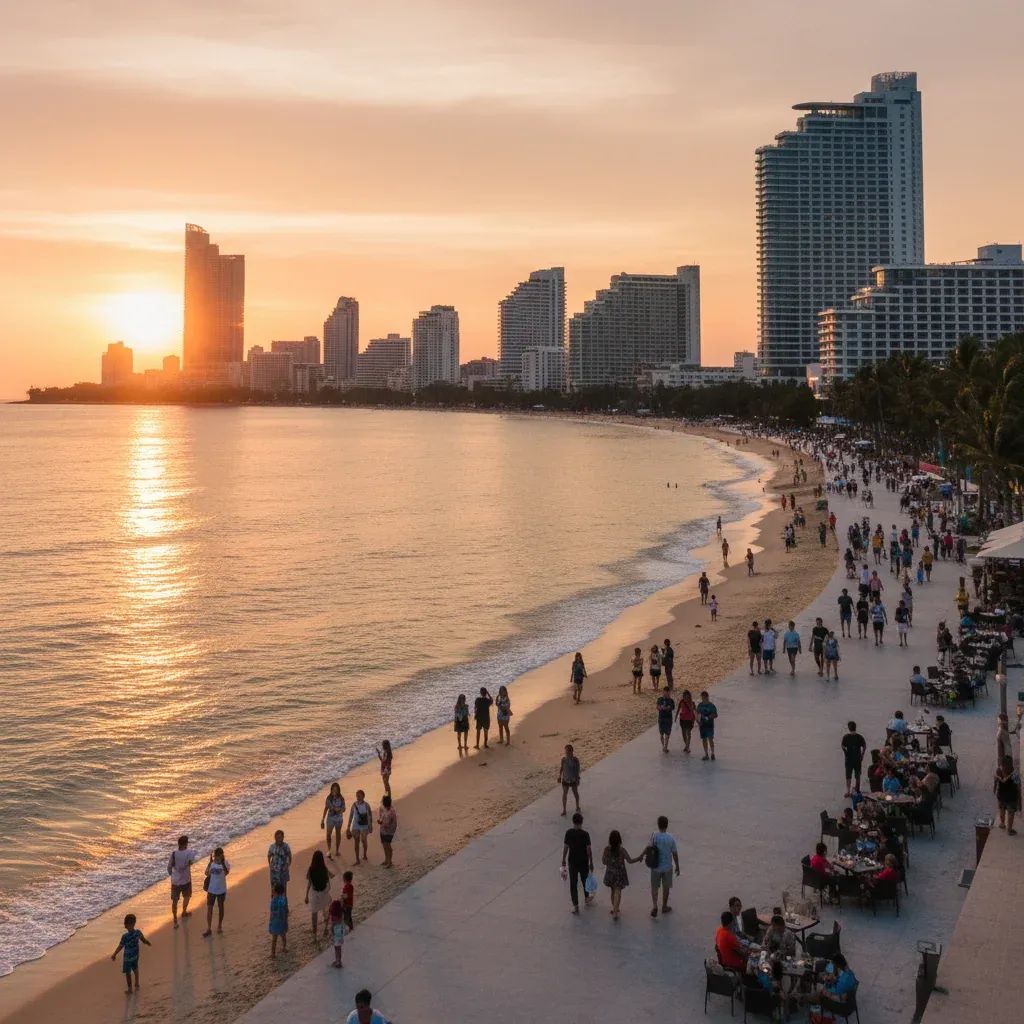
For many foreigners, Pattaya has become more than a beach destination—it's a refuge. They are fleeing frozen winters in Northern Europe, wars in Eastern Europe and the Middle East, economic instability, and the isolation of expensive Western cities. The coastal city has quietly transformed into a haven for a new generation of expats seeking affordable warmth, a simpler pace of life, and a place where personal history matters less than the present moment.
The Thailand Tourism Authority expects 35 million foreign arrivals in 2026, yet recent data reveals that many visitors are not passing through—they are staying. These are not traditional tourists chasing a two-week tan. They range from retirees on fixed pensions to digital nomads earning foreign salaries, all seeking what Pattaya offers: distance from their old lives and the space to begin again.
Why This Matters
• Expat population in Pattaya ranges between 40,000 and 70,000 residents holding long-term visas or staying seasonally, with unofficial estimates during high season exceeding 60,000.
• The Thailand baht has strengthened, and prices are rising, gradually eroding the city's traditional affordability advantage for expats and retirees.
• Visa policies remain inconsistent, creating uncertainty for digital nomads, retirees, and remote workers trying to establish stability in Thailand.
• Social friction between locals and foreigners is mounting as the city grapples with rapid change, though authorities are deploying community policing initiatives to address concerns.
A Shifting Demographic
Pattaya has long attracted retirees from the UK, Germany, and Scandinavia seeking low-cost warmth. But the demographic is shifting dramatically. Russian nationals began arriving in larger numbers following the outbreak of the Russia-Ukraine conflict, viewing the city as a safer haven amid geopolitical turbulence. Meanwhile, digital nomads and remote workers—many holding foreign salaries while benefiting from favorable exchange rates—are choosing extended stays over short vacations. Chinese, Indian, and South Korean nationals now form a growing portion of long-term residents, attracted by proximity, business opportunities, and improved connectivity.
The shift reflects a broader reality: for those escaping, Pattaya represents accessible refuge.
What Draws Them to the Coast
For many, the appeal is straightforward: Pattaya offers over 70,000 hotel rooms, cheap rentals, English-speaking locals, international hospitals, and high-speed internet. The city sits less than two hours from Bangkok, making visa runs and transit relatively painless. Year-round access to beaches, golf courses, water sports, and a vibrant nightlife scene makes extended stays practical and enjoyable.
The nightlife remains central to Pattaya's identity and appeal. After dark, entertainment districts light up in neon. Agogo bars are fixtures, where performers dance under colored lights and conversations flow easily between strangers. For many—retirees, solo travelers, and seasonal expats—this environment offers a sense of freedom and belonging. The scene is energetic and unvarnished, a space where personal history matters less than the rhythm of the evening, where loneliness fades under the hum of live music and shared drinks with people from across the world.
Yet this same reputation brings complications. The Thailand Ministry of Tourism and Sports has launched initiatives to rebrand Pattaya as a family-friendly destination, promoting micro-travel experiences, cleaner beaches, and eco-tourism. But the city's identity remains tied to its past, and efforts to reshape that image clash with the realities of Walking Street and Soi Buakhao, where public drunkenness, aggressive panhandling, and other social challenges persist.
The Cost of Living Pressure
Rising prices are testing Pattaya's appeal. The strong Thai baht has made the city more expensive relative to other Southeast Asian destinations, particularly for retirees on fixed pensions or remote workers earning in weakened currencies. Hotel rates have climbed, and dual pricing policies—where foreigners pay more than locals for public attractions—continue to frustrate long-term residents who view themselves as part of the community.
Local discontent is also rising. Thai residents in Pattaya voice concerns over overcrowding, inflated real estate prices driven by foreign buyers, and disrespectful tourist behavior. The city government has responded by increasing police patrols along Pattaya Beach, launching community policing programs, and investing in infrastructure upgrades including flood management, LED street lighting, and underground electrical cabling.
Impact on Expats & Investors
For foreigners already established in Chonburi Province, which includes Pattaya, the regulatory environment is becoming less predictable. Visa policy enforcement remains inconsistent, with border control tightening scrutiny on those relying on repeated visa exemptions or informal visa-run strategies. The Thailand Immigration Bureau has signaled a desire for clearer, enforceable rules, but implementation varies across offices, leaving long-term residents uncertain about their future.
Safety concerns exist but remain moderate. Petty crime, scams targeting tourists, and occasional violent incidents in nightlife areas—often alcohol-related—persist. Road safety remains a chronic issue, with traffic enforcement spotty at best. Yet for many, these challenges are simply part of the trade-off for the refuge they've found.
The Reality Behind the Tourist Numbers
Despite official projections of 41.1 million visitors to Thailand in 2025, reports indicate a 7.2% decline in foreign arrivals, totaling 32.9 million. The first six weeks of 2026 saw a further 7.6% drop compared to the previous year. Long-haul European and Russian arrivals grew modestly by around 5%, suggesting that those escaping geopolitical chaos are indeed arriving, even as overall tourism softens.
Pattaya-based expats and business owners note that large tour groups contribute little to independent shops, bars, and restaurants. These groups arrive on package deals, eat at contracted venues, and depart without leaving much economic footprint in the neighborhoods where long-term residents live and work.
A City in Transition
Pattaya is attempting to evolve while remaining true to the identity that drew so many. Authorities are investing in infrastructure, promoting sustainable tourism, and deploying safety initiatives to address public disorder. Yet the city remains a magnet for those seeking escape—from icy winters in Europe, political instability in Eastern Europe and the Middle East, or the isolation of expensive Western life.
For many, Pattaya does not solve the world's problems. It offers distance from them. In that space—between home and holiday, between past and present—residents find relief, even if temporary. The city's expat population continues to grow and diversify, comprising retirees, digital workers, business owners, and individuals with Thai spouses, all navigating a landscape where affordability, safety, and social acceptance are no longer guaranteed but remain worth pursuing.
What Comes Next
Thailand's tourism sector is banking on continued growth, with projections of 34.1 million arrivals in 2026 representing a 4% increase after the 2025 dip. Whether Pattaya can maintain its appeal as a refuge while managing rising costs, social friction, and regulatory uncertainty will shape its future. For now, the city remains a haven for those seeking escape—a place where, despite the challenges, thousands of foreigners have chosen to build their refuge from the chaos beyond its shores.


