
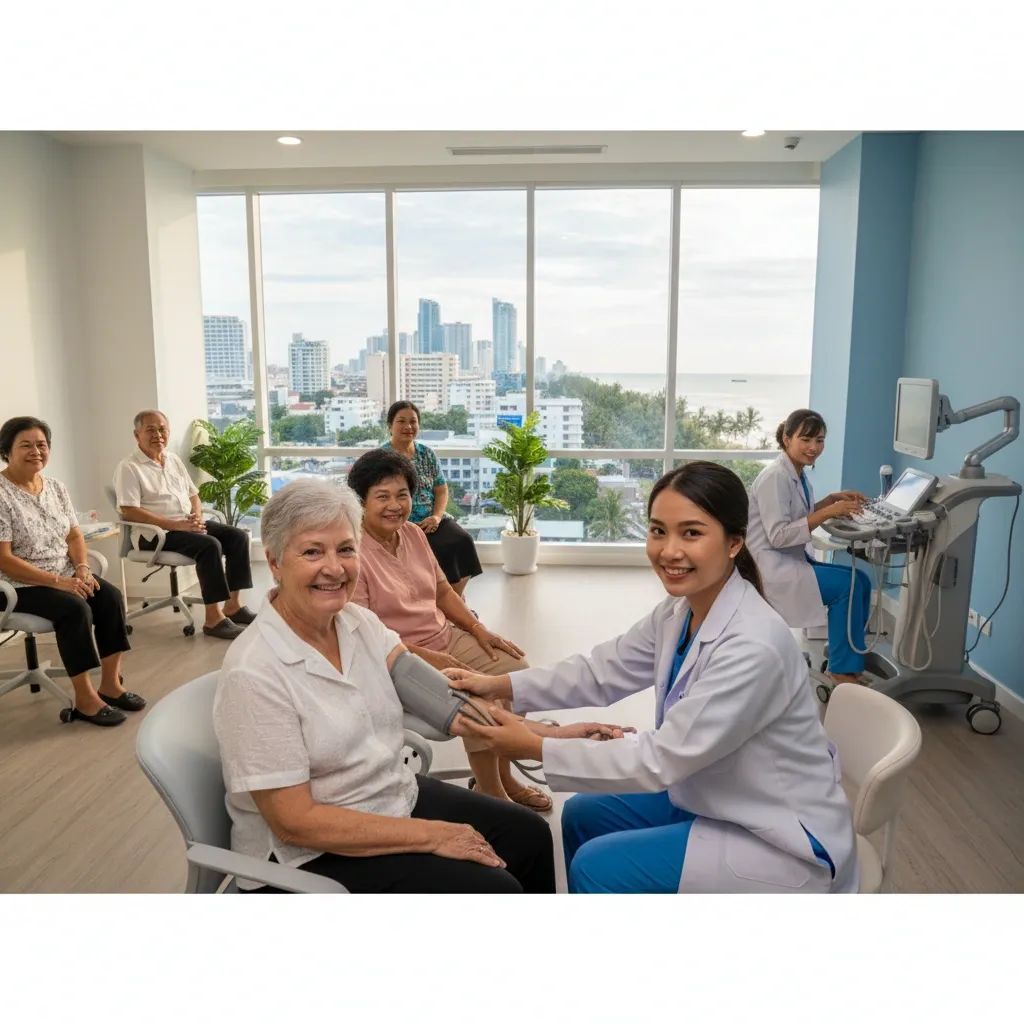
Thailand's Pattaya Municipality has launched an expanded preventive healthcare initiative targeting the city's rapidly aging population, a demographic shift that now officially places the coastal hub in "aged society" status with over 15% of residents aged 60 and above.
The move comes as local authorities acknowledge the city's accelerating transformation into a retirement destination—not just for expats, but increasingly for Thai nationals seeking affordable coastal living with robust medical infrastructure. With healthcare costs for chronic conditions rising and long-term care facilities charging tens of thousands of baht per month, the emphasis on early detection has become both a public health priority and an economic necessity.
Why This Matters
• Free health screenings now available for Pattaya residents aged 60+, covering diabetes, hypertension, cholesterol, stroke risk, and cardiovascular disease.
• Pattaya officially classified as an "aged society" with 15.36% of the population over 60, surpassing UN thresholds.
• Public-private healthcare partnerships aim to reduce long-term medical costs and expand access to care for all age groups.
• Part of national strategy: Thailand moving toward "complete aged society" status by 2027, with aging populations requiring policy adaptation across sectors.
Aging Population Drives Policy Shift
Mayor Poramet Ngampichet inaugurated the fiscal year 2026 "Healthy Living" program at Le Bali Resort & Spa in North Pattaya, drawing participation from city officials, council members, and public health representatives. The initiative reflects a broader national reckoning with demographic change: Thailand's elderly population has grown significantly in recent decades, and the trend shows no sign of slowing.
For Pattaya specifically, the numbers tell a story of transformation. The city has become a magnet for retirees—both Thai and foreign—drawn by relatively low cost of living, proximity to Bangkok, and a concentration of medical facilities. But that influx has created new pressures on public health infrastructure, particularly as the Thai government's universal healthcare system works to meet growing demand for specialized geriatric services.
The Thailand Ministry of Public Health has identified early diagnosis as critical to preventing dependency and preserving quality of life. Chronic conditions like diabetes and hypertension, if caught early, can be managed with minimal intervention. Left unchecked, they escalate into strokes, heart failure, and dementia—conditions that require intensive, expensive care.
What This Means for Residents
The immediate benefit is access. Residents enrolled in the program receive comprehensive screenings at no cost, including blood sugar tests, cholesterol panels, blood pressure monitoring, and cardiovascular assessments. The goal is to catch warning signs before they become crises.
But the program also signals a shift in municipal strategy. Rather than treating healthcare as a reactive service, Pattaya is positioning itself as a "health-friendly city", a designation that could enhance its appeal to medical tourists and retirees weighing relocation options. The initiative dovetails with the city's "Smart Senior" policy, which includes vocational training for older adults, fitness programs, and social engagement activities designed to combat isolation.
For expats and long-term residents, the implications are practical. Access to preventive care can mean the difference between manageable monthly medication costs and more expensive hospitalization. Preventive screenings, whether available through the municipal program or covered by Thailand's universal health card for Thai nationals, help residents maintain their health and independence.
Broader Healthcare Ecosystem
The Pattaya healthcare network extends beyond municipal clinics. The city has partnerships with private hospitals, health providers, and community organizations to create an integrated care system. Bangkok Hospital Pattaya, one of the region's largest facilities, offers specialized geriatric services including fall prevention programs, orthopedic monitoring, and physical therapy—all critical for maintaining mobility and independence in older adults.
Public-private collaboration has become essential as Thailand's healthcare system adapts to demographic pressures. These partnerships allow the government to leverage private sector expertise and infrastructure while maintaining affordable access for all residents.
Challenges and Questions
Not everyone is convinced of the program's immediate impact. Some healthcare professionals point to implementation challenges and the need for consistency in delivery across different neighborhoods. While central Pattaya benefits from dense medical infrastructure, ensuring outlying areas have equal access remains an ongoing consideration.
There's also the question of sustainability. As the elderly population continues to grow, maintaining robust healthcare services will require ongoing budget commitment and efficient resource allocation. The rationale behind preventive care initiatives is that early intervention reduces downstream treatment costs, though specific outcomes will depend on program uptake and follow-up care.
National Context
Pattaya's initiative is part of a broader national effort. The Thailand Department of Disease Control has strengthened focus on primary healthcare systems and health economics. The government has also developed caregiver training programs to support elderly residents—a recognition that family structures are changing and traditional home care models require supplementation with professional services.
Pattaya, as a significant urban center with established healthcare infrastructure and multilingual medical staff, is well-positioned to serve both its growing retiree population and the broader region.
Practical Takeaways
For residents, the message is clear: use the services available. The Healthy Living program operates on a walk-in basis at designated municipal health centers, with extended hours during high-demand periods. Thai nationals can use their universal health card; foreign residents should check with their insurance provider or inquire about coverage for the screenings.
The city has emphasized that the program is not a substitute for regular physician visits, but rather a complement. Those with existing conditions should continue their prescribed treatments and consult specialists as needed. The screenings are designed to catch early-stage issues and provide referrals when more intensive care is warranted.
As Pattaya moves deeper into its demographic transition, the stakes grow higher. The city's ability to deliver accessible, affordable, high-quality care for its aging population will determine not only public health outcomes but also its competitive position as a retirement destination. With Thailand's aging society status increasingly affecting policy and resource allocation nationwide, the lessons learned from Pattaya's experience could prove valuable for other communities facing similar demographic changes.


