
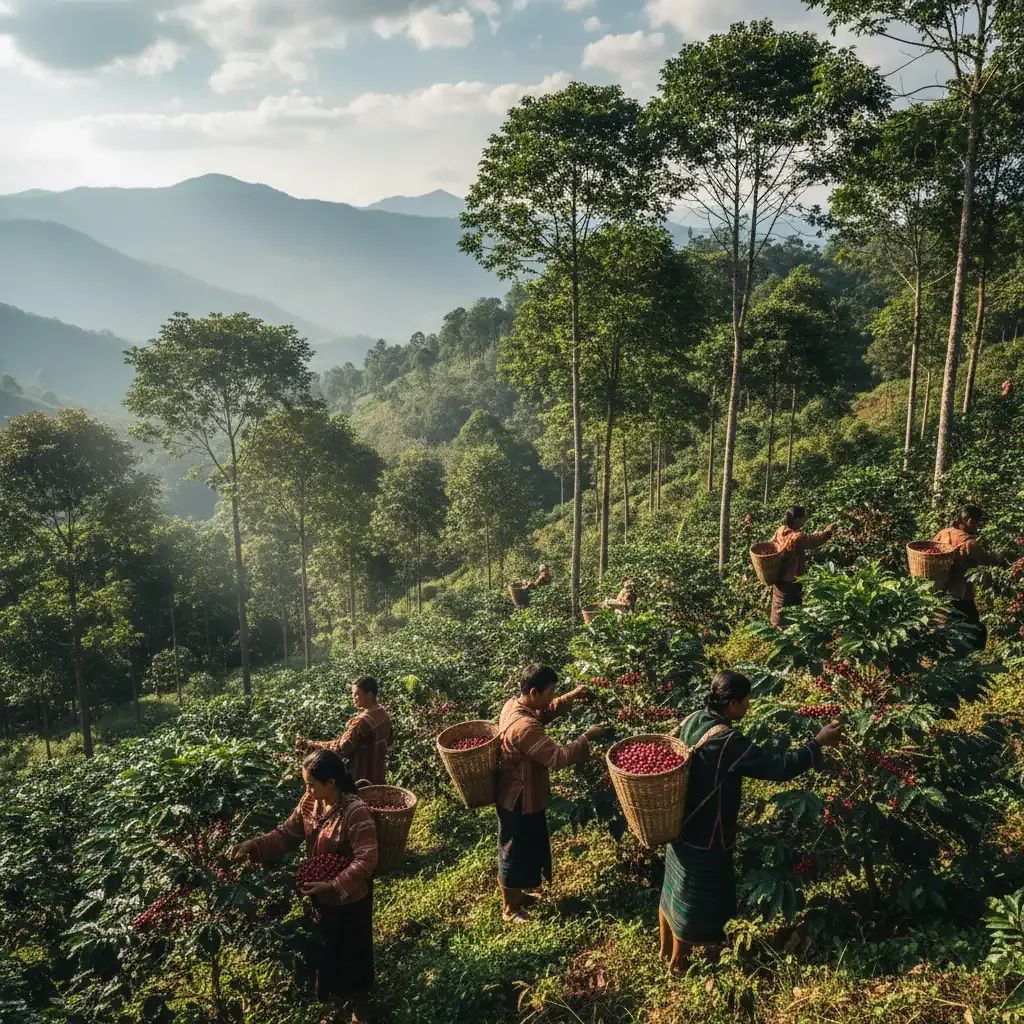
The Thailand Ministry of Agriculture and Cooperatives has seen a grassroots experiment mature into a significant economic event: the Pangkhon Coffee Festival, which will kick off its 2026 edition on March 21 in Ban Pangkhon, Chiang Rai, marking a critical juncture for specialty coffee growers navigating climate volatility and rising production costs while attempting to carve out space in global markets.
Why This Matters:
• Economic transformation: Coffee income in Pangkhon surged from ฿5,000 annually in 2002 to ฿280,000 by 2020, with the festival now anchoring agricultural tourism revenue.
• Climate crisis frontline: Farmers are grappling with 40% cost increases over five years and erratic weather patterns disrupting yield.
• Global compliance pressure: New EU Deforestation Regulation (EUDR) rules impose environmental standards that could open or close export doors.
This three-day gathering—featuring drip coffee competitions, cupping sessions, and a specialty coffee run on March 22—represents far more than a celebration. It is a statement of resilience from a community of over 100 farming households perched at 1,200–1,400 meters elevation, where Arabica cherries ripen slowly under natural canopy and absorb the mineral-rich soil that defines their reputation.
Why Pangkhon Coffee Commands Attention
Pangkhon Arabica is not generic northern Thailand coffee. Grown in the high-altitude forests of Huai Chom Phu subdistrict, the beans develop a flavor profile distinct from other Thai origins: dark chocolate, burnt caramel, and a prolonged sweet aftertaste with minimal acidity. Unlike sharper northern coffees or the heavier Robusta varieties dominating southern provinces like Chumphon, Pangkhon's 100% Arabica offerings are rounder, more aromatic, and suitable for specialty markets.
What sets this origin apart technically is the Anaerobic Process some farmers now employ—fermenting raw beans with fruit and natural microbes to deepen complexity. Combined with traditional washed processing and slow maturation under natural shade trees beside mountain streams, the result is a product that won 1st place in the national Arabica competition during the 1994/95 season and continues to draw interest from specialty roasters domestically and abroad.
Café Amazon, the retail arm of PTT Oil and Retail Business Public Company Limited (OR), has been the most visible corporate partner since 2017, transferring knowledge on cultivation, shade management, and cherry selection while establishing a fair-trade purchasing system. This relationship has turned coffee from subsistence crop to primary livelihood for many families, but it also ties the village's fortunes to corporate procurement cycles and brand priorities.
What This Means for Residents and Visitors
For expats and long-term residents in northern Thailand, the festival offers a tangible glimpse into the economic realities behind the specialty coffee now widely available in Chiang Mai and Bangkok. It also signals investment opportunities in agri-tourism: homestays in Pangkhon have proliferated as younger villagers return from cities to operate cafés and guesthouses. The tourism group at Ban Pang Khon estimates that 66% of community-based tourism sustainability is tied to coffee-related income, meaning visitor spending directly sustains infrastructure and services.
For investors and business owners, the festival underscores both opportunity and risk. Thailand's Department of Agricultural Extension has set an ambitious target: boost average Arabica yield above 80 kg per rai and triple farm-gate value by 2027. Pangkhon is a pilot zone for these goals, meaning early engagement with cooperatives here could yield sourcing advantages—but only if climate adaptation and regulatory compliance stay on track.
For tourists, the event is a rare chance to participate in cupping sessions led by farmers themselves, tour processing facilities, and purchase beans at origin prices. The mini-concert on March 21 and the specialty coffee run on March 22 add recreational elements, but the core draw remains access to farmers who can explain varietal selection, fermentation techniques, and the impact of altitude on cup quality.
The Climate and Cost Squeeze
The optimism on display at the festival sits uneasily alongside structural pressures. Climate change has emerged as the single greatest threat to Pangkhon's coffee economy. Erratic rainfall—intense downpours alternating with unseasonable heat—damages trees and reduces yield. This is not a localized problem: global coffee supply chains are contracting, and production costs have climbed more than 40% in the past five years due to labor shortages, fertilizer price spikes, and pest management expenses.
Soil fertility is another concern. Pangkhon's sloped terrain is prone to nutrient leaching during monsoon season, and continuous cultivation without adequate organic supplementation degrades soil health over time. Farmers are experimenting with agroforestry models and composting programs, but these require upfront investment and technical guidance that not all households can access.
Then there is the regulatory dimension. The EU Deforestation Regulation, which entered force in 2024 and is being phased in through 2026, mandates traceability and proof that agricultural products did not contribute to forest loss. For Pangkhon farmers, this is theoretically an advantage—their coffee grows in existing Royal Project development zones under forest canopy. But documentation systems are rudimentary, and export pathways remain concentrated in the hands of a few buyers. Smaller growers risk being shut out if compliance frameworks favor large estates.
Beyond the Festival: Building a Sustainable Model
The Thailand Royal Project Foundation, which has supported Pangkhon since 2002, continues to emphasize sustainability over volume. Its model prioritizes quality improvement, environmental stewardship, and fair pricing—principles echoed in the festival's programming. Yet the tension between maintaining farmer livelihoods, absorbing rising costs, and keeping retail prices accessible is acute. Specialty coffee in Thailand already commands premiums that many domestic consumers cannot afford; further price increases risk narrowing the market to expatriates, tourists, and urban elites.
The festival's organizers—farmer cooperatives and the local tourism group—hope the event will diversify income streams by drawing direct-to-consumer sales, encouraging online orders, and attracting roasters willing to pay for traceability. Elderly villagers are being trained to produce handicrafts sold alongside coffee, while younger residents operate social media accounts promoting farm stays and guided tours. This is classic community-based tourism, but its viability depends on consistent visitor traffic and the ability to scale without eroding the authenticity that makes Pangkhon appealing in the first place.
Practical Guidance for Attendees
Those planning to visit should note that Pangkhon is approximately 50 km from Chiang Rai city, accessible via Route 1 and local roads. The festival runs through March 23, with the most intensive programming on March 21 and 22. Homestay accommodation is limited and typically priced at ฿500–฿800 per night; advance booking through the Ban Pang Khon Tourism Group is advised. Beans purchased at origin range from ฿400–฿800 per kg depending on processing method and grade—roughly equivalent to a week's grocery budget for a single person in Chiang Rai.
The drip coffee competition on March 21 is open to spectators and provides insight into brewing techniques that farmers believe best express their beans' character. The specialty coffee run on March 22 covers 5 km of forested trails and is designed to showcase the landscape that shapes the coffee. Registration for the run is typically ฿300–฿500 and includes a finisher's bag with samples.
For those unable to attend, Pangkhon coffee is increasingly available through Café Amazon outlets across Thailand, as well as independent specialty roasters in Bangkok and Chiang Mai. Packaging should specify "Ban Pang Khon" or "Huai Chom Phu" as origin; generic "Chiang Rai Arabica" may come from other districts.
The Broader Picture
Pangkhon's 2026 festival is one node in a broader effort to position Thailand as a specialty coffee origin rather than merely a consumer market. The Department of Agricultural Extension is pushing to reduce imports and increase per-rai productivity, targeting northern highland zones for Arabica expansion. But climate instability, aging farmer demographics, and competition from lower-cost origins in Vietnam and Laos complicate this vision.
What makes Pangkhon noteworthy is the convergence of royal patronage, corporate partnership, and community organizing—a model that other highland villages are attempting to replicate. Whether it can withstand the dual pressures of climate disruption and global market volatility remains the open question. For now, the festival offers a window into both the promise and fragility of Thailand's specialty coffee sector, and a reminder that every cup carries the weight of decisions made far from the retail counter.


