
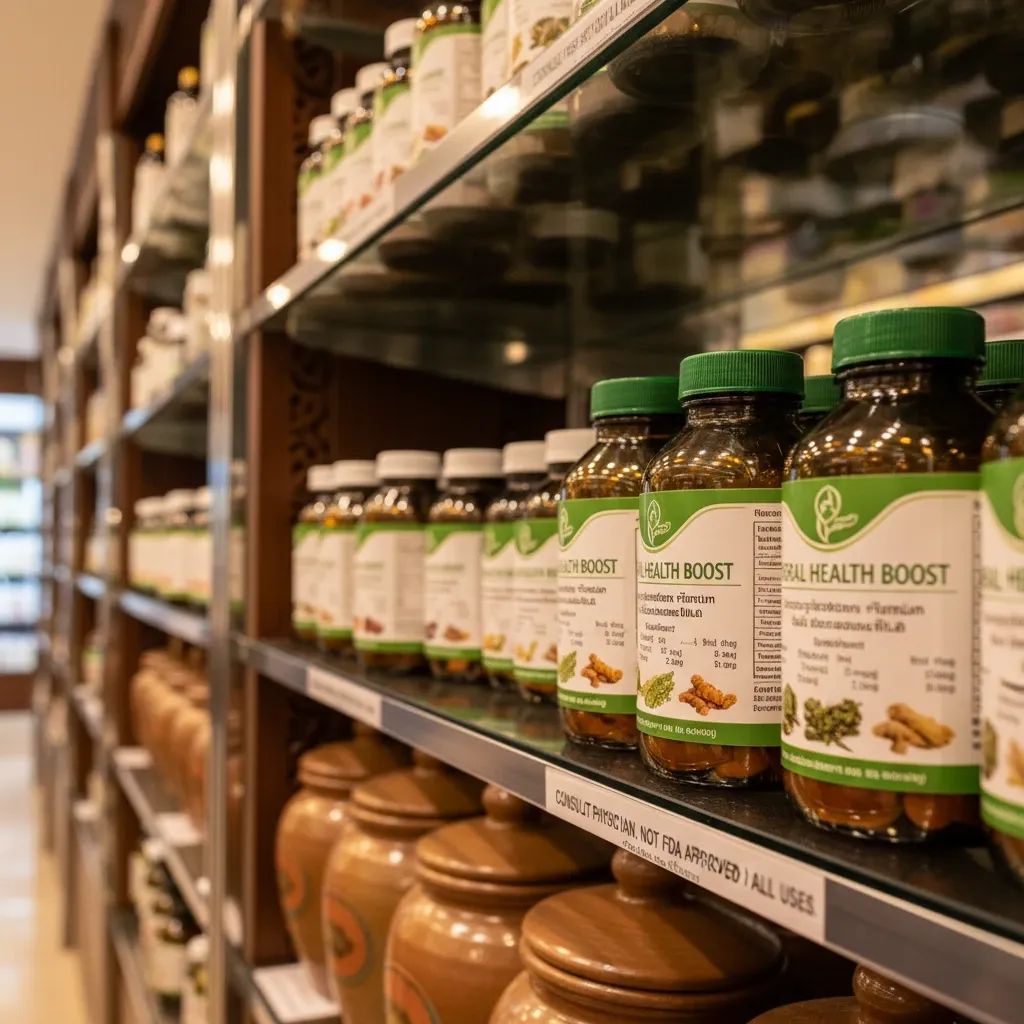
Traditional Asian herbal preparations containing compounds from the Evodia rutaecarpa plant have long been available in Thailand—a staple remedy for digestive complaints, menstrual pain, and headaches. But new scientific data published in April 2026 indicates that evodiamine, a potent alkaloid extracted from this fruit, may cause significant kidney damage in animals, raising urgent questions about its safety for residents who routinely consume such supplements.
Why This Matters
• No human trials exist: All current safety data comes from mouse and cell-culture studies, yet evodiamine-containing supplements remain widely available across Southeast Asia.
• Blood-test markers spiked: Mice exposed to evodiamine showed elevated Blood Urea Nitrogen (BUN) and creatinine—hallmark signs of failing kidneys—alongside visible pathology in renal tissue.
• Regulatory silence: As of April 2026, no Thai or regional health authority has issued a formal warning or recall for evodiamine products, despite accumulating evidence of liver, heart, and kidney toxicity.
• Reformulation underway: Researchers are developing safer derivatives and nano-delivery systems to preserve the therapeutic benefits while sidestepping the toxic effects.
Ancient Root, Modern Risk
Evodia rutaecarpa—known in Chinese as "Wu Zhu Yu"—has been a fixture in traditional Chinese medicine pharmacies throughout Thailand for centuries. Practitioners prescribe the dried fruit to "dispel internal coldness," regulate digestive qi, and ease migraines that arrive with vomiting. It often appears in multi-herb formulas such as "Zuojin Wan," which combines evodia with Coptis chinensis (Huang Lian) to harmonize the stomach and liver. For women, it serves as a go-to remedy for painful periods; for the elderly, it promises to invigorate digestion and promote diuresis.
Yet the 2020 Chinese Pharmacopoeia already flagged concerns, classifying the plant as having "little toxicity" and recommending short-term use at doses no higher than 2–5 grams daily. The text warns against long-term use and marks it as contraindicated for patients with "yin deficiency due to internal heat"—a traditional classification that maps roughly onto inflammatory or hypertensive profiles. The pharmacopoeia describes the herb as "hot in nature" and even "extremely hot," cautioning that elevated doses over extended periods can provoke adverse effects. Despite those caveats, herbal-supplement vendors in Bangkok, Chiang Mai, and border markets continue to stock capsules, tinctures, and powders that list Evodia rutaecarpa as a principal ingredient, often with minimal dosage guidance.
The April 2026 Study: Kidney Injury at the Molecular Level
Researchers in China used mouse models to assess evodiamine's impact on renal function, publishing their findings in April 2026. Animals exposed to the compound experienced a marked drop in body weight alongside a rising renal index—the ratio of kidney mass to total body weight, a telltale sign of swelling or inflammation. Laboratory blood panels revealed elevated levels of BUN and creatinine, both standard clinical markers of impaired kidney filtration. Histopathology slides confirmed "varying degrees of pathological kidney damage."
To identify the molecular culprits, the team applied an integrated approach combining network toxicology and RNA sequencing, isolating 24 genes implicated in kidney injury. Molecular-docking simulations validated four core targets: TRPV1, NOS3, HSP90AA1, and PPARG. Evodiamine showed the strongest binding affinity for PPARG, a nuclear receptor that governs lipid metabolism and inflammation. The study concluded that the compound likely triggers nephrotoxicity through a cascade: inhibiting the PPARG signaling pathway, activating the TRPV1 pain-and-ion channel, reducing expression of the protective chaperone HSP90AA1, and disrupting the apelin-NOS3 axis that maintains vascular tone in the kidneys.
A separate review published in September 2024 had already flagged evodiamine as "potentially nephrotoxic" after screening hundreds of traditional Chinese medicine ingredients. Laboratory experiments using HEK293 human kidney cells exposed to escalating doses of evodiamine documented a dose-dependent collapse in cell viability, increased release of lactate dehydrogenase (LDH)—a marker of membrane rupture—and morphological deformation under the microscope. Western-blot analysis revealed elevated levels of autophagy-related proteins, suggesting the compound forces kidney cells into a destructive self-digestion cycle.
Beyond the Kidneys: Heart and Liver in the Crosshairs
Evodiamine's toxicity profile extends far beyond renal tissue. Cardiotoxicity studies in zebrafish and neonatal rat heart cells documented a drop in heart rate, sluggish circulation, and malformed pericardial sacs. Researchers believe evodiamine and a related alkaloid, rutaecarpine, alter myocardial-cell permeability, tamper with enzyme activity, disrupt calcium homeostasis, and compromise energy supply. Two minor alkaloids—dehydroevodiamine and hortiamine—have been implicated in proarrhythmic effects by blocking hERG potassium channels, the same mechanism responsible for drug-induced long QT syndrome.
On the hepatic front, mice receiving an alkaloid-rich Evodiae fructus extract developed hepatic injury, with sharp rises in aspartate aminotransferase, alanine transaminase, lactate dehydrogenase, and alkaline phosphatase. Evodiamine, being the dominant alkaloid in the extract, is considered a primary driver of this liver damage.
Why the Regulatory Silence?
As of late April 2026, no public-health advisory has been issued by the Thailand Food and Drug Administration, nor by counterpart agencies in Singapore, Malaysia, or mainland China specifically naming evodiamine. In 2025, Singapore's Health Sciences Authority released general warnings about overseas products containing "potent ingredients" and urged consumers to scrutinize exaggerated claims, but evodiamine did not appear on that list. The World Anti-Doping Agency's 2026 prohibited-substances roster, effective January 1, also omitted evodiamine.
Meanwhile, regulatory infrastructure in the region has been busy with other reforms: China's National Medical Products Administration approved a record number of new drugs in 2025, mostly from domestic developers; India and Japan have mandated electronic Common Technical Document submissions; and Australia introduced fresh labeling rules for complementary medicines. None of these initiatives addressed the evodiamine question, leaving the compound in a regulatory gray zone where tradition and commerce outpace preclinical science.
What This Means for Residents
Expats and Thai nationals who routinely purchase herbal digestive aids, menstrual-pain remedies, or migraine capsules should scrutinize ingredient labels for Evodia rutaecarpa, "Wu Zhu Yu," or "evodiamine." Because no human safety trials have been published, the true threshold for toxicity in people remains unknown. Even short-term use at the "recommended" 2–5 grams daily could pose risk if underlying kidney or liver function is already compromised by diabetes, hypertension, or concurrent medication.
Pregnant women face a double jeopardy: traditional texts classify the herb as "possibly unsafe during pregnancy," and its hot, dispersing nature may increase the risk of bleeding or uterine contractions. Anyone scheduled for surgery should discontinue evodiamine-containing products at least two weeks beforehand, as the compound may prolong bleeding time. Patients with atrial fibrillation or other arrhythmias should avoid it entirely, given the documented hERG-channel blockade.
Science Races to Salvage the Therapeutic Promise
Researchers are unwilling to abandon evodiamine altogether, since preclinical models demonstrate antitumor, anti-inflammatory, cardioprotective, and neuroprotective effects when toxicity can be controlled. Two parallel tracks are underway.
First, structural optimization: chemists have synthesized hydroxyl derivatives such as 10-hydroxyl evodiamine and 3-amino-10-hydroxyl evodiamine, both of which preserved antitumor efficacy in mouse xenografts while registering low toxicity scores. Modifications typically target the A, D, or E ring of the indole-alkaloid scaffold or alter nitrogen substituents at positions N-13 and N-14.
Second, novel delivery systems aim to overcome evodiamine's notoriously poor solubility and low bioavailability. Inclusion complexes with hydroxypropyl-β-cyclodextrin have already improved pharmacokinetics and boosted antitumor punch in animal models. Solid dispersions enhance absorption across the gut lining, while nanoparticle carriers promise higher blood concentrations and more targeted delivery to tumor cells, potentially sparing healthy kidney and liver tissue from collateral damage.
The Bottom Line
Until human clinical trials establish a safe therapeutic window—or regulatory agencies in Thailand and neighboring countries issue formal guidance—residents are left navigating a risk they cannot accurately quantify. The April 2026 mouse study offers the clearest mechanistic picture to date, linking evodiamine to kidney injury via PPARG inhibition, TRPV1 activation, and disrupted vascular signaling. When combined with established evidence of liver enzyme spikes and cardiac malfunction, the cumulative toxicity profile suggests that centuries of traditional use do not automatically confer modern safety.
For now, consumer vigilance is the only practical safeguard: read labels, consult a licensed pharmacist familiar with herbal–pharmaceutical interactions, and consider whether the potential benefit of a traditional remedy justifies exposure to a compound that, in laboratory animals at least, punches well above its therapeutic weight class. Science may yet deliver a safer derivative or delivery method, but until then, the wisdom of "extremely hot" herbs demands a correspondingly cautious approach.


