
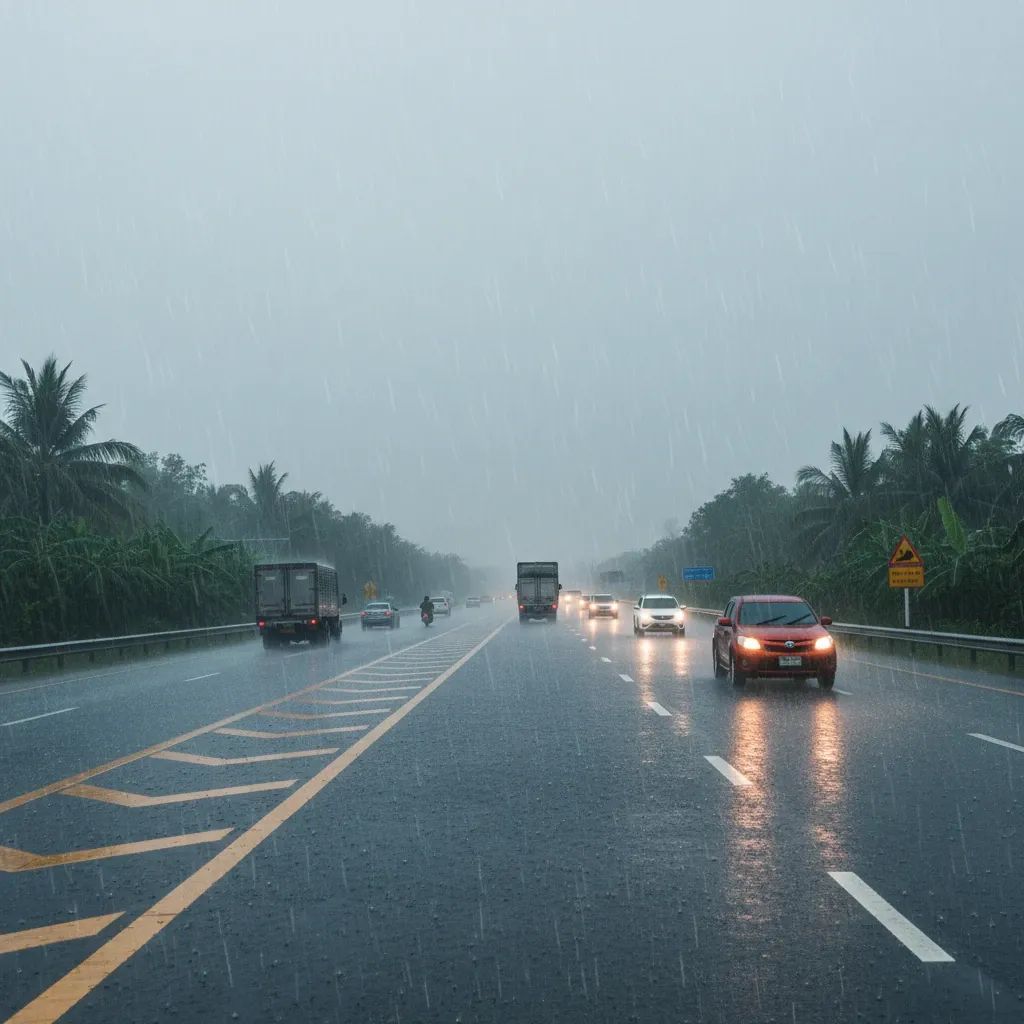
On April 30, a five-year-old girl in Nakhon Ratchasima province faced a question no child should ask: "Are my parents dead? Will I die too?" Rescue workers responding to a pickup truck wrapped around a roadside tree on Mittraphap Road heard those words during extraction. They did not have immediate answers. What they had was the grim machinery of disaster response—hydraulic tools, rain, and a surviving child whose physical injuries measured in centimeters but whose emotional wounds would take years to measure at all.
Her parents did not survive. The driver, a 36-year-old man, died at Sung Noen Hospital. His 32-year-old wife was pronounced dead at the scene. The accident, triggered by hydroplaning on rain-soaked asphalt near Kut Chik junction at kilometer marker 122+600, added two more names to Thailand's grim wet-season casualty count while asking an uncomfortable question: How does a nation prepare for disasters it cannot prevent?
Why This Matters
• Childhood trauma intervention windows are narrow: Research confirms that psychological support initiated within 30 days of trauma significantly reduces the risk of chronic PTSD in children. Delayed intervention can lock children into years of difficulty.
• Guardianship urgency in Thailand: Orphaned children require immediate legal guardianship designation, social service enrollment, and coordinated care—processes that compound emotional crisis with bureaucratic friction.
• Wet-season predictability: Mittraphap Road experiences statistically predictable accident clustering during May and June as monsoon conditions coincide with driver acclimation periods; the April 30 incident foreshadows recurring danger zones.
The Scene and the Question
Sawang Saeng Tham Foundation rescue teams in Sung Noen district received their dispatch at 4:58 p.m. on a day when rain had transformed the highway into a waiting weapon. At the scene, they encountered a gray Toyota Vigo pickup bearing Saraburi plates, its front section crushed beyond immediate recognition of the machine it had been moments earlier. A large tree had accepted the vehicle's full momentum. The family had been en route from Nakhon Ratchasima city center toward their workplace when the downpour intensified. No speeding was documented. No mechanical failure preceded the collision. Only the invisible physics of water on asphalt—the same physics that had claimed five people on this same road just twelve days earlier when a trailer lost traction near Pak Chong, injuring several and critically wounding one.
Extraction required hydraulic equipment. The child remained conscious throughout, her repeated questions embedding themselves in the memory of rescue personnel long after the scene was cleared. Medical evaluation confirmed minor cuts and abrasions; the rear-seat positioning that had protected her from worse impact offered no protection from what came next: the knowledge that she was alive and everyone else in her immediate universe was not.
How Rain Rewrites the Rules of Physics
Hydroplaning is deceptively simple: water creates a cushion between tire and asphalt, transforming rubber into a frictionless interface. At speeds above 60 km/h on wet surfaces, this cushion becomes inevitable, and control becomes theoretical. The driver's judgment becomes irrelevant. Experience becomes irrelevant. Physics takes over.
Thailand's Department of Highways documented 85% of wet-season collisions stem from correctable factors: excessive speed, underinflated tires, worn brake components, and inadequate following distance. This statistic is simultaneously optimistic and damning—optimistic because solutions exist, damning because they require individual discipline rather than systemic fixes.
The Mittraphap Road (formally Highway 2) serves as Thailand's commercial and transportation spine, linking Bangkok to the northeast. Its volume is relentless. Its geometry includes curves that reward hesitation and punish overconfidence. Between kilometers 35+770 and 39+800 on the Nakhon Ratchasima-bound lanes, all vehicles are now prohibited from lane changes—a regulatory acknowledgment of the road's particular danger during monsoon conditions. The rule emerged after analysis of multi-vehicle collisions that occurred during wet conditions when drivers attempted to navigate congestion at inappropriate speeds.
Recent construction at the Pradok intersection underpass had created temporary complications: partial lane closures in March left fresh asphalt exposed, and construction residues mixed with rain create surfaces that test even cautious drivers. The underpass will eventually reduce congestion, but the short-term friction persists through June 2026.
Preparing a Vehicle for What Rain Actually Is
Vehicle maintenance is not luxury; it is the difference between control and surrender. Tire tread depth should be inspected monthly. Tires with grooves shallow enough to pass a penny test cannot channel water effectively—hydroplaning becomes inevitable at any speed above 50 km/h. Inflate tires to 2–3 psi above normal specifications; the slight overpressure assists water displacement from grooves without compromising ride quality. This takes five minutes and costs nothing.
Brake pads and wiper blades become critical infrastructure during monsoon months. Wiper replacement costs under 300 baht; replacement of a collision is immeasurable. Inspect headlight and taillight systems thoroughly; visibility during heavy rain deteriorates faster than most drivers anticipate. Clean all lighting and windshields before wet season; dust and residue scatter light and reduce visibility for both your vehicle and approaching traffic.
The temptation to ignore these steps is real—vehicles appear functional regardless of preparedness level, until the moment they are not.
The Techniques That Actually Work
Driving in heavy rain requires abandonment of normal assumptions. Immediately reduce speed to 40–60 km/h the instant precipitation begins. Any higher velocity creates uncontrollable hydroplaning regardless of driver skill or vehicle quality. Maintain 10–15 meters of following distance from the vehicle ahead—triple the normal gap—to allow genuine gradual braking rather than emergency stops. Other drivers will not anticipate your reduced speed; give yourself time to adjust to theirs.
Turn on headlights immediately, even in daytime, so other vehicles see you through spray and mist. Activate headlights, not emergency flashers—flashing lights communicate vehicle breakdown, not intentional caution, and can confuse approaching drivers.
Begin movement in second gear rather than first to reduce wheel spin and skid likelihood. If your vehicle begins to skid, release the accelerator gently, steer straight ahead without jerking, and avoid slamming brakes. Modern ABS systems pulse automatically if pressed firmly and held steady; aggressive steering or hard braking during hydroplaning accelerates loss of control. If severe hydroplaning occurs at speeds above 50 km/h, recovery may be physically impossible; prevention through initial caution is the only reliable defense.
If visibility drops below 50 meters during heavy downpour, pull to a safe shoulder and wait. No appointment, deadline, or commitment justifies gambling with a multi-ton vehicle on slick asphalt. Emergency lights should remain activated while parked to alert approaching vehicles.
The Child's Path Forward
The five-year-old now faces double burden: recovering from minor physical injuries while processing simultaneous loss of both parents. Childhood PTSD manifests distinctly from adult trauma—often as nightmares, social withdrawal, repetitive play reenacting the accident, sudden emotional outbursts, and developmental regression in school performance or behavioral milestones.
Critical intervention window is 30 days post-incident. Research confirms that children receiving structured psychological support within this period show significantly lower rates of chronic PTSD and attachment disorders. The Queen Sirikit National Institute of Child Health operates a specialized child and adolescent psychiatry clinic offering trauma-focused cognitive behavioral therapy, play therapy, and family counseling. Therapists employ age-appropriate techniques to help children process overwhelming events.
Thailand's Department of Mental Health maintains a 24-hour crisis hotline (1323) offering free counseling; the Sai Dek Foundation hotline (1387) specializes in child-specific case management and referrals; Maharat Nakhon Ratchasima Hospital houses a pediatric psychiatry unit serving the province. Guardians should contact these services immediately to arrange initial assessment and schedule ongoing treatment.
Family therapy is equally essential. The child's relatives—likely assuming guardianship—will navigate their own grief and guilt while learning to support a traumatized child. Trained clinicians facilitate communication about tragedy in language children can understand and guide families in rebuilding emotional safety within household systems fractured by loss.
The Institutional Response
The Thailand Royal Police station in Sung Noen completed preliminary investigation, indicating no criminal charges are anticipated. The incident appears to reflect tragic accident rather than recklessness or mechanical failure. The vehicle was properly registered; the driver maintained no history of traffic violations. The family's guardianship is being coordinated with social-services teams and relatives in Saraburi province, where the pickup was registered. Funeral arrangements are underway.
Local Nakhon Ratchasima officials have issued formal condolences and initiated discussions with psychological support organizations to ensure the girl receives immediate and sustained care. The child remains hospitalized under observation, though medical discharge appears imminent pending guardianship finalization.
Mittraphap Road lane closures at Pradok construction site continue through June 2026, adding 15–20 minutes to journeys through the affected section. Motorists can reduce exposure to heavy truck traffic by using bypass routes around Nakhon Ratchasima city, though these extensions approximate similar time penalties. The Department of Highways recommends allowing additional travel time, consulting real-time navigation applications for traffic updates, and avoiding peak rain hours (typically late afternoon through early evening in May through June).
The Pattern That Defines Risk
On April 18, approximately twelve days before this incident, a trailer truck lost traction on Mittraphap Road near Pak Chong's Phaya Yen subdistrict during heavy rain. The trailer collided with two vehicles, injuring five people and critically wounding one. The conditions, the road, and the outcome were nearly identical—different only in the families affected and whether survival occurred.
This repetition is not coincidence; it reflects seasonal predictability. Thailand's wet season from May through October carries measurable statistical increases in road fatalities. Mittraphap Road experiences predictable clustering of collisions during the first two weeks of monsoon onset, when drivers have not yet acclimated to wet conditions and systems remain optimized for dry-season speeds.
The Thailand Department of Highways has initiated a multi-layered response targeting 5% reduction in deaths, injuries, and total crashes compared to three-year historical averages. Measures include pothole repairs, vegetation clearance, rumble strip installation at dangerous curves, and strict lane-change enforcement. Drainage has been improved at several high-risk zones where water accumulation previously accelerated hydroplaning.
Recent calls from Nakhon Ratchasima residents for automated speed-detection cameras equipped with weather-triggered enforcement have not yet yielded deployment decisions pending budget allocation and provincial planning processes. Whether technology will advance prevention remains uncertain; what remains certain is that awareness, vehicle maintenance, and reduced speed save lives every rainy season.
Three Rules That Actually Matter
For residents traveling Mittraphap Road or similar highways during rain, the April 30 tragedy encapsulates bedrock principles:
Halve your speed the moment rain appears. Hydroplaning risk increases exponentially above 60 km/h on wet asphalt. Your vehicle does not know you are cautious; your speed determines risk.
Check tire tread and pressure monthly. Bald tires are unrecoverable at any speed in wet conditions. This takes ten minutes quarterly and costs nothing preventively but everything reactively.
Pull over and wait if visibility is poor. No destination merits the wager. A meeting delayed is a person who arrives alive; a meeting reached on schedule by someone who did not is a tragedy that reshapes multiple families.
The Thailand Royal Police additionally emphasize that families with young children ensure car seats are rear-facing and correctly anchored. In this collision, the girl's light injuries likely resulted from rear-seat positioning, which absorbed less direct impact than the front cab would have delivered.


