
A 35-year-old Myanmar national, Aung Zaw, was fatally stabbed by four Thai teenagers in Nakhon Ratchasima on May 20, 2026. Officers from Muang District Police Station responded to reports of an injured man at a waste disposal area adjacent to Thanonchira railway tracks. Paramedics transported Zaw to Maharat Nakhon Ratchasima Hospital, where he was pronounced dead from a penetrating chest wound.
Investigators recovered a 14-centimeter knife at the scene and apprehended four male suspects: a 13-year-old, two aged 15, and a 19-year-old named Papangkorn. According to police statements, Papangkorn delivered the stabbing blow, the two 15-year-olds kicked Zaw while he was on the ground, and the 13-year-old struck him with a motorcycle helmet.
Police colonel Sirichai Srichaipanya noted that Papangkorn had completed a theft sentence approximately one month before this incident. The other three suspects had clean records.
What This Means for Residents
This case occurs at a moment when Nakhon Ratchasima faces documented concerns about juvenile violence. Authorities have confirmed increased patrols in areas where unsupervised youth congregate, particularly around communal waste sites and public squares. Residents are encouraged to report suspicious activity through official police channels.
For Myanmar workers in the region, new multilingual reporting channels have been established through the Thailand Ministry of Labour, with basic Burmese-language support on hotlines. Workers can now report incidents without automatic deportation risk, and the Myanmar Embassy has established direct communication protocols with Nakhon Ratchasima Provincial Police.
Background: Juvenile Justice Framework in This Case
The four suspects will experience different legal pathways determined by age thresholds under Thai law.
The 13-year-old suspect falls under the Juvenile and Family Case Procedure Act, which exempts children under 15 from criminal prosecution in most circumstances. Authorities will likely refer this minor to an Observation and Protection Center for assessment and rehabilitation.
The two 15-year-old suspects occupy a legal threshold that permits prosecution for serious crimes, though judges typically apply discretionary sentencing that reduces sentences by 25–50% compared to adult penalties. Both are likely to face formal charges with placement in Juvenile Training Centers.
Papangkorn, aged 19, technically enters the adult criminal system, though his proximity to juvenile jurisdiction and prior theft conviction will factor into sentencing recommendations. All serious violent juvenile offenders now receive trauma-informed classification and specialized programming that emphasizes mentorship and restorative approaches rather than punitive discipline.
Background: Youth Violence Patterns in Nakhon Ratchasima
Nakhon Ratchasima, Thailand's northeastern industrial hub, has documented juvenile violence as a chronic concern. The region's economy relies on agriculture, construction, and service employment—sectors with long hours and geographic mobility. Research indicates that extended parental absence, pharmaceutical availability, and limited institutional oversight create environments where adolescents drift toward peer groups that normalize violence.
Community organizations including Fortify Rights Foundation and the International Labour Organization have expanded legal clinics across northeastern provinces, offering documentation assistance and rights education in multiple languages.
Background: Migrant Worker Vulnerability
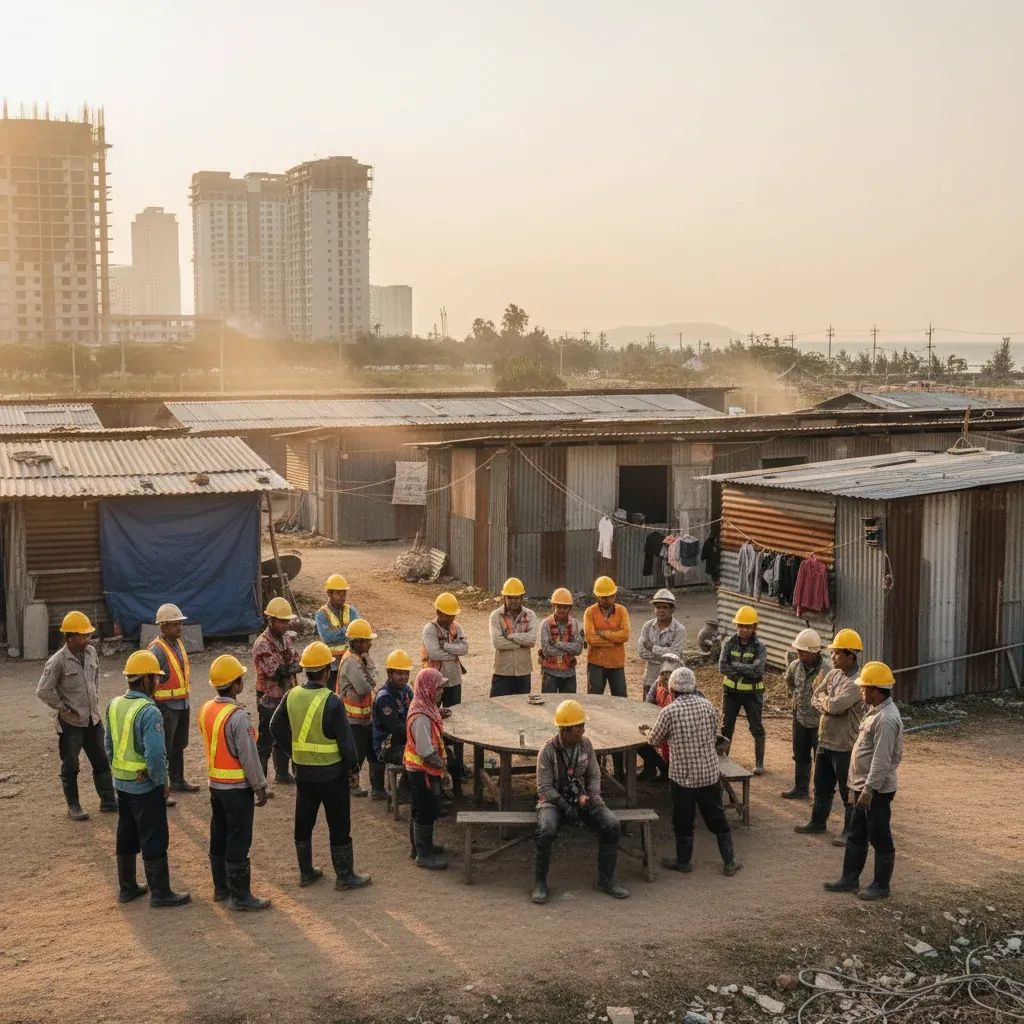
Aung Zaw worked at a garbage disposal site—informal employment with minimal workplace protections. Myanmar nationals in comparable roles earn 200–250 baht daily, substantially below Thai wages for identical work. An International Labour Organization study found that 4.24% of Myanmar migrant workers in selected Thai regions experienced physical or sexual violence within a 12-month window, suggesting approximately 85,000 individuals experience violent assault annually.
Institutional coordination has improved following this incident. The Myanmar Embassy established direct communication protocols with Nakhon Ratchasima Provincial Police, ensuring that Myanmar nationals are notified of consular services. Labour agreements with Myanmar authorities now allow Thai employers to confirm worker documentation status electronically, reducing both exploitation and deportation risk.


