
Royal Presence Marks Lumpini Park's Centennial Moment
Their Majesties will grace Lumpini Park this Saturday evening, marking the 100-year milestone of Thailand's oldest public garden and honoring the visionary monarch whose royal bequest shaped modern Bangkok's recreational landscape.
Why This Matters
• Royal attendance on April 25 at 6 PM signals the cultural weight of this centennial for the Thai monarchy and the nation's approach to urban development.
• Site transformations worth 134 million baht include a new hawker center (opened January 2026), refurbished cultural hall, and expanded pedestrian corridor connecting two major green zones.
• Practical access: Gate 1 (Ratchadamri Road) opens at 4 PM for security screening; avoid Saturday crowds by visiting April 26–30 when performances and exhibitions continue.
The Park's Historic Significance
Lumpini Park was established in 1922 as Thailand's first public park. Named after Lumbini, the birthplace of Buddha in present-day Nepal, the park embodies the country's vision of modern urban development rooted in cultural and spiritual heritage. Over the past century, it has become a vital recreational space for millions of Bangkok residents, serving as the city's primary green sanctuary amid urban density and development.
A bronze statue of King Vajiravudh was installed at the park's principal gate, becoming the focal point for ceremonial remembrance. During World War II, the grounds were repurposed for agriculture to address food shortages but were later restored and expanded with amenities including paddle boats, exercise zones, and recreational facilities.
The Renovations: A Century-Long Asset Becomes Contemporary
The Bangkok Metropolitan Administration (BMA) approved a 134 million baht modernization program in 2020–2021. By April 2026, nearly all landscaping and structural upgrades are complete or nearing completion—a massive undertaking for a 57-hectare site in the heart of a congested capital.
Lumpini Hall, the park's aging cultural theater and performance space, underwent comprehensive renovation and now functions as a multipurpose arts venue with an exhibition gallery, live music stage, and ballroom for retro dancing. The venue opened mid-2025 and will host performances throughout the centenary week.
The Green Bridge—a 1.6-kilometer pedestrian and cycling corridor linking Lumpini and Benjakitti parks—was redesigned according to Universal Design principles with separated lanes for runners, cyclists, and walkers. The bridge should open informally by May 15, creating a continuous 600+ rai green corridor through central Bangkok and eliminating the fragmentation that previously cut the two parks apart.
A Japanese-style dog park now operates near Gate 3, catering to Bangkok's growing pet-owning demographic. A Hawker Center with 88 vendor stalls per shift opened in early 2026 on Ratchadamri Road adjacent to Gate 5, operating from 5 AM to midnight. Street vendors displaced by the city's sidewalk clearing on Sarasin Road received priority allocation—a bureaucratic courtesy that smoothed the transition.
Three of seven restroom facilities have been reconstructed with modern fixtures and accessibility features. The BMA's Drainage Bureau is overhauling the park's stormwater system to mitigate urban flooding, while the Environment Bureau retrofitted all outdoor lighting to LED, reducing operational costs and light pollution.
The Sala Chalermkrung 72 Pansa (the ornamental Chinese pavilion) underwent restoration with technical assistance from the Thai-Chinese Chamber of Commerce, which dispatched craftsmen from China to preserve original architectural details. The park's 100-year-old clock tower, refurbished at developer One Bangkok's expense, now serves as the canvas for Saturday evening's multimedia projection spectacle.
What This Centenary Celebration Brings
The government and BMA have orchestrated a six-day program (April 25–30) combining royal tribute, cultural performance, and public participation. The opening ceremony on April 25 at 6 PM features their Majesties presiding over events that include:
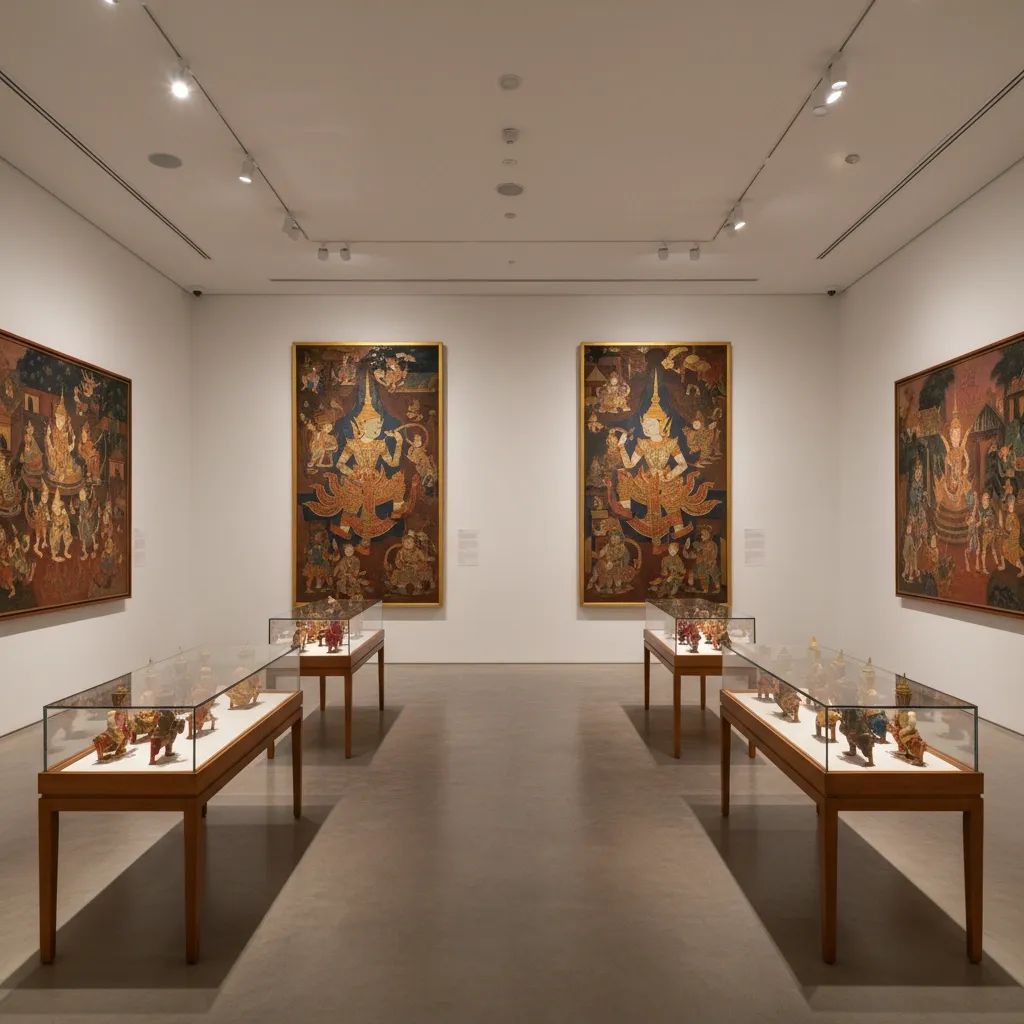
Contemporary dance performances honoring Thai cultural traditions. Traditional Khon masked dance workshops will introduce the classical form—a theatrical tradition with deep roots in Thai performing arts.
An exhibition pavilion will display historical photographs, artifacts, and information illustrating the park's development and significance. Visitors will explore the story of how Lumpini Park emerged as a symbol of Thailand's modernization and urban development.
A commemorative light installation will trace the park's narrative from its establishment to its role as a beloved urban commons, projected across trees and pathways after sunset. The centerpiece is a multimedia mapping show on the restored clock tower, beginning at 7 PM and repeating hourly through the evening—a visual journey synchronized to orchestral music.
Public programming extends across multiple stages with live music performances, food stalls representing all 50 Bangkok districts, a musical fountain, retro ballroom dancing in the refurbished hall, and early-morning tai chi, yoga, and aerobics sessions catering to the retiree and fitness-conscious demographic that has long claimed Lumpini as their morning ritual.
Impact on Residents and Property Markets
For millions of Bangkok residents, Lumpini functions as the capital's primary respiratory system—a 57-hectare oasis in a district dominated by high-rises, gridlock, and industrial air pollution. The park measurably reduces ambient temperatures and airborne particulates in surrounding neighborhoods. Public health officials credit Lumpini with enabling tens of thousands of daily exercise routines—jogging, cycling, tai chi—that mitigate chronic disease burdens in an aging urban population.
The park serves as a social and cultural hub beyond recreation. It hosts the annual Red Cross Fair, political rallies, and seasonal festivals. In March 2026, the grounds hosted "One Piece: Head to the Grand Line," a collaboration between the Tourism Authority of Thailand and Netflix, transforming the park into a pirate-themed attraction. The "Read & Learn Festival 2026" occupied the sundial plaza on March 21–22, attracting families for literacy workshops and author talks.
Real estate analysts estimate that proximity to Lumpini Park commands a 15–25% premium on condominium and office valuations compared to similar properties two kilometers away. The centenary upgrades have accelerated investment velocity in the Silom, Sathorn, and Ploenchit corridors, where developers market "green-view" units at premium pricing and highlight the park's accessibility in marketing materials.
A Symbol of Modern Urban Development
Lumpini Park represents Thailand's commitment to creating modern public spaces that reflect cultural values while serving the needs of all citizens. Established over a century ago, the park embodies the vision of integrating green space into urban planning and providing equitable access to recreation and nature for the city's residents.
As Bangkok evolved into a modern capital, Lumpini Park remained central to the city's identity, offering refuge from urban pressures and serving as a gathering place for diverse communities. The park's design blended modern amenities with traditional Thai principles, creating a space that honors cultural heritage while embracing contemporary urban life.
Forward-Looking Resilience: The Next Century
The BMA's long-term vision for Lumpini emphasizes climate resilience, cultural diversity, and universal accessibility. Planned phases include:
• Sponge city features absorbing stormwater and mitigating flooding during monsoons.
• Native forest zones enhancing biodiversity and reducing the park's ecological footprint.
• Chinese garden sections reflecting Bangkok's multicultural demographics and historical trade ties.
• Urban farming plots for community agriculture and food security education.
• Specialized recreation clubs for seniors, children, and individuals with mobility constraints.
As Bangkok's population density climbs and green space per capita shrinks—the city now averages 4.2 square meters of public green space per resident, below WHO recommendations of 9 square meters—Lumpini's centennial celebration functions as both tribute and reminder. The choices made a century ago to establish this public space continue to shape daily life for millions. Saturday's royal ceremony honors that continuity, even as infrastructure upgrades position the park for the challenges of climate change, aging populations, and urban intensification ahead.
Residents planning to attend should note that Gate 1 (Ratchadamri Road) remains the primary entry point, with security screening beginning at 4 PM. The multimedia show on the clock tower begins at 7 PM and repeats hourly throughout the evening. Food stalls and cultural performances continue through April 30, offering a week-long window to experience the park's transformation and celebrate a century of shared public space in Bangkok.


