
The Thailand Royal Police in Khon Kaen confirmed late Tuesday that a 4-year-old girl died inside a locked vehicle after spending more than three hours alone in scorching heat, a tragedy that underscores the country's persistent struggle with preventable child deaths in hot cars despite awareness campaigns and evolving safety technology.
Why This Matters
• Fatal oversight: The child climbed into the family sedan voluntarily to wait for a promised outing, but no adult realized she was trapped until it was too late.
• Documented on CCTV: Security footage shows the girl entering the rear driver-side door and closing it herself—eliminating any ambiguity about the sequence of events.
• National pattern: Thailand has recorded at least 130 documented incidents of children left in vehicles from 2014 to 2022, with 7 confirmed deaths during that window, though some sources cite over 12 fatalities.
• Legal void: Current Thai law mandates car seats and prohibits children under 10 from front-row seating, but there are no enforceable requirements for rear-seat monitoring systems in private vehicles.
The Khon Kaen Incident
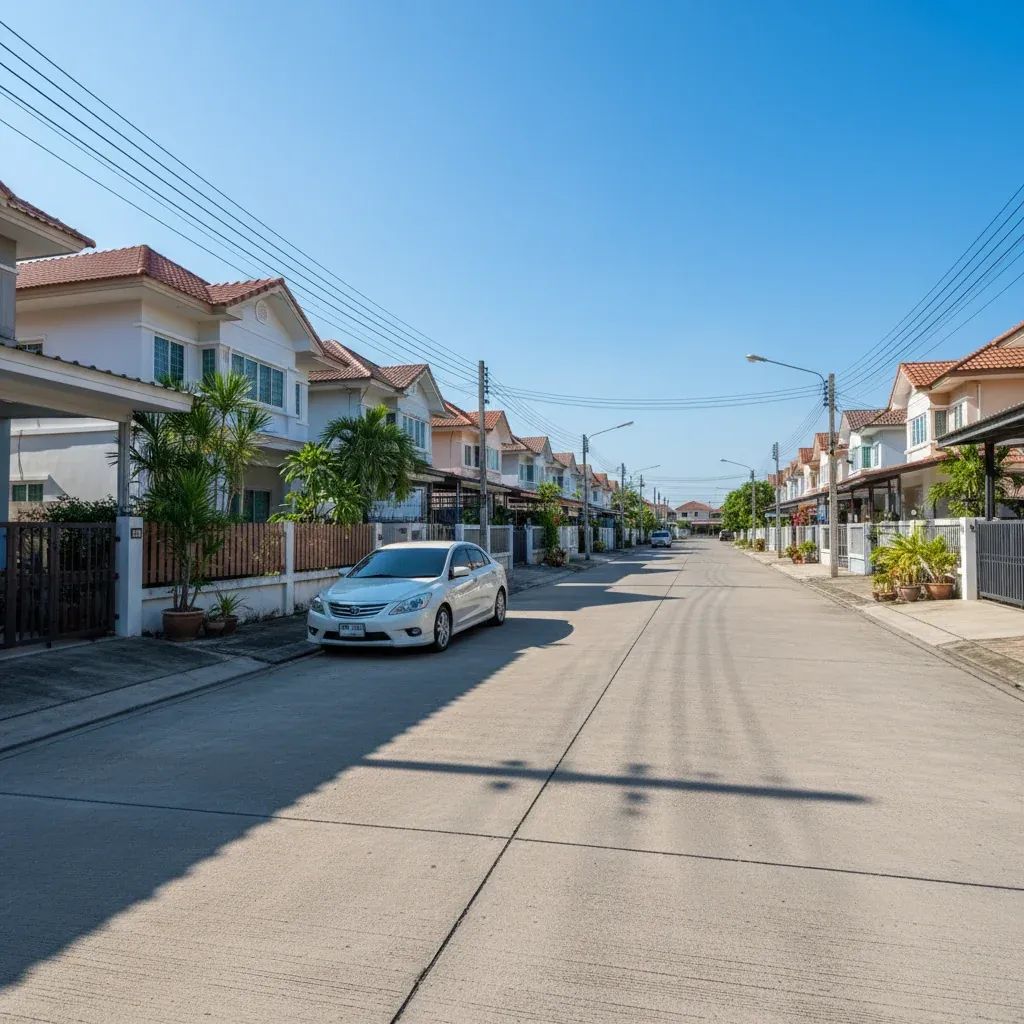
The mother parked the family car outside their home in the Theparaksa 5 community on Prachasamosorn Road in Muang District, Khon Kaen, around midday on April 28. She told her daughter they would go out later, then entered the house to rest—assuming the child had walked to the nearby home of her grandmother.
CCTV footage reviewed by investigators reveals the girl walked to the car independently, opened the rear door on the driver's side, climbed in, and shut the door behind her. No one witnessed her entry. The vehicle remained parked under direct sun exposure for an estimated three-plus hours, during which interior temperatures likely exceeded 55°C—well beyond the threshold for pediatric heatstroke.
When the mother returned to the car, she found her daughter motionless. Immediate attempts at cardiopulmonary resuscitation and emergency medical dispatch failed to revive the child. Officers from Muang Khon Kaen Police Station have interviewed family members and are awaiting autopsy results, though the preliminary cause of death is consistent with heatstroke, not asphyxiation—a critical distinction in these cases.
The Science Behind the Danger
Contrary to widespread belief, children trapped in hot vehicles typically die from heatstroke (hyperthermia), not suffocation. A child's body heats three to five times faster than an adult's because immature thermoregulatory systems cannot cool efficiently.
Temperature escalation is rapid and irreversible:
• Within 5 minutes, cabin temperatures can climb 10°C above ambient air.
• By 15 minutes, the interior reaches peak danger zones—often 50–60°C even on moderately warm days.
• At 20 minutes, a child's core temperature enters the danger zone (above 39°C).
• Beyond 30 minutes, metabolic acidosis, shock, unconsciousness, and cerebral edema set in.
• Death can occur within an hour, even with windows cracked open.
When core body temperature hits 40°C, heatstroke symptoms begin—no sweating, extreme thirst, rapid pulse, headache, dizziness, nausea. At 41°C, organ failure and death become likely. For small children, this progression is dramatically faster.
A separate, less common hazard is carbon monoxide poisoning if the engine is left running with air conditioning on. The colorless, odorless gas can seep into the cabin from the exhaust, binding to hemoglobin and causing fatal hypoxia—especially dangerous because sleeping occupants have no warning.
Thailand's Statistical Reality
Data compiled by the Thailand Department of Disease Control's Injury Prevention Division covering 2014 through 2020 recorded 129 incidents of children left or trapped in vehicles, resulting in 6 confirmed deaths during that span. Including a 7-year-old who died in August 2022, the toll over nine years stands at 7 official fatalities—though some health advocacy groups claim the true figure exceeds 12, suggesting underreporting or classification inconsistencies.
Age and context patterns:
• 38% of affected children were 2 years old; 20.9% were 1 year old; 19.4% were 3 years old.
• 96% of incidents occurred in private passenger vehicles.
• Among the confirmed deaths, 5 were in school transport vans, 1 in a daycare center teacher's personal car, and 1 in a family sedan (the latest Khon Kaen case).
• Most fatalities involved children left alone for more than 6 hours.
The concentration of deaths in school transport highlights systemic oversight failures—drivers and attendants forgetting sleeping toddlers after drop-offs. In the decade from 2012 to 2022, 11 children died in school vans alone.
What This Means for Residents
Existing Legal Framework
As of August 17, 2023, the Road Traffic Act (No. 13) B.E. 2565 mandates that children under 6 years or shorter than 135 cm must use car seats or booster seats. Fines for non-compliance cap at ฿2,000. From 2026 onward, children under 10 and shorter than 1.35 meters are prohibited from front-row seating, except in single-row vehicles.
Public and commercial transport are exempt from the car seat rule, but private vehicles without seats must comply with three conditions: drive slowly and stay left, seat children in the rear (front only for pickup trucks, never in the cargo bed), and ensure a supervisor or seat belt is used.
Technology and Prevention Gaps
Advanced rear-seat alert systems—using motion and heat sensors to detect forgotten occupants and send smartphone alerts—are emerging in new models globally, but Thailand has no regulatory mandate requiring such features. The Ministry of Digital Economy and Society has promoted a Smart School Bus pilot program deploying IoT sensors that notify parents, teachers, and control centers if a child remains in a vehicle after shutdown, but adoption remains voluntary and patchy.
Thai vocational students have developed DIY solutions—siren-based alarms that auto-lower windows and send SMS alerts—but these innovations lack commercial scale or regulatory support.
Legal Liability in Negligence Cases
No criminal charges have been filed in the Khon Kaen case as of this writing, but Thai law allows multiple avenues for liability:
• Civil tort (Section 420, Civil and Commercial Code): Parents or vehicle owners may face claims for compensatory damages if negligence is proven, including funeral costs, loss of support, and emotional distress.
• Criminal negligence (Section 291, Penal Code): Driving-related deaths from gross negligence can trigger prosecution, though application to stationary-vehicle fatalities is rare and discretionary.
• Compulsory motor insurance (Act on Protection of Accident Victims from Motor Vehicles, B.E. 2535): Covers initial expenses up to ฿35,000 for funeral costs and ฿30,000 for medical treatment prior to death, paid within 7 days without proof of fault. Full civil damages may reach ฿500,000 depending on policy terms and court rulings.
Parental liability under Section 429 holds guardians jointly responsible for a minor's actions unless they prove reasonable care was exercised—though this typically applies to a child's harmful acts toward others, not self-inflicted harm through parental oversight failure. Nonetheless, civil courts have awarded damages to grandparents who lost support from a deceased child, establishing precedent for familial claims.
Regional Context and Cultural Factors
Unlike some jurisdictions with "Good Samaritan" laws protecting bystanders who break car windows to rescue trapped children, Thailand has no explicit legal shield for such interventions, creating hesitancy among passersby who fear property damage charges. Public awareness campaigns emphasize teaching children as young as 3 to honk the horn or unlock doors from inside—a pragmatic, if imperfect, stopgap.
The Khon Kaen case also reflects a common assumption in multi-generational Thai households: that a child not seen with one parent has naturally gravitated to a grandparent or other relative. This diffusion of oversight responsibility, while culturally rooted, increases the risk of tragic miscommunication.
Path Forward
Advocacy groups are pressing the Thailand Ministry of Transport to require rear-seat alert systems as standard equipment in all new passenger vehicles by 2028, mirroring regulations under consideration in the European Union and several U.S. states. In parallel, the Ministry of Education is piloting mandatory check-in/check-out electronic systems for all school and daycare transport, with real-time parent notifications.
For now, the burden remains on individual vigilance. Experts recommend a "look before you lock" habit—physically checking the back seat every time you exit the vehicle—and placing a crucial personal item (phone, wallet, work badge) in the rear seat to force a visual sweep.
The Khon Kaen family, according to neighbors quoted in local media, is devastated. The mother's assumption that her daughter had gone elsewhere, combined with the child's initiative to wait inside the car as instructed, created a perfect storm of miscommunication. Funeral arrangements are underway, and police have indicated no immediate intent to file charges, pending final autopsy confirmation and consultation with prosecutors.
Practical Reminders
• Never assume a child has gone elsewhere—conduct a headcount before entering the house.
• Teach children aged 3+ to honk the horn continuously if locked inside, and to lower power windows if accessible.
• Invest in aftermarket sensors if your vehicle lacks factory alerts—several models under ฿3,000 are available in Thai e-commerce platforms.
• Park in shaded areas whenever possible, though this only delays, not prevents, dangerous heat buildup.
• Call 191 immediately if you see an unattended child in a vehicle—Thai emergency services prioritize these calls and will authorize forced entry if necessary.
This incident is the latest in a preventable pattern. With summer temperatures routinely exceeding 40°C across Thailand's northeast, the window for error is shrinking. Until technology and regulation catch up, the solution remains brutally simple: Check the back seat. Every single time.


