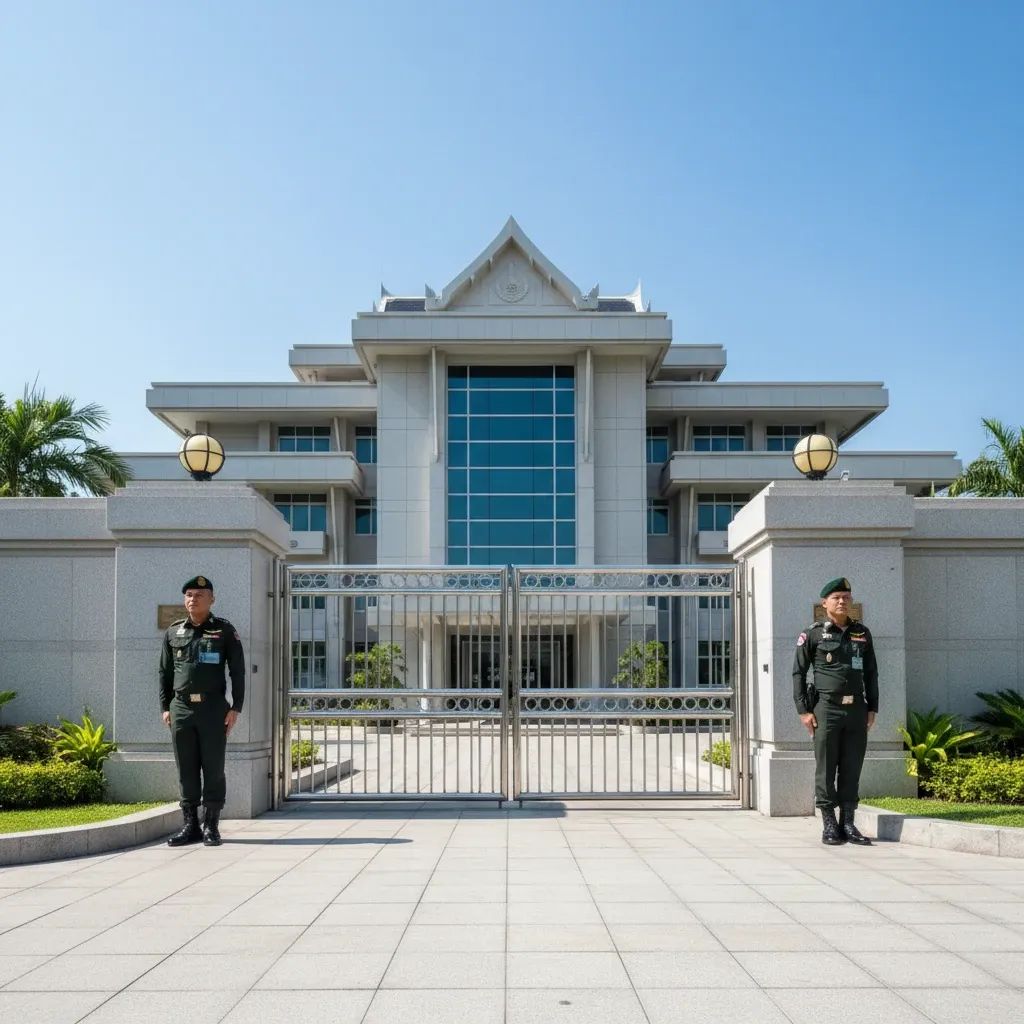
The Thailand Immigration Bureau is holding a Chinese investigative journalist in detention as Beijing formally requests extradition—a case now testing the limits of Bangkok's commitment to international human rights obligations against the backdrop of deepening diplomatic ties with its largest trading partner.
Why This Matters
• Bai Zhaodong, a reporter known for exposing corruption networks within the Chinese Communist Party, faces detention at a Bangkok immigration center since January while extradition proceedings unfold.
• Rights groups warn he could face torture, forced disappearance, and political persecution if returned to China, which currently detains 120 journalists—more than any other nation.
• The timing is critical: Thai Deputy Prime Minister and Minister of Interior Anutin Charnvirakul is scheduled to visit Beijing between July 16–20 for talks with President Xi Jinping, raising concerns Bangkok may prioritize bilateral relations over refugee protections.
• At least 3 other Chinese dissidents currently detained in Thailand hold UNHCR refugee status, yet face similar deportation risks.
Who Is Bai Zhaodong
Bai Zhaodong built his reputation as a financial investigator at Caijin Magazine, a Beijing-based publication known for probing the intersection of power and money in China. His reporting focused on multi-million-yuan fraud schemes involving local government officials and senior members of the Chinese Communist Party—work that eventually drew criminal charges, state surveillance, and interrogations from authorities in the Yulin Public Security Bureau.
He fled China in 2023. By the following year, Chinese authorities issued an arrest warrant. Thai immigration officers detained him in January 2026 and transferred him to the Bangkok Immigration Detention Center, where he remains without authorization to leave the country.
What Beijing Claims—and What Advocates Say
The China Ministry of Foreign Affairs contends Bai is wanted for extortion and bribery charges unrelated to state officials. The ministry framed the extradition request as a routine criminal matter under the 1993 bilateral extradition treaty ratified between Thailand and China, which took effect in March 1999.
Reporters Without Borders and Safeguard Defenders dispute this characterization entirely. They argue the charges are fabricated retaliation for journalism that embarrassed powerful figures. Both organizations cite a "foreseeable, individualized, and genuine risk" of torture, arbitrary detention, and enforced disappearance if Bai returns. China's treatment of journalists is well-documented: it holds the global record for imprisoned reporters, with 120 currently behind bars.
Human Rights Watch has separately accused the Thailand government of repeatedly sidelining international obligations to appease Beijing, pointing to a pattern in which economic incentives override refugee protections.
Thailand's Legal Obligations Under Scrutiny
Thailand operates under two overlapping legal frameworks for extradition: the 1993 bilateral treaty with China and the domestic Extradition Act of 2008. Both require dual criminality—meaning the alleged offense must be criminal in both jurisdictions and carry a sentence of at least one year.
However, the treaties also embed human rights safeguards. Under the International Covenant on Civil and Political Rights (ICCPR), which Thailand has ratified, the principle of non-refoulement prohibits returning individuals to countries where they face a real risk of torture or inhumane treatment. The UN Convention Against Torture (CAT) reinforces this prohibition.
Safeguard Defenders emphasized that Thailand's domestic law and international commitments explicitly forbid deportation in cases involving political persecution or torture risk. The group called on Thai authorities to allow Bai safe passage to a third country rather than comply with Beijing's demand.
Thailand also maintains bilateral extradition treaties with neighboring countries, including Myanmar, Cambodia, and Laos—arrangements that residents from these nations should be aware of when considering Thailand as a refuge. Understanding the full landscape of Thailand's extradition agreements helps foreign nationals assess their legal position, particularly if they have fled persecution in the region.
The Broader Pattern: Other Dissidents at Risk
Bai is not alone. At least three other Chinese nationals detained in Thailand currently hold UNHCR-certified refugee status, yet face deportation pressure:
• Tan Yixiang
• Zhang Xinyuan
• Zhou Junyi
All three fled China citing political persecution. Despite UN recognition of their refugee claims, they remain in Thai custody without clear pathways to resettlement. Advocacy groups warn that returning any of them would violate the UN Model Treaty on Extradition, which provides for refusal when human rights are at stake.
Diplomatic Timing Raises Questions
The extradition request arrives during a sensitive diplomatic window. Deputy Prime Minister and Minister of Interior Anutin Charnvirakul is set to visit Beijing from July 16–20 to hold talks with President Xi Jinping. China remains Thailand's largest trading partner and a key investor in infrastructure projects across the kingdom, including railways and energy developments.
Human Rights Watch warned that Bangkok has historically subordinated refugee protections to maintain favorable relations with Beijing. The organization pointed to previous cases in which Chinese dissidents were quietly deported despite holding provisional asylum status.
The Thailand Ministry of Foreign Affairs has not publicly commented on the timing or substance of Bai's case. The extradition review process typically begins with the ministry, then moves to the Ministry of Justice and the Office of the Attorney General before judicial review. Thai courts are tasked with assessing whether sufficient evidence exists and whether extradition complies with treaty terms—but they do not rule on the defendant's guilt, leaving that determination to the requesting country.
What This Means for Residents
For foreign nationals living in Thailand—particularly those from countries with authoritarian governments—this case highlights the fragility of protection mechanisms even when UN refugee status is granted. UNHCR recognition does not guarantee immunity from detention or deportation; it requires the host government to honor non-refoulement principles, which are not always enforced.
Legal experts note that Thai courts have previously upheld refusals to extradite in political cases, citing constitutional protections for freedom of expression. However, enforcement remains inconsistent, especially when geopolitical considerations intersect with judicial processes.
For journalists, activists, and academics residing in Thailand who have fled repressive regimes, the message is clear: legal status alone may not ensure safety. Observers recommend maintaining contact with embassies of third countries willing to accept asylum claims and keeping legal representation on standby.
International Pressure Mounts
Reporters Without Borders has publicly called on the Thai government to reject the extradition and facilitate Bai's transfer to a country that will guarantee his safety. The group noted that China's systematic persecution of journalists makes any assurance of fair trial or humane treatment inherently unreliable.
Safeguard Defenders echoed that assessment, stating that compliance with Beijing's request would constitute a violation of Thailand's obligations under the Convention Against Torture and the ICCPR. The organization urged Thai courts to apply the legal safeguards embedded in the 1993 treaty, which allows refusal on human rights grounds.
The Office of the UN High Commissioner for Human Rights (OHCHR) in Southeast Asia has issued guidance emphasizing that border management and extradition procedures must align with international human rights standards, including robust screening for torture risk.
A Test Case for Rule of Law
Legal observers describe Bai's case as a benchmark for Thailand's judiciary. If courts approve the extradition despite documented risks, it could signal a shift toward prioritizing diplomatic expediency over legal principle. Conversely, a ruling that refuses extradition on human rights grounds would affirm the independence of Thailand's legal system and its adherence to international norms.
The Thailand Constitutional Court has previously affirmed that refusal to extradite in political cases protects freedom of expression and avoids international conflict—principles enshrined in the ICCPR. Whether lower courts will apply that precedent in Bai's case remains uncertain.
As the July 16–20 summit approaches, advocacy groups are intensifying public pressure, urging the government to demonstrate that economic partnerships do not override fundamental rights protections. The outcome will reverberate far beyond one journalist's fate, shaping how refugees, dissidents, and foreign nationals perceive Thailand's commitment to the rule of law.