
Why This Matters
• Carry-on only, maximum two units: Each power bank is capped at 160 Wh, with a strict two-unit limit per passenger. Devices exceed this threshold face aircraft prohibition.
• Flight operations locked: Zero in-flight charging—neither phones nor the power banks themselves—and devices must remain unplugged and secured in seat pockets or under-seat storage, never overhead bins.
• Enforcement includes significant penalties: Violations in Japan incur fines up to ฿280,000 or up to two years imprisonment, underscoring the regulatory shift from advisory to criminal liability.
The Safety Crisis That Forced Global Action
Aviation's relationship with lithium batteries shifted significantly in early 2025. In January, an Air Busan Airbus A321 caught fire at Gimhae International Airport in Busan before departure. Investigators traced the origin to a portable charger stowed overhead. The aircraft suffered extensive damage, though all 176 passengers and crew evacuated safely.
Following this incident and similar thermal events involving lithium-powered devices, aviation authorities worldwide have documented a concerning pattern of power-bank-related incidents on commercial flights. Power banks have emerged as the most prevalent contributor to lithium-related thermal runaway events—the self-accelerating chemical reaction that generates uncontrollable heat.
How Asia Led Regional Tightening
Regulators across East Asia moved decisively in response to these safety incidents. South Korea's Ministry of Land, Infrastructure and Transport responded on March 1, 2025, mandating that travelers keep power banks and e-cigarettes secured on their person rather than in overhead storage, while banning all in-flight charging.
By January 2026, regional carriers had implemented stricter protocols, with several airlines requiring passengers to either tape charging ports shut or seal power banks individually in protective packaging. This move acknowledged an uncomfortable reality: counterfeiting and manufacturing defects plague the portable-charger market across Southeast Asia, where unlabeled or mislabeled units regularly circulate through informal distribution channels.
China's Civil Aviation Administration imposed additional requirements around battery certification and labeling, mandating that power banks display clear capacity markings; units with absent, faded, or unreadable labels face confiscation.
The ICAO Framework and Japan's Interpretation
When the International Civil Aviation Organization codified updated Technical Instructions on March 27, 2026, it established a unified architecture that most major aviation authorities adopted within weeks. Japan's formal enforcement on April 24, 2026—precisely 28 days later—represents one of the strictest global implementations.
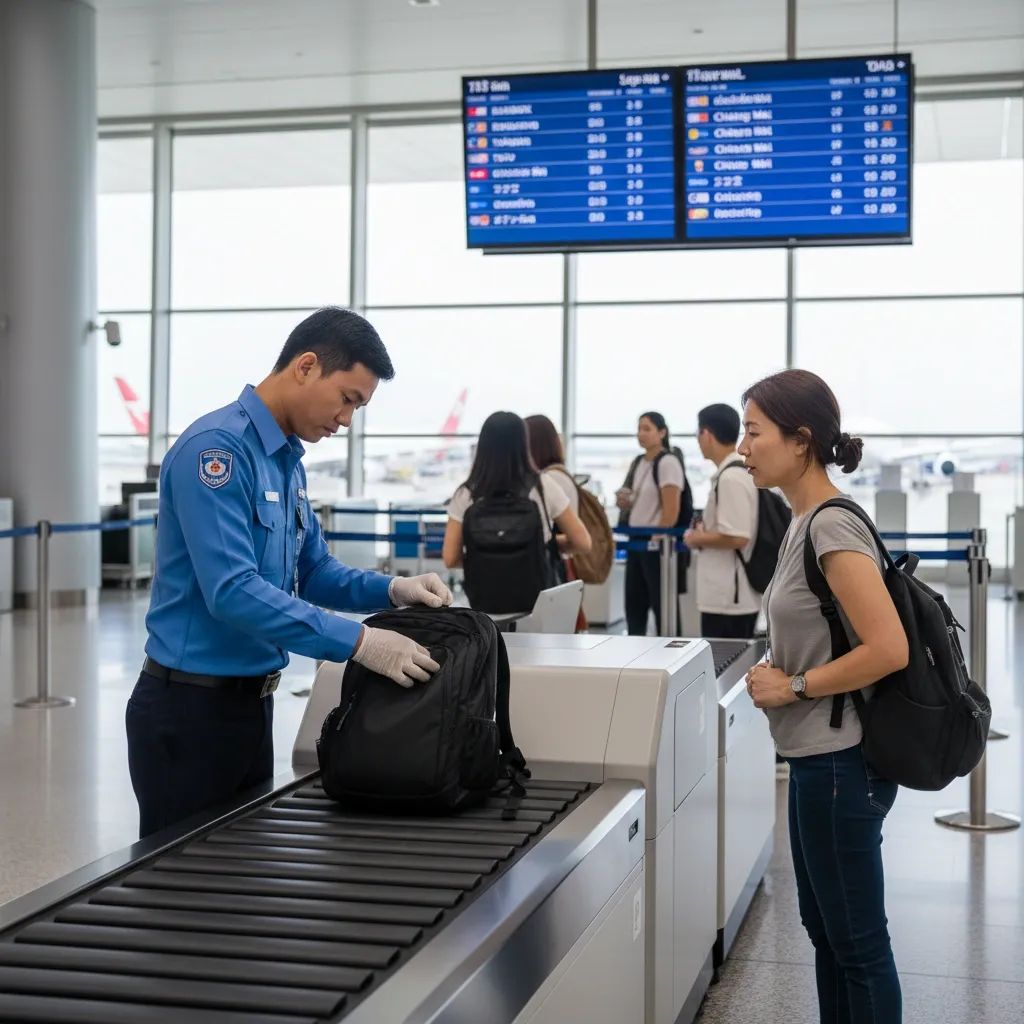
The framework consolidates four operational requirements. Capacity constraints limit passengers to maximum 160 Wh per unit, with a hard ceiling of two power banks per person. Devices between 100 Wh and 160 Wh frequently require advance airline authorization depending on the carrier's risk tolerance. Operational lockdown mandates power banks remain turned off and electrically disconnected throughout the entire flight, eliminating charging sessions at in-seat USB ports, AC outlets, or any onboard power infrastructure. Baggage protocols confine power banks exclusively to carry-on luggage—never checked baggage—requiring placement in immediate reach, typically seat pockets or under-seat storage where crew can rapidly respond to thermal events. Terminal protection demands that battery contacts be shielded through original packaging, electrical tape, or individual plastic enclosures to prevent dormant short-circuit scenarios.
Notices posted at Tokyo Haneda Airport, Narita International, and regional Japanese terminals explain the framework in multiple languages. Airlines serving routes to and from Thailand have updated boarding announcements and gate procedures to reflect the Japanese regulatory environment.
Practical Implications for Travelers Heading to Japan
The policy reshape demands behavioral adaptation. Pre-departure charging has transitioned from convenience to necessity. Travelers from Thailand must fully charge devices before airport arrival or utilize Suvarnabhumi and Don Mueang charging infrastructure as a procedural checkpoint. Mid-flight battery anxiety—historically managed through power banks—now requires flight planning that terminates at full charge.
Device specification verification becomes critical. Most mainstream consumer power banks occupy the 20,000–30,000 mAh range, translating roughly to 75–110 Wh at standard 3.7-volt lithium nominal voltage, placing them comfortably below the ceiling. However, laptop-charger bricks and large-capacity travel models frequently exceed 160 Wh, rendering them aircraft-incompatible. Devices lacking visible watt-hour labeling or bearing unclear markings risk confiscation at Japanese security checkpoints. Counterfeit units—prevalent in Thai online marketplaces and informal retail channels—routinely carry mislabeled specifications wildly divergent from actual performance, introducing unmeasured thermal risks.
Packing discipline has shifted. Power banks must reside in personal carry-on items or cabin bags accessible during flight, never in checked luggage where crew cannot intervene if overheating occurs. Protecting charging contacts—via original packaging, electrical tape, or individual plastic pouches—eliminates the hidden risk of internal short circuits capable of igniting latent manufacturing defects.
Penalty architecture reflects zero-tolerance philosophy. A two-year prison sentence or ฿280,000 fine for charging a smartphone mid-flight may appear disproportionate to Western observers, yet Japan's enforcement reflects its institutional approach: strict compliance through proportional consequence. Violations remain exceptionally rare because deterrence is explicit and credible.
Global Regulatory Divergence
While fundamental principles converge across aviation authorities, enforcement intensity and specific tolerances diverge meaningfully. The United States Federal Aviation Administration permits two larger spare lithium batteries (101–160 Wh) with prior airline approval but mandates in-flight charging prohibition. The European Union Aviation Safety Agency strongly discourages in-flight power-bank usage and recommends passengers maintain lower state-of-charge batteries to minimize thermal risk. Canada mirrors the U.S. posture. China has implemented certification documentation requirements and banned-unit tracking.
Japan occupies the strictest regulatory continuum. Criminal penalties—not merely administrative fines—attached to violations reflect the Japan Ministry of Land, Infrastructure, Transport and Tourism (MLIT) positioning lithium risks as public-safety threats equivalent to other serious infractions.
Why Lithium Remains Fundamentally Hazardous
Thermal runaway emerges from internal short circuits or manufacturing defects initiating self-sustaining heat generation beyond suppression capability. Within a sealed fuselage at cruise altitude, even modest combustion events can compromise structural integrity, saturate fire-suppression systems, or incapacitate crew capacity. Lithium fires exhibit counterintuitive persistence—they continue burning despite conventional extinguishing attempts and can reignite hours after apparent suppression.
Power banks amplify this profile because they saturate modern travel cultures—nearly ubiquitous, easily damaged through luggage compression or impact, and frequently manufactured outside rigorous quality control frameworks. Counterfeit or incorrectly labeled units—endemic to Southeast Asian consumer electronics retail—deviate wildly from printed specifications. Actual capacity and thermal stability remain unmeasured and unknown, transforming each device into an unpredictable thermal risk.
Current Requirements for Thailand-Based Travelers
Effective April 24, 2026, Japan's enforcement of the ICAO framework is now in effect. For Thailand-based residents, the new operational reality represents a permanent adaptation to travel protocols. Overnight device charging before airport departure, visual confirmation that power-bank capacity labels are legible and accurate, and acceptance that in-flight connectivity convenience has been traded for cabin safety have become standard travel requirements.
This regulatory transformation reflects aviation's recalibration between personal-device proliferation and operational safety assurance. Lithium chemistry now powers essential modern equipment—phones, laptops, medical devices—creating an irreversible dependency. Yet regulators are simultaneously drawing firmer boundaries on where and how this technology can operate. Japan's April 24, 2026 enforcement milestone signals a permanent institutional shift in risk tolerance for in-flight battery safety.


