
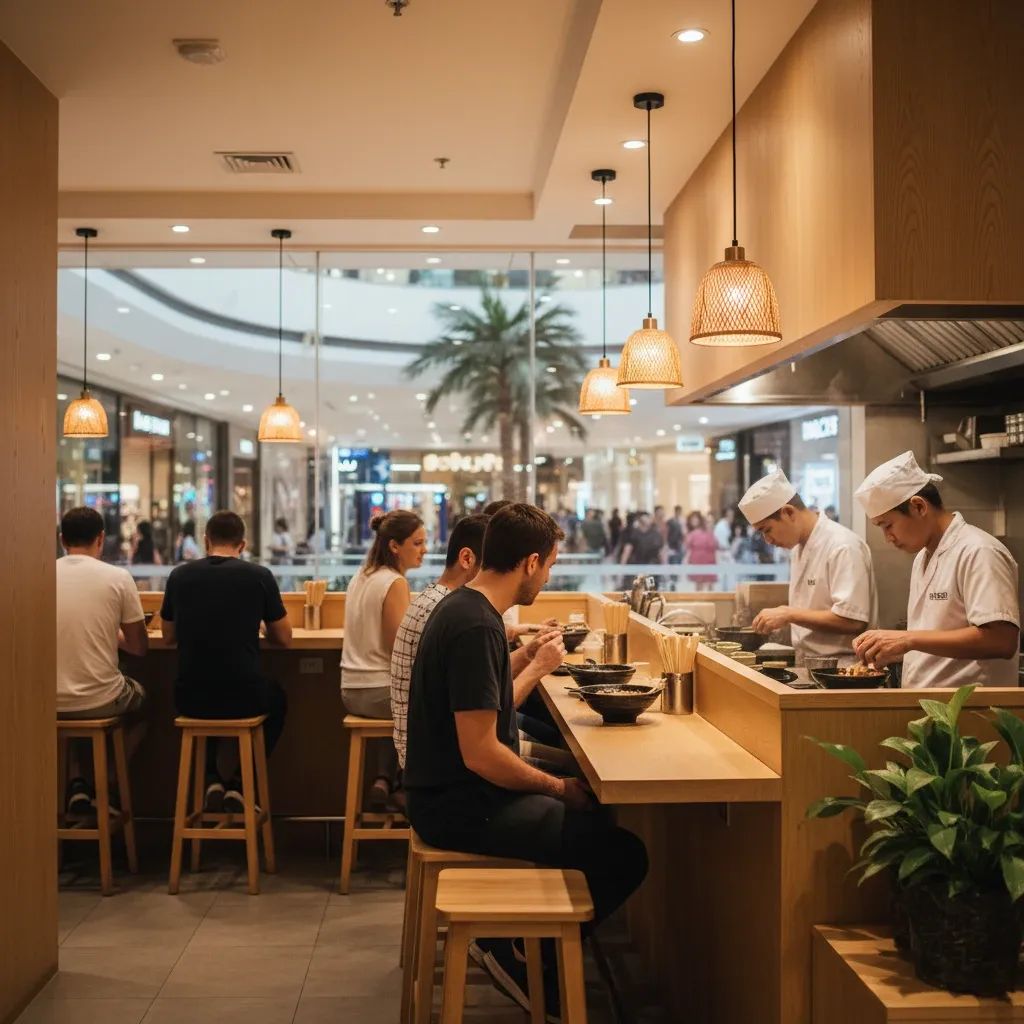
Thailand's Japanese restaurant sector is entering a strategic recalibration phase, with new brands and aggressive expansion plans rolling out across the country despite the market recording its first numerical decline since 2007 last year. Operators are betting on specialization, affordability, and prime location clusters to recapture momentum in a landscape where simply serving Japanese food is no longer enough.
Why This Matters
• Market correction: The sector shed outlets in 2025 for the first time in nearly two decades, but 2026 is seeing 20-plus new branches from major players like Maguro Group alone.
• Price wars are real: Economic headwinds have forced even premium brands to introduce cheaper menu tiers and rethink their footprint strategy.
• Regional expansion: The Eastern Economic Corridor (EEC) is emerging as the fastest-growing zone outside Bangkok, driven by industrial expat communities.
• Long-term trajectory remains bullish: Forecasts project the Thai Japanese restaurant market will climb from USD 1.45B in 2025 to USD 2.31B by 2033, equivalent to a 6% annual growth rate.
Value, Not Volume: The New Playbook
The Japanese dining scene in Thailand has matured to the point where consumers demand tangible ingredient quality, distinct storytelling, and clear specialisms—not just the label "Japanese." This shift is forcing operators to polarize: large, well-capitalized chains are doubling down on expansion, while smaller single-outlet players are closing under pressure from rising wages, rent, and ingredient costs.
Maguro Group, the MAI-listed operator behind Maguro sushi, Hitori Shabu, and other concepts, exemplifies the aggressive-but-adaptable approach. In April, the company launched Ippe Koppe, a Japanese curry specialist, and opened a second Bincho traditional restaurant at One Bangkok. The group's target for the year is ambitious: 20 new branches, lifting its total footprint to 73 outlets by year-end. Critically, Maguro is also adjusting menus downward at its Maguro and Hitori Shabu outlets to offer more accessible price points, a direct response to the economic squeeze hitting Thai consumers.
Similarly, Synergy Co Ltd, a Japanese restaurant operator, debuted its Tayuto udon concept at CentralWorld in April and aims to operate five branches within three years. Meanwhile, Shichi Japanese Restaurant—which posted over 300M baht in revenue in 2025—is targeting 20% sales growth in 2026 and expanding into the Ramindra Expressway and Krungthep Kreetha corridors, with plans to enter the premium shabu-shabu segment.
What Went Wrong in 2025
The contraction last year was driven by a confluence of headwinds. Thailand's sluggish economic growth cut into discretionary dining budgets, and consumers became more cautious about spending on higher-priced meals. The Japanese yakiniku segment, in particular, suffered contraction, while sushi restaurants saw a 6.8% decline due to oversupply and saturation.
Another unique factor: the weakening Japanese Yen made travel to Japan significantly cheaper for Thai tourists, fueling a "save it for Japan" mentality. Instead of spending on omakase or wagyu in Bangkok, consumers opted to allocate those budgets for dining in Tokyo or Osaka, where authenticity and pricing felt more justified.
Rising operational costs—especially for smaller operators without scale advantages—also played a role. Rent in prime Bangkok malls, ingredient import expenses, and wage inflation squeezed margins, leading to closures across the capital, metropolitan provinces, and regional markets. The market had simply reached maturation: after nearly two decades of unbroken growth, the sector hit a ceiling where generic Japanese offerings could no longer command customer loyalty.
Where the Growth Is Hiding
Despite the 2025 dip, specific segments are thriving in 2026. The conveyor-belt sushi market is experiencing rapid expansion. Sushiro, Japan's top kaiten chain, now operates over 40 branches in Thailand, mainly in Bangkok and surrounding areas, and is the current market leader. Hama Sushi, part of Zensho Holdings, opened its first Thai outlet at Central Pinklao in November last year. Katsu Midori, a Tokyo brand brought in by The Food Selection Group, launched in December 2024 and has already scaled to four branches.
The most anticipated opening in this segment is Kaiten Sushi Ginza Onodera, a premium kaiten brand from the Onodera Group. Set to debut in Q3 2026 at CentralWorld, it will be the brand's first Southeast Asian outlet and largest flagship in Asia, distinguished by its use of premium-grade tuna.
Ramen shops and Japanese cafés are also bucking the trend. A surge in local ramen shops run by Thai chefs offering creative Thai twists—along with the matcha trend driving café openings—is pulling in footfall. Omakase dining continues to evolve, expanding from high-end exclusivity to mid-range and casual tiers, with Thai chefs increasingly blending local ingredients and seasonal produce with traditional Japanese techniques.
What This Means for Residents
For diners living in Thailand, the recalibration translates into better value and more variety. Expect to see:
• Lower price points at established chains like Maguro and Hitori Shabu, making Japanese dining more accessible without sacrificing quality.
• More regional options: If you live in the Eastern Economic Corridor—particularly Chonburi or Rayong—new openings will come to your malls and commercial districts, not just Bangkok.
• Specialty experiences: Generic sushi bars are losing ground to specialist concepts: Japanese curry (Ippe Koppe), udon (Tayuto), premium kaiten (Ginza Onodera), and French-Japanese hybrids like Hippopotoshi BKK in Soi Ruamrudee.
• Digital integration: Many restaurants are adopting AI-driven demand forecasting and POS-integrated analytics, reducing food waste and improving operational margins—savings that can translate into better pricing or higher ingredient quality.
Bangkok Still Dominates, But EEC Is Rising Fast
Bangkok remains the largest market due to its dense mall ecosystems, premium retail clusters, and strong expatriate presence. However, the Eastern Economic Corridor—covering Chonburi and Rayong—is emerging as the fastest-growing regional cluster. This is fueled by industrial development, expanding commercial infrastructure, and a growing expatriate population tied to manufacturing and logistics sectors.
For investors and franchisees, this signals a shift: the next wave of viable locations may not be in central Bangkok, but in industrial-adjacent commercial zones where disposable incomes are rising and dining infrastructure is still underdeveloped.
The Technology and Sustainability Angle
Thailand's Japanese restaurant ecosystem is transitioning into a digitally enabled, premium-casual growth model. Operators are integrating AI-enabled ordering systems and POS analytics to improve margins and forecast demand more accurately. Sustainability is also becoming a brand differentiator: restaurants are sourcing locally caught, seasonal seafood and reducing plastic packaging to strengthen positioning with younger, environmentally conscious consumers.
Yuzu Group, for instance, has paused new openings in the short term, instead focusing on renovating existing outlets and improving profitability per unit of space—a signal that the era of blind expansion is over, replaced by a focus on operational excellence and unit economics.
The Bottom Line
The Japanese restaurant market in Thailand is not shrinking—it's consolidating. The 2025 downturn was a market correction that weeded out undifferentiated players and forced the sector to grow up. In 2026, the winners are those who specialize, adapt pricing, leverage technology, and tell a compelling story. With forecasts projecting the market to nearly double by 2033, the long-term trajectory remains intact—but only for operators who understand that "Japanese food" is no longer the selling point; the experience, value, and authenticity are.


