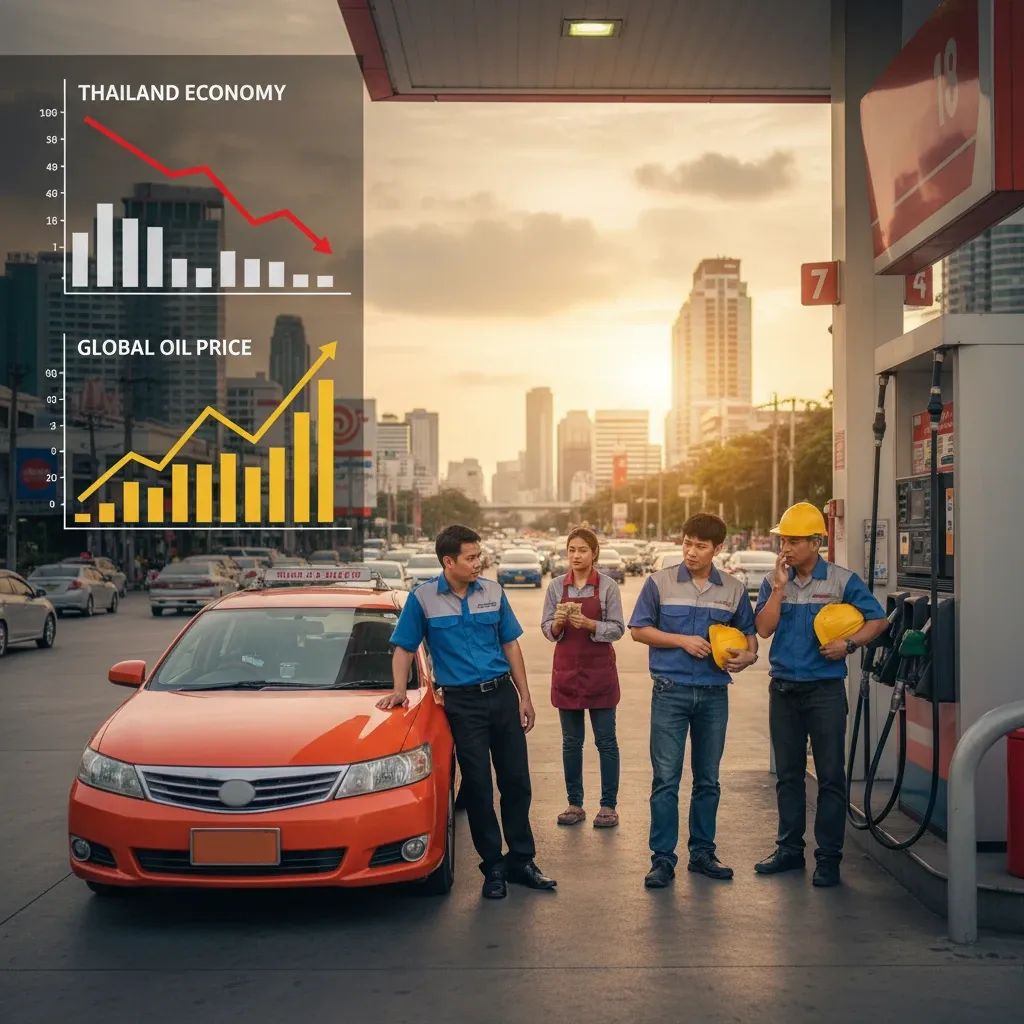
Thailand's Oil Fund continues to support diesel prices as the government works to manage costs for consumers amid the volatile US-Iran conflict that has sent crude oil prices climbing in global markets. The surge in energy prices—driven by disruptions to critical shipping lanes in the Middle East—is affecting household budgets, transport costs, and inflation pressures across the kingdom.
Why This Matters
• Fuel prices have risen in recent weeks, with diesel and gasohol climbing above ฿35 per liter as global crude oil markets face upward pressure.
• Global crude prices have climbed significantly since early July, approaching $86 per barrel as tensions in the Middle East disrupt oil flows.
• Inflation concerns are rising across Thailand as energy costs increase pressure on the broader economy.
• Economic growth forecasts face headwinds from prolonged energy-price pressure stemming from Middle Eastern instability.
The Strait That Holds the World Hostage
The Strait of Hormuz—a narrow passage between the Persian Gulf and the Gulf of Oman—handles roughly 17-20 million barrels per day, representing a significant portion of global oil shipments and a meaningful share of worldwide liquefied natural gas (LNG) trade. When tensions between US and Iranian forces escalated in 2026, tanker traffic faced disruptions. Insurance premiums spiked. Alternative shipping routes added time and costs to each shipment.
The market saw some relief during a period of lower tensions, but renewed hostilities in July sent global crude prices back up, prompting fuel price increases at Thai pump stations. Analysts note that Brent crude has averaged around $86 per barrel in 2026—significantly higher than pre-conflict forecasts—reflecting the scale of the supply disruption caused by the geopolitical crisis.
What This Means for Residents
Transport and Logistics
Fuel accounts for a substantial portion of operating costs in Thailand's trucking, shipping, and aviation sectors. As diesel prices climb, freight and logistics costs rise accordingly. Airlines have adjusted ticket surcharges; shipping firms are imposing fuel surcharges on cargo; and delivery companies warn of price adjustments ahead.
Public transportation operators face mounting pressure. Public-bus operators in Bangkok and neighboring provinces have sought government support to manage fare increases. Motorcycle-taxi operators are considering fare adjustments to offset higher fuel costs.
Food and Consumer Goods
Higher transport costs affect food prices across the kingdom. Fresh produce, frozen seafood, and packaged goods all depend on diesel-powered transportation. Food-price inflation is accelerating, with staple items—rice, cooking oil, eggs—absorbing cost increases. Retailers have begun passing on costs to consumers, with price rises visible in markets from Bangkok to regional cities.
Electricity Bills
LNG fuels a major portion of Thailand's power generation. Global energy prices are rising, and electricity tariffs track these movements with a lag of several weeks. Households consuming typical amounts of electricity should expect bill increases as the July oil-price spike works through the system in the coming months.
Government Response
Thailand's Oil Fund remains the primary tool for managing fuel prices, subsidizing diesel and gasohol to prevent immediate sharp increases. However, the fund faces mounting pressure as global oil prices remain elevated, requiring sustained government support.
The government has announced various support measures to help affected residents:
• Welfare assistance programs have been expanded to help low-income households cope with rising costs.
• Support for agricultural producers has been increased to help farmers offset higher input costs.
• Soft-loan facilities have been made available to small and medium enterprises facing higher energy costs.
These measures aim to cushion the impact of higher energy costs, though analysts note they address immediate hardship rather than fundamental economic vulnerabilities.
Looking for Solutions: Diversification and Renewables
Regional oil producers are working to reduce dependence on the Strait of Hormuz through pipeline development and alternative export routes. For Thailand, longer-term energy security depends on several factors:
• Long-term energy contracts with diverse suppliers help insulate the country from supply shocks
• Domestic oil and gas exploration in the Gulf of Thailand could boost local production
• Renewable energy expansion is underway, with solar and other clean energy sources growing as part of Thailand's power generation mix
The energy transition takes time, however, and offers little immediate relief at the pump.
The Inflation Squeeze
Rising energy prices are driving broader inflation across Thailand. The central bank faces a balancing act: raising interest rates to cool prices would further dampen economic growth, while lower rates risk allowing inflation to accelerate. For ordinary Thais, the impact is direct: transport costs, food prices, and utility bills are all climbing faster than wages.
A household that spent ฿3,000 monthly on transport and ฿6,000 on food is now facing material increases in expenses compared to earlier in the year. Wage growth remains modest, meaning real purchasing power is declining for many residents.
No End in Sight
Geopolitical tensions in the Middle East show little sign of easing, and oil markets are pricing in ongoing supply-disruption risks. For Thailand, the challenge is clear: energy security has become a strategic priority, and the economy remains vulnerable to shocks originating thousands of kilometers away in the Middle East.
Until domestic energy production expands, renewable capacity grows significantly, or Middle Eastern tensions ease—none of which appear imminent—residents will continue managing the effects of global energy-price pressures on their household budgets and daily lives.