
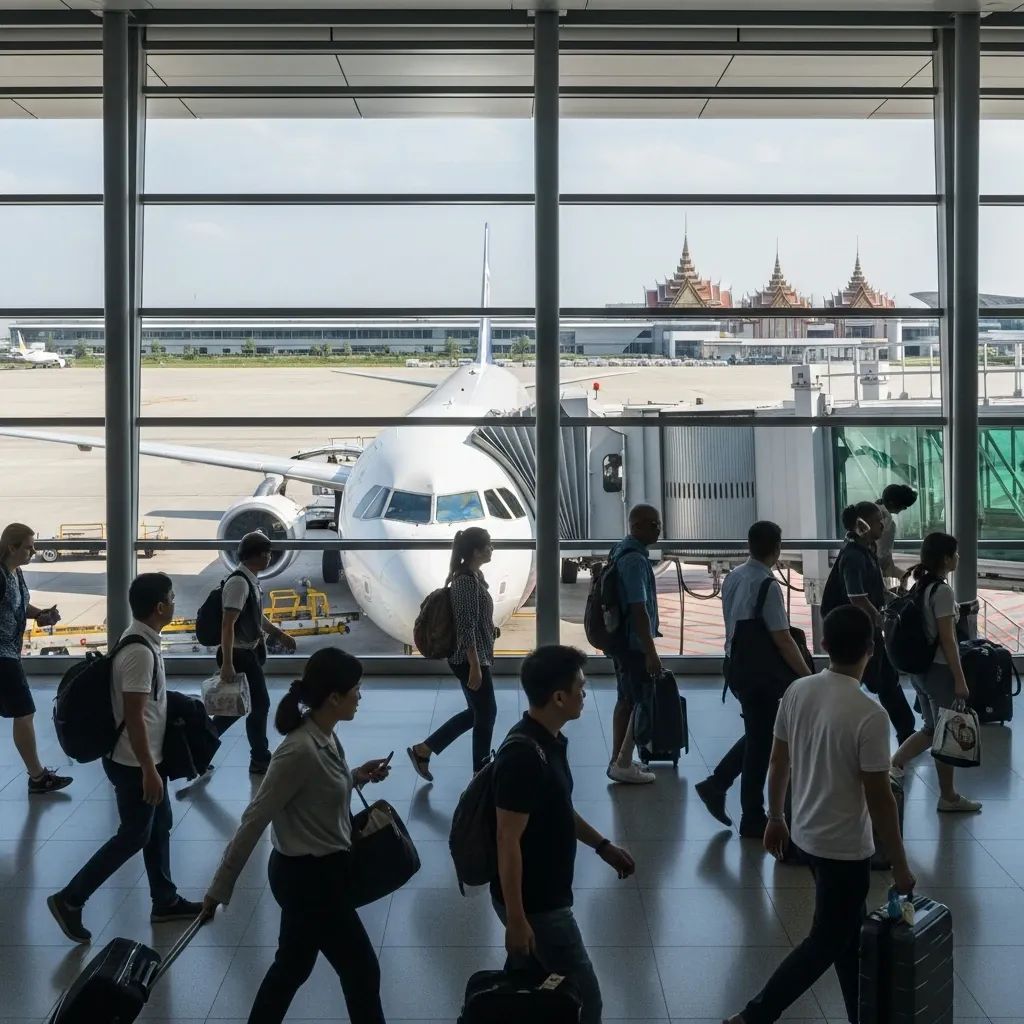
A Hong Kong court sentenced 70-year-old gang member Chiu Hon-leung to one year in prison on June 22, 2026 for forcing two Thai women into prostitution after they were lured to the city by fake massage therapist jobs in 2023. The Royal Thai Consulate in Hong Kong helped rescue the two women in their forties from a forced prostitution operation on Temple Street, after they managed to contact consular officials. The women had been locked in a flat and coerced into sex work—a rapid response that highlights ongoing bilateral efforts to combat a trafficking pattern that has ensnared hundreds of Thai nationals in recent years.
The Conviction and the Network
On June 22, 2026, Hong Kong's District Court sentenced Chiu Hon-leung to one year behind bars for "living on the earnings of prostitution of another" under the city's Crimes Ordinance. Judge Ernest Lin Kam-hung noted that although Chiu never met the victims face-to-face, evidence showed he directed his subordinate, Ke Jinmei, via group-chat messages on how to "manage" the Thai women and prepare them for clients. Ke, believed to be in her mid-thirties, was arrested and charged alongside Chiu; two additional co-conspirators pleaded guilty to the same offense earlier this year.
Prosecutors initially explored human-trafficking charges but proceeded under the prostitution-earnings statute, a legal route that carries lighter penalties yet still acknowledges the cross-border nature of the crime. The court heard that Chiu, a veteran member of an organized-crime syndicate, orchestrated the operation remotely—a model that trafficking investigators say has become increasingly common as gangs seek to insulate senior figures from direct contact with victims.
Why This Matters
• Job scams remain the primary trap: Fake massage therapist and casino positions are still luring Thai women to Hong Kong, where they face forced prostitution upon arrival.
• Consular hotline worked: The victims' ability to reach Thailand's consulate in Hong Kong led to same-day police intervention, underscoring the importance of maintaining those emergency contacts when traveling.
• Tourist-visa loophole is a red flag: Recruiters promise visa conversion after arrival, but working on a tourist visa in Hong Kong carries criminal penalties—and often signals a trafficking scheme.
• Bilateral enforcement is tightening: Thai and Hong Kong authorities dismantled 11 linked operations between 2023 and early 2025, with joint task forces now meeting quarterly.
The Recruitment Playbook
Both women were recruited in Thailand during 2023 through online advertisements for massage therapists at upscale spas in Hong Kong. Promised monthly salaries equivalent to 50,000 to 60,000 baht—roughly double what many spa workers earn in Bangkok or Chiang Mai—they traveled on tourist visas, having been assured by recruiters that work permits could be "arranged locally." That assurance was false: Hong Kong Immigration Department regulations require employment visas to be secured before departure, and any breach triggers both deportation and criminal prosecution.
Upon landing, the women were driven to a flat on Temple Street in Yau Ma Tei, a neighborhood long associated with illicit massage parlors and street-level sex work. Their identity documents were confiscated, and they were informed they owed "migration fees" that could only be repaid through prostitution. When they refused, Chiu's operatives reportedly used threats of physical harm and deportation without pay.
Within hours of their confinement, one victim managed to send a text message to the Royal Thai Consulate-General in Hong Kong, triggering an emergency protocol. Consular staff alerted the Hong Kong Police Force, which raided the flat the following morning and freed both women. Investigators later recovered chat logs showing Chiu instructing Ke on client quotas, pricing, and methods to prevent escape.
A Persistent Cross-Border Problem
Data compiled by Thailand's Anti-Human Trafficking Division (AHTD) shows that sexual-exploitation cases accounted for 88% of the 279 trafficking investigations opened in Thailand during 2025, with 170 of those specifically involving forced prostitution. The majority of victims are women aged 25 to 45, often from rural provinces in the northeast and north, who respond to social-media job postings or are referred by acquaintances already abroad.
Hong Kong remains a key destination. In May 2023, Thai police arrested Khachapha (surname withheld), a 44-year-old Thai woman accused of recruiting victims for Hong Kong syndicates, charging her with trafficking, procuring for prostitution, and using deception to send persons out of the kingdom. That arrest followed a joint operation with Hong Kong authorities that dismantled a network responsible for moving at least a dozen women between Bangkok and Kowloon over an 18-month period.
Between October 2023 and January 2025, Thai and Hong Kong police conducted three joint task-force missions, exchanging intelligence on recruiters, money launderers, and transit routes. In January 2025, a Hong Kong Special Task Force visited Bangkok to coordinate victim-identification protocols and train Thai officers on evidence standards required for Hong Kong prosecutions—a signal that both governments are treating the issue as a law-enforcement priority rather than a consular footnote.
What This Means for Residents
For Thai nationals considering work abroad, the case reinforces three hard rules:
Verify the employer and visa type before departure. Legitimate Hong Kong employers sponsor work visas through the Immigration Department's online portal; any recruiter who says "we'll sort it out when you arrive" is operating illegally.
Never surrender your passport. Thai law protects your right to retain travel documents. If an employer or agent demands it, contact the AHTD hotline at 1300 or the nearest Thai consulate immediately.
Tourist visas are for tourism only. Hong Kong prosecutes unauthorized employment aggressively, and a conviction can bar re-entry to Hong Kong, Macau, and mainland China for up to 10 years.
The Royal Thai Consulate-General in Hong Kong has published a frequently updated list of verified labor recruiters on its website, and maintains a 24-hour emergency line for Thai nationals in distress. Consular officials emphasize that even undocumented workers or those who entered on false pretenses are entitled to protection and repatriation assistance without facing immediate criminal liability in Thailand—a policy designed to encourage victims to come forward.
Enforcement Gains and Gaps
Thailand's 2025 placement on Tier 2 of the U.S. State Department's Trafficking in Persons Report marks the fourth consecutive year at that level, reflecting sustained government effort but also persistent challenges. The report credited Thailand for investigating 381 trafficking cases in 2024 and securing 360 convictions, 328 of which involved sexual exploitation. It also noted that 644 victims were formally identified, though advocates believe the true figure is several times higher due to underreporting and irregular migration.
In Hong Kong, lighter sentencing for "living on earnings" offenses—typically 12 to 24 months—has drawn criticism from anti-trafficking organizations, which argue that penalties do not reflect the severity of cross-border coercion. Judge Lin's remarks in the Chiu case acknowledged "trafficking two foreigners into Hong Kong for prostitution," yet the final charge carried a maximum penalty of just seven years, far below the life sentences available for formal trafficking convictions.
Destiny Rescue, an international NGO operating shelters in Thailand, reported assisting 955 survivors—274 of them minors—in Thailand during 2025. The organization's Bangkok director noted that Hong Kong scams now rival those targeting women bound for Malaysia and Singapore, and that recruiters increasingly use encrypted messaging apps and cryptocurrency to evade detection.
Lessons for Policy and Practice
The Temple Street case illustrates both progress and limitations in regional anti-trafficking cooperation. The victims' rescue within 24 hours of their first contact with the consulate demonstrates that Thailand's diplomatic network can act decisively when alerted. Yet the fact that Chiu and his network operated openly for months before the bust suggests gaps in proactive intelligence-sharing and labor-migration oversight.
Thai authorities have tightened pre-departure briefings at Suvarnabhumi and Don Mueang airports for travelers on one-way tickets to high-risk destinations, requiring passengers to show proof of accommodation and return flights. Hong Kong, meanwhile, has increased spot-checks of massage parlors and short-term rental flats in Yau Ma Tei, Mong Kok, and Tsim Sha Tsui—districts where illicit sex work has historically clustered.
For families of potential victims, the most actionable step remains vigilance around overseas job offers that promise unusually high pay, vague job descriptions, or upfront "processing fees." Thailand's Ministry of Labour maintains a public database of licensed overseas recruiters, and any agency not listed should be treated as suspect. When in doubt, a five-minute call to the AHTD hotline can prevent months of exploitation abroad.
The sentencing of Chiu Hon-leung closes one chapter but underscores an uncomfortable reality: as long as wage gaps persist and enforcement remains uneven, traffickers will continue to exploit the demand for low-cost services and the desperation of those seeking better livelihoods. The difference now is that both governments are finally treating that exploitation as a crime worth prosecuting—and victims are learning that help, though imperfect, is within reach.


