
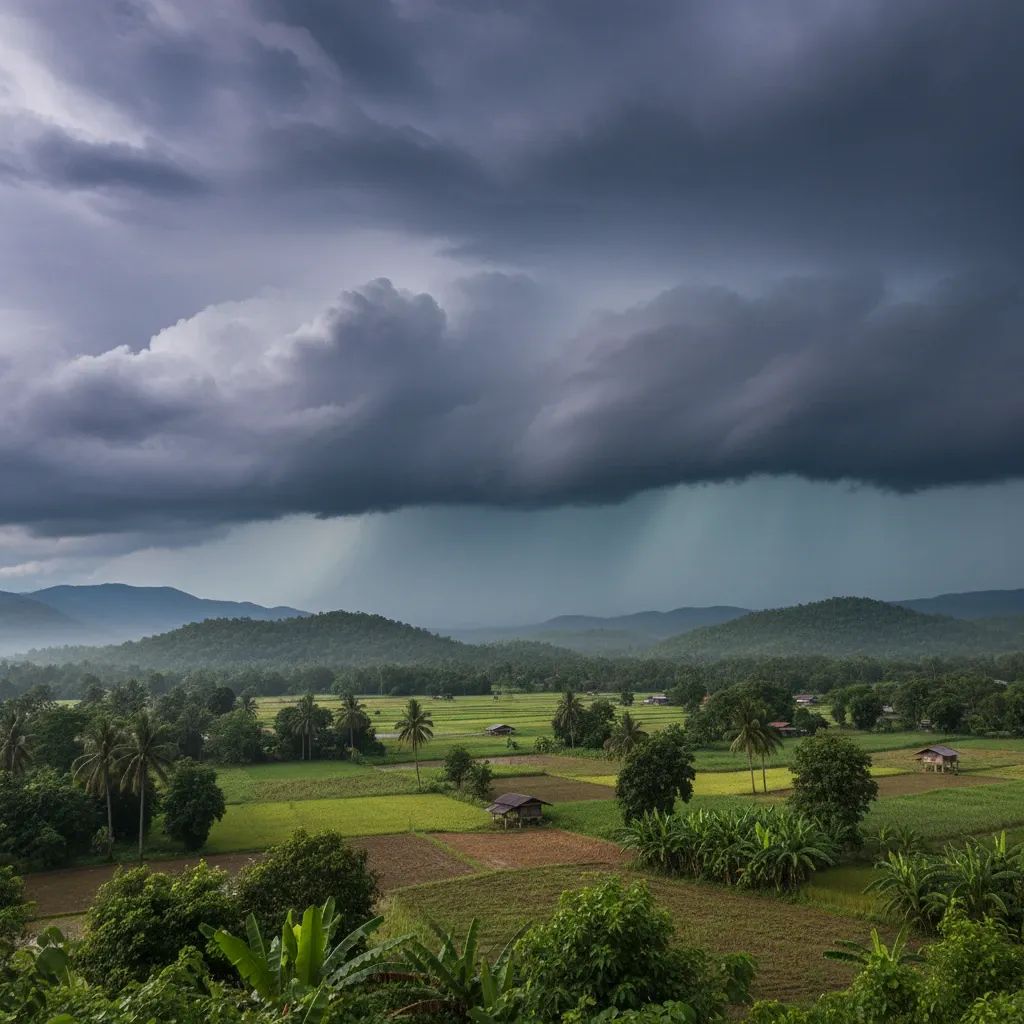
The Thailand Meteorological Department has issued a rainfall warning for the next seven days, with heavy downpours expected across multiple regions starting today through Friday, July 3. Residents and travelers should brace for disruptions and flash flooding as the southwest monsoon intensifies over the Andaman Sea and the Gulf of Thailand.
Why This Matters
• Flash floods and mudslides are likely in vulnerable areas, especially near mountain slopes and low-lying zones.
• Eastern Thailand and the west coast of the South face the highest risk of severe weather.
• Small boats on the Andaman Sea should avoid departure between June 29 and July 3.
• Local authorities are on alert to coordinate emergency response and provide real-time updates.
The Monsoon Has Arrived
Late June marks the official start of Thailand's rainy season. The Thailand Meteorological Department warns that a monsoon trough is stretching across the upper North and Northeast, while the southwest monsoon covering the Andaman Sea, Thailand, and the Gulf of Thailand has strengthened significantly. This combination is expected to produce thunderstorms and isolated heavy rain across the Northeast, Central Plains, Bangkok and surrounding provinces, the East, and the western South.
Rain is forecast to fall intermittently, particularly during afternoon and evening hours, a pattern familiar to long-term residents. However, the intensity this week poses risks that demand attention. Flash flooding, runoff, and sudden water surges remain the primary concerns for communities near waterways and on sloped terrain.
High-Risk Zones and Regional Breakdown
The eastern provinces and the Andaman coast are under the most immediate threat. Provinces such as Trat, Chanthaburi, Ranong, Phuket, and Phang Nga are historically vulnerable to heavy rainfall during the southwest monsoon due to their proximity to the sea and mountainous topography.
Bangkok and its metropolitan area are also on the watch list, with concerns about urban flooding in low-lying neighborhoods and traffic disruptions. Local authorities are monitoring drainage systems and standing by for coordinated response.
For sailors and maritime operators, the Andaman Sea will experience rough conditions. Waves are expected to increase, and small vessels should remain docked from June 29 through July 3 to avoid dangerous swells.
What This Means for Residents
Residents in flood-prone areas should prepare emergency kits, monitor official weather updates, and have evacuation routes ready. The government has designated emergency shelters and evacuation centers in at-risk districts, and local authorities have been instructed to remain on 24-hour alert.
Urban residents should expect potential disruptions to daily routines. Flooded roads and interrupted public transportation are common during heavy rain events. Business owners in ground-level properties should consider moving inventory and equipment to higher floors, especially in areas with a history of flooding.
Agricultural communities should take precautions to protect crops and livestock. Farmers are urged to monitor local water levels, avoid planting in low-lying fields until the weather stabilizes, and follow guidance from agricultural extension offices.
Government Preparedness Measures
The Thailand National Water Resources Office has activated emergency response protocols ahead of the expected rainfall. The government has rolled out comprehensive measures including:
• Enhanced forecasting and early alerts through the Meteorological Department working with provincial authorities
• Infrastructure readiness, including drainage system inspections and water management preparations
• Community preparedness centers established in vulnerable provinces to coordinate evacuations and relief efforts
• Public awareness campaigns providing real-time updates through official channels
Practical Steps to Stay Safe
Monitor official sources. Follow updates from The Thailand Meteorological Department and local disaster prevention offices. Avoid relying solely on social media for weather information.
Secure your property. Move vehicles to higher ground, reinforce doors and windows, and ensure drainage around your home is clear.
Stock essentials. Keep at least three days' worth of food, water, medicine, and batteries on hand. Include a flashlight, portable charger, and first-aid kit.
Know your evacuation route. Identify the nearest shelter and have a plan for getting there quickly if flooding occurs.
Avoid flooded areas. Do not attempt to drive or walk through standing water. Currents can be stronger than they appear, and water may conceal hazards such as open drains or debris.
Stay connected. Keep your mobile phone charged and inform family members of your whereabouts.
A Critical Week Ahead
This week's weather system represents a significant test of Thailand's monsoon preparedness. While seasonal rains are expected and necessary for agriculture and water reserves, the intensity of this forecast demands vigilance and readiness.
For those living in Thailand, the message is clear: take precautions, stay informed, and be ready to act. The next seven days will determine how well communities manage this challenging weather period.


