
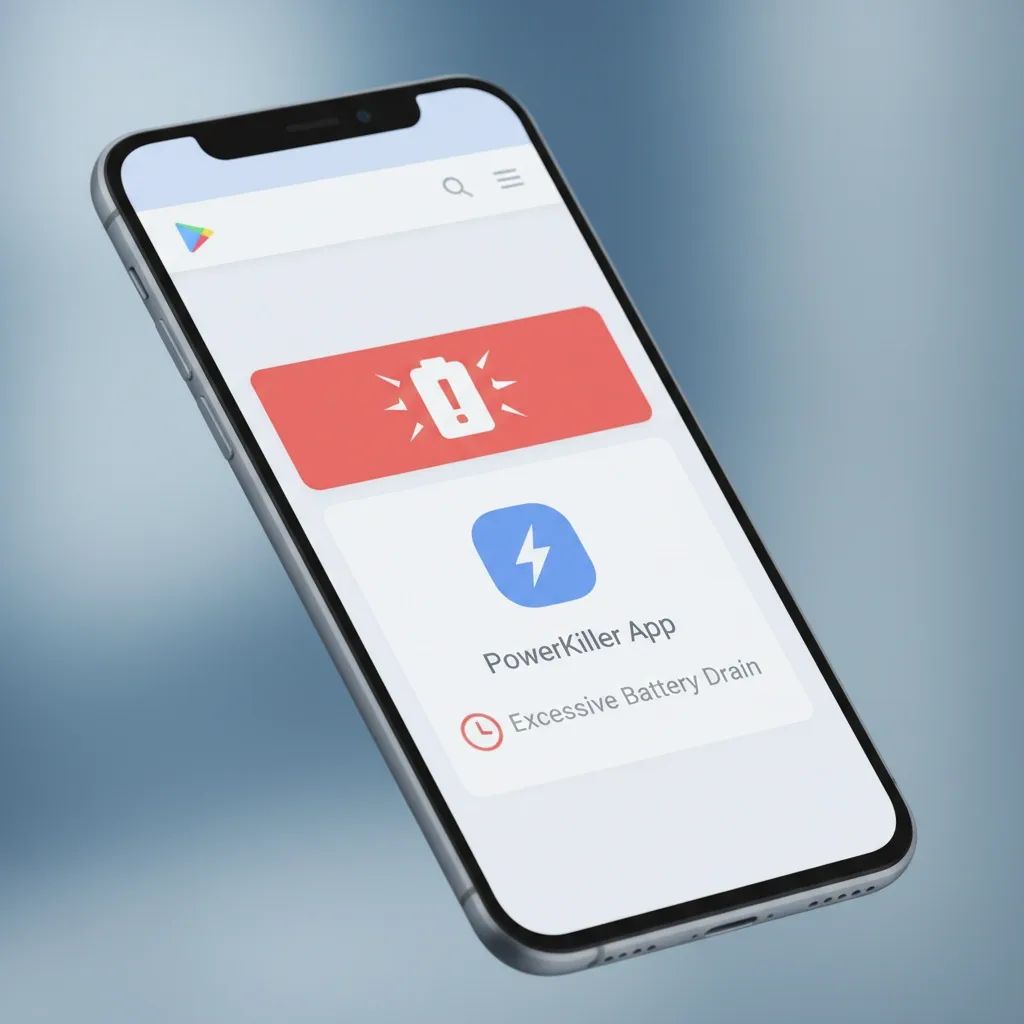
Google Play Store now displays prominent warnings on Android apps that drain battery excessively—a global policy shift rolling out worldwide that impacts users in Thailand who depend on their devices for everything from mobile banking to ride-hailing apps.
Why This Matters
• Visible warnings now appear on Play Store listings for apps that drain battery through excessive background activity, with rollout underway since March 1.
• Apps crossing Google's threshold face reduced discoverability in recommendations and search—potentially tanking downloads.
• The system targets "wake locks" that keep your processor running even when the screen is off, penalizing apps that hold them for more than 2 hours daily in over 5% of sessions.
• Legitimate power-hungry features like music playback and GPS navigation are exempt.
What This Means for Residents
If you live in Thailand and rely on your Android device for everything from mobile banking to grab-taxi apps, this policy directly improves your daily experience. Battery anxiety is universal here—particularly for those commuting in Bangkok's heat, where a dead phone can mean missing ride confirmations, payment failures, or losing access to condo key apps. Now, before installing any new application, you'll see an explicit alert: "This app may use more battery than expected due to high background activity." That single sentence lets you weigh convenience against the risk of your device dying mid-errand. For expats and locals alike who depend on their phones for navigation, food delivery, and digital wallets, this transparency is a practical safeguard.
How the Detection System Works
Google's Android Vitals dashboard—accessible to developers through Google Play Console—tracks CPU usage patterns, background activity frequency, and wake lock behavior across millions of devices. A wake lock is essentially a command that prevents your phone from entering low-power sleep mode, keeping the processor active even when the screen is dark. While necessary for legitimate tasks like streaming music or running a fitness tracker, poorly coded apps abuse this feature, draining your battery for no clear benefit.
Google's algorithm defines "excessive" as holding a non-exempted partial wake lock for a cumulative 2 hours or more within a 24-hour window. If an app crosses this threshold in more than 5% of user sessions over a rolling 28-day period, it triggers the warning label. The system aggregates on-device monitoring data with cloud-based analysis, building comprehensive battery profiles for each application. Developers receive detailed breakdowns showing exactly which background processes are problematic, along with debugging tools to fix the issue.
Certain use cases are deliberately exempted. If an app is playing audio, tracking your run via GPS, or completing a file upload you initiated, those wake locks don't count against the threshold. In Thailand—where ride-hailing, food delivery, and messaging apps run constantly in the background—this nuance benefits users directly, as essential services won't be unfairly penalized.
Developer Consequences
For app publishers, battery efficiency has transformed from a technical footnote into a business-critical metric. A warning label on your Play Store listing is the digital equivalent of a health inspector's violation notice—it immediately erodes user trust and suppresses installs. Beyond the visible stigma, flagged apps face algorithmic demotion: they're excluded from "Recommended for You" carousels, buried in search results, and removed from top charts. Persistent violations can escalate to full removal from the Play Store.
This creates a competitive dynamic where performance excellence drives market advantage. Developers now evaluate every new feature against its battery impact. A social media app that refreshes feeds every 30 seconds might reconsider that cadence if it risks triggering the threshold. A news aggregator that fetches updates continuously in the background might shift to a schedule synced with user behavior patterns. For developers building services in Thailand—including hyper-local platforms like street food delivery or motorbike taxi apps—the challenge is balancing aggressive background syncing (to ensure fast, real-time updates) with the need to stay below Google's threshold.
Google provides updated guidelines and new metrics to help developers track how often their apps wake the device. The Play Console dashboard visualizes wake lock duration, frequency, and the specific code paths responsible. This proactive tooling encourages innovation toward more efficient solutions—batch processing, intelligent scheduling, and on-demand fetching rather than constant polling.
User Behavior Shift
For the average Android user in Thailand, the warning label serves as a pre-install filter. You're no longer flying blind when choosing between two similar apps—one flagged, one clean. Early behavioral data suggests users are increasingly avoiding or uninstalling applications that carry the battery drain notice. This is particularly relevant in markets like Thailand, where mid-range Android devices dominate and battery capacity is often modest. A 4,000mAh battery stretched across 12 hours of daily use leaves little margin for digital energy vampires.
The policy also shifts responsibility. Previously, diagnosing battery drain required digging through Android's battery usage menu, deciphering arcane statistics, and manually identifying culprits. Now, Google takes active ownership of user experience quality, flagging problematic apps before they ever land on your device. This proactive policing reduces frustration and extends the practical lifespan of phones—a meaningful economic benefit in a country where many users hold onto devices for 3-4 years.
Contextual understanding matters. A navigation app consuming significant power during a cross-country drive to Chiang Mai is expected. A wallpaper app doing the same while you sleep is not. Google's exemption framework acknowledges this, ensuring that warnings target waste rather than legitimate functionality.
The Broader Implications
This initiative represents a significant evolution in platform governance. For years, Google provided developers with battery optimization guidelines but left enforcement largely voluntary. The March 2026 rollout marks a decisive shift toward mandatory compliance, backed by tangible penalties. It aligns Google's incentives with user satisfaction—devices that perform better reflect positively on the Android ecosystem as a whole.
For Thailand's digital economy, where mobile-first services drive commerce, communication, and daily logistics, the policy strengthens the foundation. Apps that respect battery life improve user retention, reduce churn, and enhance overall trust in the platform. As the rollout continues over the coming weeks, expect developers to prioritize optimization, users to become more discerning, and the Play Store to gradually weed out the most egregious offenders.
The warning label is simple—just one sentence—but its implications ripple across the entire app economy. Battery life is no longer an invisible technical metric; it's a visible, user-facing signal of quality. And in a mobile-dependent society like Thailand, that transparency is long overdue.


