
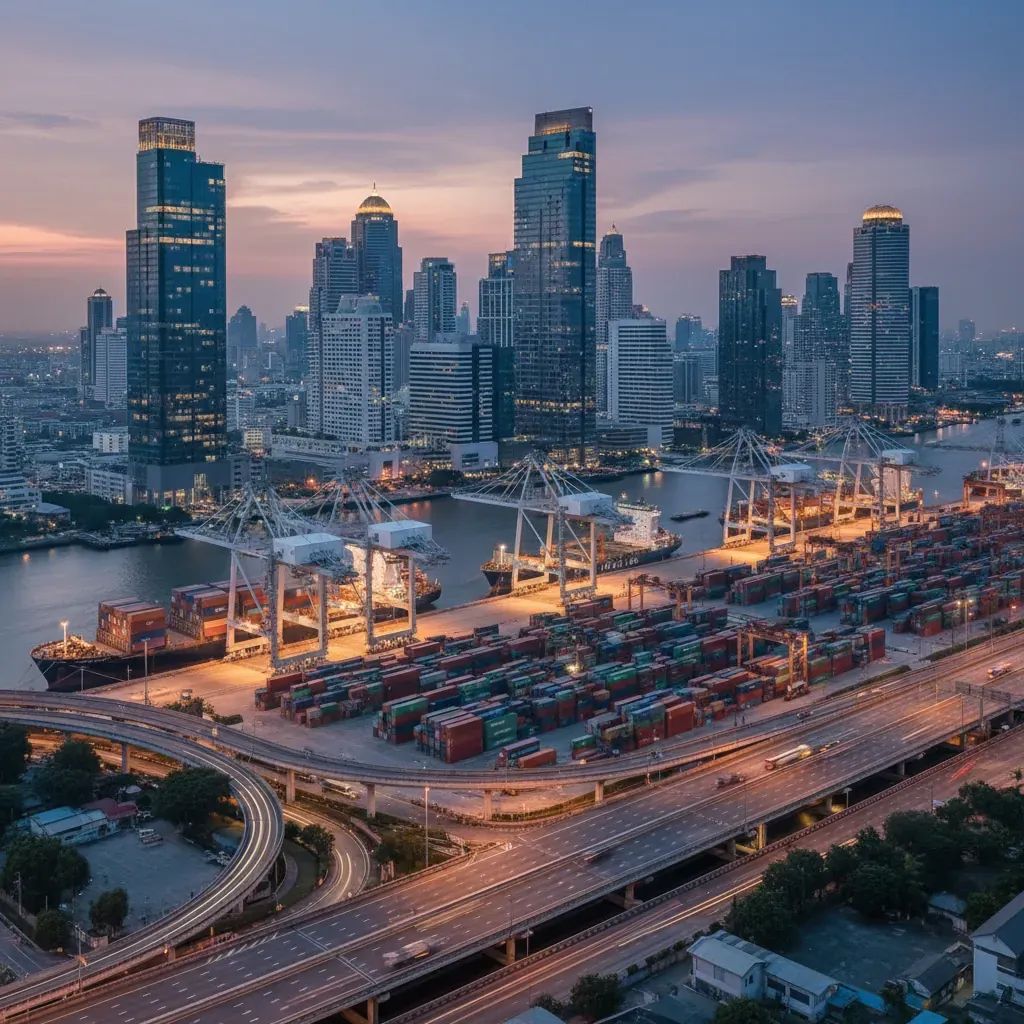
A Bangkok office building in central Thailand houses a company quietly moving Chinese-manufactured drones to Russia—and the consequences could freeze your Thai bank account, block your employer's dollar transfers, or shut down your business overnight.
This isn't distant geopolitical theory. If U.S. regulators determine that Thailand is facilitating sanctions evasion, they can penalize any Thai bank, company, or individual connected to the scheme—even if they had nothing to do with the drones. This is called secondary sanctions, and it's already reshaping how multinational corporations operate throughout the Kingdom.
Why This Matters—Right Now
If you have a Thai bank account: Thai banks like Bangkok Bank and Kasikornbank depend on access to the U.S. financial system for international transfers. A sanctions designation could freeze their dollar access, meaning your savings, business payments, and overseas transfers could be delayed or blocked indefinitely.
If you work for a multinational company in Thailand: Your employer must screen all business partners and vendors for sanctions connections. If your company unknowingly worked with a sanctioned entity, compliance investigations could disrupt operations and cost jobs.
If you run a business in Thailand: Your clients, suppliers, and shipping partners are all potential exposure points. One contaminated transaction could trigger regulatory scrutiny that takes months to resolve.
The core problem: Secondary sanctions mean the U.S. can penalize any bank or company doing business with sanctioned entities—even if they're based in neutral countries like Thailand. Regulators don't just target the bad actors; they punish entire financial systems connected to them.
How the Scheme Works (And Why Bangkok Is the Hub)
Over the past 18 months, Bangkok has emerged as a critical transshipment point for sanctioned technology destined for Russia. Here's the mechanism:
A Thailand-registered company receives shipments of sensitive electronics and aerospace components from Chinese suppliers. It processes them through Thai customs with legitimate-looking paperwork, then re-exports them within days—often with altered end-user certificates listing a neutral intermediary in the United Arab Emirates or Central Asia. Each layer of the transaction adds confusion about who the actual customer is.
By the time the hardware reaches its military destination in Russia, the original source is buried under shell companies and false documentation.
Why does Bangkok work so well for this?
Thailand doesn't require export licenses for military-grade technology—unlike Singapore or South Korea, which maintain rigorous screening systems. Combined with the Kingdom's massive cargo capacity (Suvarnabhumi Airport handles 60+ million passengers annually; Laem Chabang Port connects to every major global hub), Bangkok becomes an ideal waypoint for operators seeking to hide illicit shipments in the noise of legitimate trade.
The Pressure Building on Thailand's Government
Over the past year-and-a-half, delegations from the U.S. State Department and European Commission have visited Bangkok for what officials call "consultations on dual-use export controls." This is diplomatic pressure disguised as technical dialogue. The message is blunt: tighten oversight, or face consequences.
So far, Thailand's government response has been silence. The Ministry of Foreign Affairs maintains that Thailand respects international law and remains non-aligned. The Customs Department has not publicly acknowledged any investigation. The Department of Business Development has announced no audits of suspect entities.
This silence reflects a deeper problem: Thailand's government is caught between competing pressures it cannot satisfy simultaneously.
Thailand's Impossible Dilemma
The Kingdom depends on China for approximately 18% of its total trade—manufactured components, machinery, raw materials that Thai factories need to operate. Russia supplies energy and represents a longtime defense partner. Offending either carries real economic cost.
Simultaneously, the United States and European Union are critical markets for Thai agricultural exports, automotive parts, and tourism revenue. Enhanced sanctions scrutiny would harm Thai exporters and banking institutions directly.
Thailand cannot please everyone. That's why the Board of Investment and Thai Chamber of Commerce emphasize the Kingdom's stability and rule-compliance while avoiding the sanctions-evasion issue entirely.
What This Means for Your Daily Life
Check your financial exposure:
• If you use Thai banks for international transfers, monitor banking news for any regulatory changes
• If you work for a multinational, ask your HR or compliance department whether your employer conducts regular sanctions screening
• If you run a business, verify that your clients and suppliers are not on international watchlists (OFAC, EU sanctions lists)
Diversify cautiously:
• Consider maintaining banking relationships in multiple countries if you conduct international business
• Document all your business relationships and counterparties—compliance investigations often require proof you weren't knowingly dealing with sanctioned entities
• If you employ staff, ensure your payroll can function even if Thai banking is temporarily disrupted
Verify business partners:
• Before entering contracts with new suppliers or clients, conduct basic due diligence: check company registration, ownership records, and transaction history
• Many free online tools (Thailand Department of Business Development registry, OFAC search, EU sanctions database) allow you to verify whether someone appears on watchlists
• For major transactions, consider hiring a compliance consultant to review the counterparty
What Happens Next?
The Thai government faces an increasingly costly choice: adopt stricter export controls (satisfying the West but angering China and Russia), conduct selective audits of suspect companies (appearing compliant while leaving the system intact), or make quiet private commitments to Western officials while avoiding formal legal changes.
Inaction becomes costlier each month. Congressional investigations and media investigations are already escalating pressure. Once the issue becomes undeniably public, silence becomes complicity in Western eyes—and that's when the real consequences arrive.
For now, the office towers of central Bangkok continue their ordinary operations. But the regulatory landscape surrounding them is shifting rapidly. Decisions the Thai government has long deferred are coming due—and the residents, businesses, and banks of Thailand will feel the impact first.


