
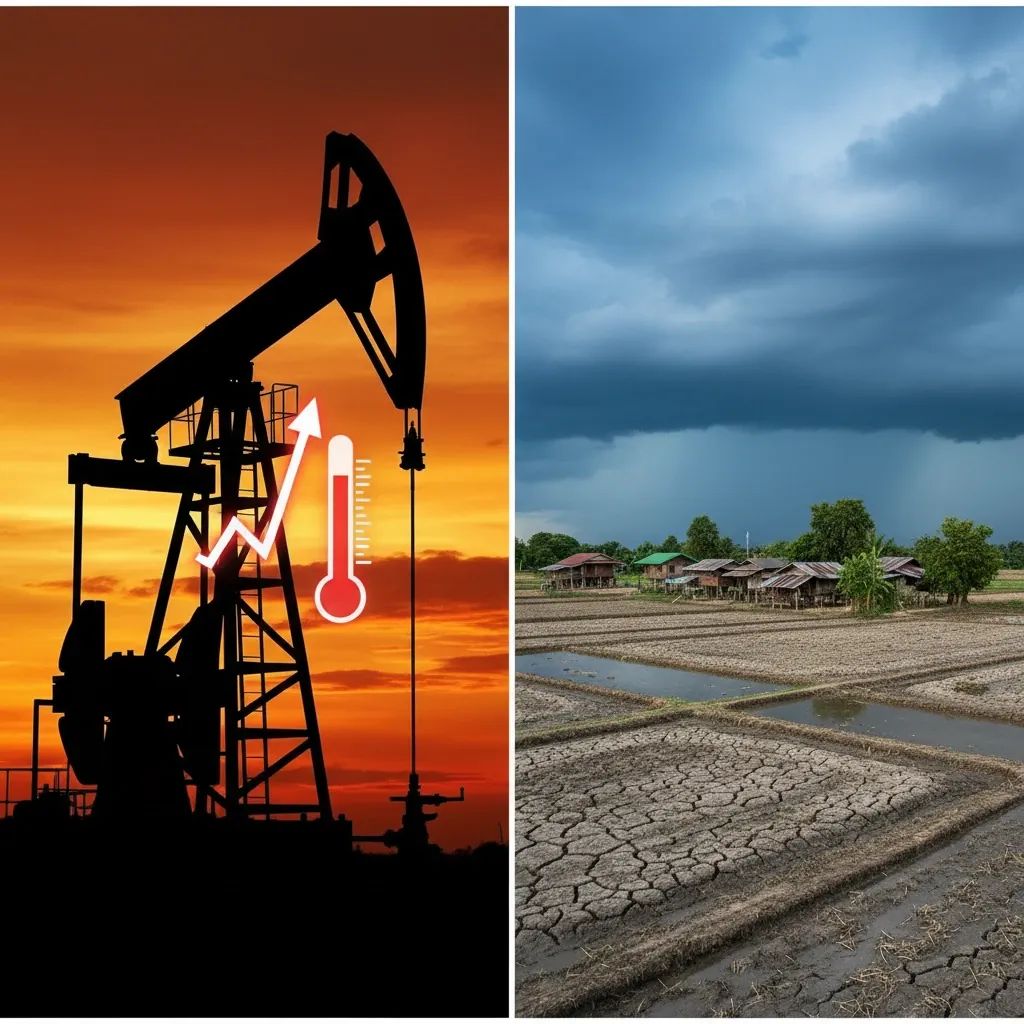
The Thailand investment community faces a critical climate-driven portfolio decision as meteorologists confirm a rapidly intensifying El Niño event that could rival the most extreme weather patterns on record, with direct implications for commodity exposure, energy holdings, and supply chain-dependent sectors through early 2027.
Why This Matters
• Agricultural commodity prices could surge 50%-100% for rice, palm oil, sugar, and coffee—staples deeply woven into Thailand's economy and consumption patterns.
• Energy demand spikes are forecast for Thailand and neighboring Southeast Asian markets, potentially straining power grids and boosting thermal generation stocks.
• Supply chain disruptions affecting the Panama Canal and regional shipping routes will increase logistics costs and delivery times for import-dependent businesses.
• Portfolio repositioning window is narrow—climate analysts say the full economic impact will manifest through 2027 and potentially into 2028.
Current El Niño Strength Exceeds Forecasts
The U.S. National Oceanic and Atmospheric Administration (NOAA) issued an updated El Niño Advisory on July 9, 2026, placing the probability of continuation through early spring 2027 at 97%. Sea surface temperature anomalies in the critical Niño 3.4 region reached +1.55°C in June, with forecasters now predicting an 81% chance of a "very strong" classification during the October-December quarter.
This places the 2026 event in potential competition with the catastrophic 1997-98 and 1982-83 Super El Niños, which triggered $5.7 trillion and $4.1 trillion in global economic losses respectively over five-year periods. Contemporary estimates for a comparable 2026 event suggest $686 billion in immediate global losses, escalating to $3.1 trillion without coordinated intervention.
For investors based in Thailand, the immediate concern centers on sectoral exposure to the specific weather disruptions now materializing across Southeast Asia: below-average monsoon rainfall, intensified heat stress on agriculture, and hydropower deficits that force expensive thermal backup generation.
Southeast Asia Bears Disproportionate Agricultural Risk
India's summer monsoon is already running approximately 40% below the long-term average, threatening production of soybeans, groundnuts, cotton, and rice—crops that feed regional supply chains extending into Thailand's food processing and export industries. Drought-like conditions are forecast to reduce maize, rice, and wheat output across Southeast Asia and Australia, tightening regional grain markets that Thailand relies on for both domestic consumption and livestock feed.
Palm oil, a critical commodity for Thailand's food manufacturing sector, faces dual pressure. Indonesia and Malaysia—the world's dominant producers—are experiencing the drying conditions characteristic of strong El Niño events. Historical precedent suggests palm oil prices could increase 50%-100% as plantation yields decline and export restrictions emerge from producer nations protecting domestic supplies.
Sugar presents a similar risk profile. Dry weather in India and Brazil, combined with heat stress during critical growth stages, has historically driven sharp price increases. Thailand's position as both a major sugar producer and consumer means the sector faces a complex calculus: farmers may benefit from higher prices, but food processors and households will absorb increased costs.
Coffee and cocoa, while less central to Thailand's domestic economy, represent significant import categories for the expanding café culture and confectionery industries in Bangkok and major urban centers. Indonesia's cocoa regions are under particular stress, and global coffee supply chains are already pricing in anticipated shortfalls.
Energy Sector Faces Double Squeeze
Thailand's energy infrastructure confronts a dual challenge that mirrors the broader regional pattern: reduced renewable generation capacity coinciding with surging demand for cooling. The 2023-2024 El Niño provided a recent preview, with hydropower generation in China and India experiencing steep declines while electricity demand for air conditioning spiked.
India's energy system—closely integrated with Thailand through regional power trading and shared fuel markets—is particularly vulnerable. Falling winds and rainfall reduce wind and hydropower output precisely when cooling demand peaks, forcing utilities to increase coal-fired generation. This dynamic supports thermal power stocks and coal suppliers serving Asian markets, but undermines clean energy transition timelines and raises electricity costs for industrial consumers.
Hydropower operators face reservoir management challenges that could restrict output for extended periods. The broader implication extends to international energy logistics: the Panama Canal system, which handles a significant portion of liquefied natural gas (LNG) shipments, has historically experienced draft restrictions during El Niño events due to lower water levels in Gatun Lake. Rerouting through the Suez Canal or around the Cape of Good Hope adds days to transit times and increases shipping costs, ultimately flowing through to energy prices in import-dependent markets like Thailand.
Companies positioned to benefit include natural gas distributors, coal mining operations with Asian market exposure, and manufacturers of cooling technology—air conditioning units, industrial refrigeration systems, and related components that see demand spikes during prolonged heat events.
What This Means for Thailand-Based Investors
The investment thesis centers on identifying sectors with positive correlation to El Niño disruptions while maintaining awareness of the substantial downside risks to broadly held commodity and logistics positions.
Agricultural technology companies offering drought-resistant crop varieties, precision irrigation systems, and water-efficient farming solutions are entering a favorable demand environment. Thailand's own agricultural modernization efforts, combined with regional government responses to crop failures, should drive increased adoption of these technologies. Solar-powered water pumps and soil management systems represent specific product categories likely to see accelerated uptake.
Commodity trading firms with sophisticated hedging strategies and diversified sourcing networks can capitalize on price volatility, but this requires specialist knowledge and active management. For most retail investors, direct commodity exposure carries substantial risk given the unpredictable timing and magnitude of price movements.
Thermal power generation assets—particularly natural gas and coal operations serving Southeast Asian grids—face increased dispatch rates as hydropower shortfalls emerge and cooling demand rises. Thailand's own power generation mix, which includes significant gas-fired capacity, positions domestic utilities to benefit from higher utilization rates, though this comes with regulatory and environmental considerations.
Water infrastructure companies specializing in storage facilities, efficient distribution systems, and wastewater management represent a longer-term structural opportunity. Both drought-stressed regions requiring better conservation and flood-prone areas needing improved stormwater management will drive public and private investment in these capabilities.
Logistics and shipping present a more nuanced picture. While disruption typically pressures margins, companies capable of rapid rerouting, alternative route development, and sophisticated freight forwarding can capture premium pricing. Dry bulk shipping serving coal movements to Asia may see temporary volume increases, but container shipping faces headwinds from canal restrictions and storm-related delays.
The insurance and reinsurance sector will experience increased claims frequency but also repricing opportunities. Specialized parametric insurance products and crop insurance programs tied to weather indices could see expanded adoption, benefiting providers with advanced climate risk modeling capabilities.
Risk Factors Require Portfolio Hedging
The optimistic sectoral thesis must be balanced against substantial macroeconomic risks. Tropical lower- and middle-income countries—including several of Thailand's key trading partners—could experience losses equivalent to 3.3% of combined GDP, reducing import demand and disrupting regional trade flows. Many governments are managing heavy debt loads from the COVID-19 pandemic, limiting fiscal capacity to respond to climate shocks.
Food price inflation poses a direct threat to consumer spending power in Thailand, where household budgets allocate a significant portion to food and energy. If rice, palm oil, and sugar prices surge as forecast, real wages decline and discretionary spending contracts, pressuring retail, hospitality, and consumer goods sectors.
Supply chain fragility extends beyond obvious agricultural impacts. The ongoing conflict in Iran has already created fertilizer shortages and elevated energy prices—inputs that underpin agricultural productivity globally. Simultaneous shocks from El Niño and geopolitical disruption could compound into more severe shortfalls than models based on historical El Niño events alone would suggest.
Timeline and Action Window
Climate forecasters emphasize that the full production impact of strong El Niño events typically manifests with a 6-12 month lag from the climate peak. Given the current trajectory toward maximum intensity in late 2026, the most acute commodity price pressures and supply disruptions are expected through 2027 and potentially into early 2028.
This timeline creates a narrow window for portfolio repositioning. Sectors already pricing in El Niño impacts may offer limited upside, while early movers in less-obvious beneficiaries—water infrastructure, agricultural technology, specialized insurance—could capture disproportionate returns.
The Thailand market's specific exposure to regional agricultural supply chains, energy import dependence, and consumer sensitivity to food price inflation requires a more defensive posture than might be appropriate for investors in temperate regions less affected by tropical Pacific weather patterns. Diversification across geographies and a bias toward companies with proven supply chain resilience and adaptive capacity will be critical for navigating the extended disruption period ahead.
For residents and investors in Thailand, the 2026 El Niño represents not merely a weather event but a multi-year economic adjustment with clear winners and losers across the portfolio landscape. The forecasting confidence is unusually high, the historical precedent is well-documented, and the sectoral implications are actionable—but the magnitude of disruption and the compounding effects of existing global stresses introduce execution risk that demands careful position sizing and active monitoring through 2027.


