
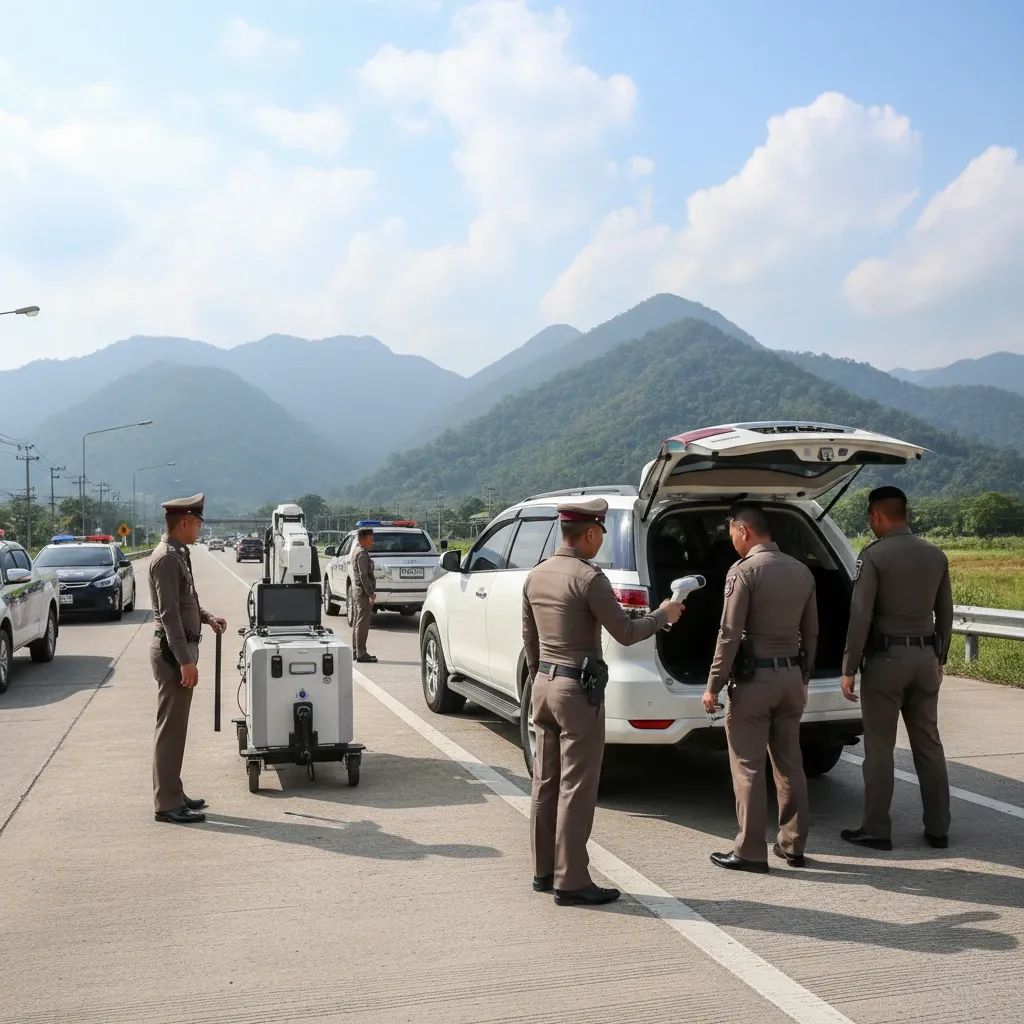
The arrest of a Taiwanese courier at Fukuoka Airport with over 3 kilograms of methamphetamine represents yet another data point in a persistent transnational smuggling corridor, but it also underscores how aggressively regional law enforcement has begun closing information gaps and disrupting trafficking at multiple points—a shift that affects travelers from Thailand and the broader regional security landscape.
Key Takeaways for Thailand Residents
• Enhanced screening protects legitimate travelers: Advanced detection technology interdicts smuggling attempts before they reach destinations, meaning innocent travelers face lower risk than ever before.
• Unknowing involvement carries severe penalties: Accepting packages without verification or transporting items in checked luggage you haven't personally packed can result in prosecution, imprisonment abroad, and permanent deportation.
• Practical vigilance matters: Verify package contents before travel, understand Japanese import restrictions on common medications, and refuse suspicious requests to transport items.
Why This Matters
• Detection capability gap is narrowing: Japanese customs now deploys AI-assisted X-ray analysis, 130 drug detector dogs, and trace detection systems that can identify microscopic drug residue even inside sealed packaging—making concealable quantities increasingly difficult to move undetected.
• Liability extends to unwitting couriers: Travelers accepting packages, boarding planes with unpacked luggage, or claiming ignorance face prosecution and deportation under Japanese law; intent is irrelevant to criminal liability.
• Thailand remains the logistical hub: While production occurs upstream in the Golden Triangle, Thai territory houses the transit networks, refinement labs, and distribution hubs that feed markets across Asia, making Thai airports and ports primary enforcement chokepoints.
The May 2026 Interception: What Happened
On May 10, Chang Tse-wei, a 35-year-old claiming to work as a driver, passed through immigration at Fukuoka Airport with two checked suitcases. Inside, nestled beneath instant coffee sachets and tea cans, sat approximately 3 kilograms of methamphetamine worth roughly 33 million baht (160 million yen). The concealment showed professional execution—the disguise was not improvised but calculated to withstand routine optical screening. Custom officials deployed three-dimensional X-ray CT imaging, a technology that visualizes cargo density anomalies invisible to conventional scanners, flagging the baggage immediately. Laboratory confirmation followed, identifying the substance as kakuseizai—Japan's term for synthetic stimulants including methamphetamine. Chang was detained and held while investigators spent two weeks mapping his connections before announcing the arrest publicly on May 26.
During interrogation, Chang denied knowledge of the contents and claimed the journey was tourism. Japanese police disregarded this explanation. The precision of concealment, the quantity involved, and the routing all suggested courier-level involvement within a larger syndicate rather than independent operation. Investigators are now examining whether Chang was one of several regular couriers, whether the flight route was habitual, and whether parallel networks operate similar logistics simultaneously.
Thailand's Position in the Supply Chain
The methamphetamine seized at Fukuoka originated from production zones in the Golden Triangle—the border region spanning parts of Myanmar, Laos, and northern Thailand. Thailand itself produces limited quantities of synthetic drugs; its critical role is logistics. Drugs manufactured upstream flow through Thai seaports like Laem Chabang, land crossings in northern provinces, and airports in Bangkok and Chiang Mai en route to regional markets. Japan represents one of the most lucrative destinations due to tight supply controls and high street prices.
Between October 2025 and mid-January 2026, Thai law enforcement conducted a sustained campaign that seized over 330 million methamphetamine tablets, arrested more than 88,000 suspects, and froze criminal assets exceeding 3.39 billion baht. This operation dismantled several major syndicates, including the detention of a Taiwanese national described as a strategic coordinator of a transnational operation based in Bangkok. The scale signals both the volume flowing through Thailand and the organizational capacity organized crime dedicates to maintaining these corridors.
Seizures throughout early 2026 paint a picture of unrelenting trafficking activity. March brought a 1.5-tonne bust in Nakhon Pathom province, with contraband valued at 520 million baht. January saw 300 kilograms of crystal methamphetamine intercepted in Sakon Nakhon province, disrupting a network fed from border zones. In the same month as Chang's arrest, authorities caught a Lao national in Thailand carrying 249 kilograms of crystal meth—one of two major seizures within six days, both routed from Laos. These incidents are not outliers; they constitute the operational baseline of Thailand's drug enforcement reality.
How the Detection Net Has Tightened
Japanese customs has invested substantially in interdiction infrastructure. The approximately 130 drug detector dogs stationed at customs facilities provide olfactory detection that disguising agents cannot reliably defeat. More critically, X-ray CT systems now visualize cargo in three dimensions, exposing concealment that visual inspection alone would miss. Trace detection technology wipes suspicious package surfaces, then ionizes collected specimens and analyzes molecular composition—sensitive enough to identify microscopic drug residue even within sealed containers.
In the Chang case, this layered approach functioned as designed: technology flagged baggage, trained officers confirmed contents, and the shipment was removed from circulation. Yet the case also exposes a sobering reality—interdiction catches individual shipments but does not address underlying supply resilience. Syndicates lose shipments to seizure as an operational cost, budget accordingly, and continue expanding volume to maintain profit margins despite losses.
More significantly, Japanese customs has begun deploying artificial intelligence to analyze X-ray CT images automatically, accelerating processing of high-volume cargo screening. Intelligence officers stationed in source countries including Thailand gather advance information on passengers and cargo for risk analysis, allowing customs to flag high-probability targets before arrival. This represents a fundamental shift: enforcement has transitioned from reactive interdiction to predictive targeting.
Implications for Travelers and Residents
For anyone living in or transiting through Thailand, the Fukuoka arrest reinforces an important reality: enhanced enforcement infrastructure protects legitimate travelers by removing smuggling attempts from circulation before departure. This represents genuine security progress.
However, vigilance remains essential. Japanese law enforcement maintains active intelligence-sharing arrangements with Thai authorities, meaning passenger screening at Thai airports has intensified. For residents traveling to Japan, this means:
What You Must Know:
• Unknowingly transporting contraband is not a viable defense. Liability attaches to possession, not intent. Travelers accepting packages without verification of contents, boarding flights with luggage they have not personally packed, or claiming ignorance face criminal prosecution abroad and potential imprisonment.
• Common medications are restricted. Japan prohibits medications containing amphetamines or pseudoephedrine (found in many cold remedies, weight-loss supplements, and asthma inhalers)—even prescription versions—without specialized import permits. Check Japanese customs regulations before packing any medications.
• Deportation is permanent. Foreign nationals convicted of drug trafficking in Japan face mandatory deportation and permanent blacklisting from re-entry. Criminal records follow you internationally.
Practical Protection:
• Never accept packages from acquaintances, colleagues, or strangers without independently verifying contents and sender authenticity.
• Pack your own luggage and keep it in your possession at all times before departure.
• If approached to transport items, refuse clearly and report the request to local authorities.
For foreigners living in Thailand, understanding your legal exposure is critical. Thai law prosecutes foreign nationals involved in trafficking with the same severity as Thai citizens. Involvement with trafficking networks—even unknowingly—can result in imprisonment in Thailand followed by deportation and permanent re-entry blacklisting.
The Regional Enforcement Narrative
The Fukuoka arrest is not an isolated success but one thread in a broader regional enforcement campaign. Japanese authorities have pledged to deepen cooperation with Mekong region countries, including Thailand, recognizing that many smuggling operations are franchises of criminal organizations operating across Southeast Asia. These organizations demonstrate increasing operational sophistication, adopting encrypted digital communication, cryptocurrency payments, and emerging concealment technologies.
While specific cartel names and syndicate structures are rarely disclosed publicly, investigators acknowledge the involvement of "overseas smuggling organizations" collaborating with domestic criminal groups in Japan—including entrepreneurial factions within organized crime hierarchies. The precision of the concealment attempt in Chang's case suggests actors familiar with both production logistics and airport security protocols.
Thai authorities continue targeting both urban distribution networks and cross-border trafficking corridors. Enforcement pressure—reflected in staggering seizure numbers—has likely increased operational costs and disrupted certain pipelines. Yet demand in Japan remains robust, and supply chains have proven resilient. For every shipment intercepted, intelligence agencies acknowledge that others proceed undetected. The disruption is real but incomplete.
The operational reality for residents in Thailand is this: enforcement infrastructure has become substantially more sophisticated, both domestically and internationally. The Thai government, in coordination with Japanese counterparts, is deploying technology, intelligence networks, and cross-border cooperation to intercept shipments at multiple chokepoints. For legitimate travelers, this enhanced capability provides reassurance. For those considering involvement with trafficking networks—or accepting suspicious requests to transport items—it represents a dramatically elevated risk of detection, prosecution, and permanent legal consequences.


