
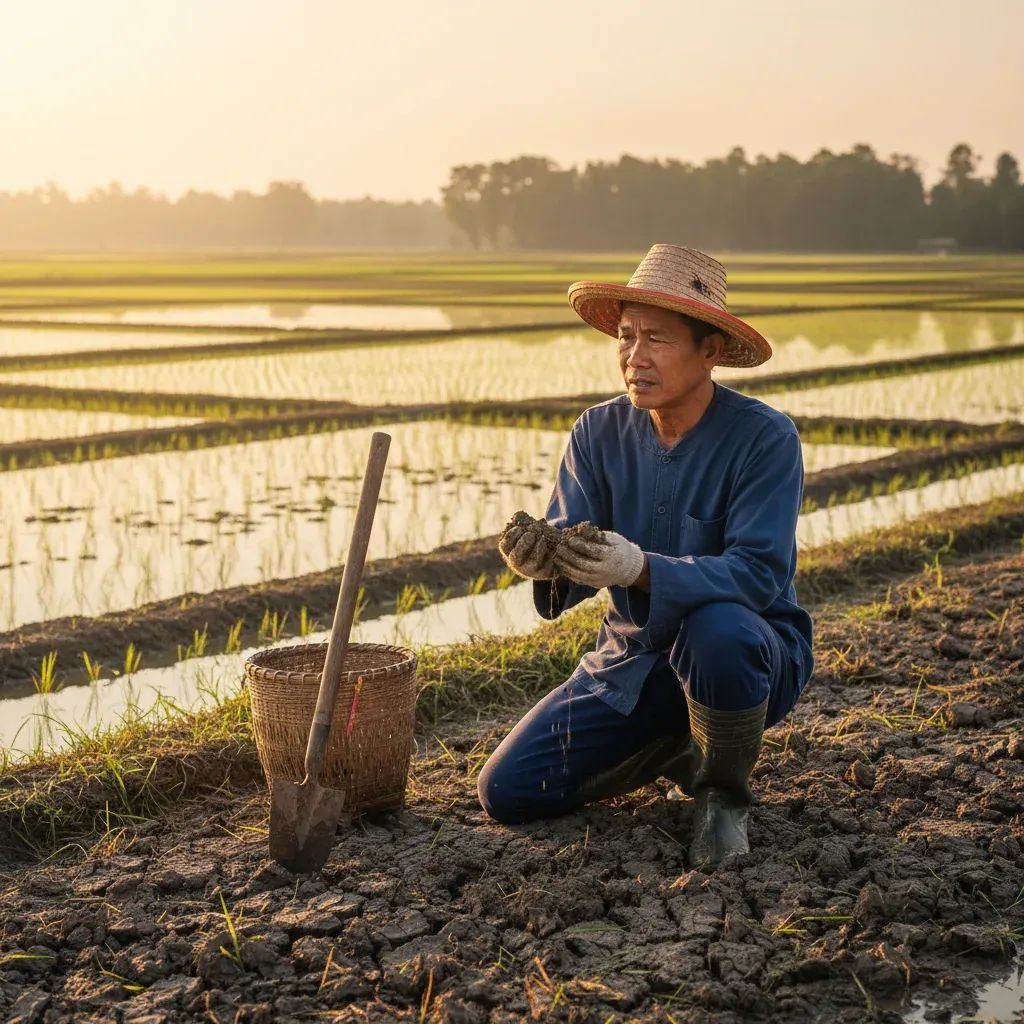
China's Fertilizer Export Restrictions Create Regional Supply Challenge for Thailand
The China Ministry of Commerce has imposed sweeping restrictions on fertilizer exports, cutting shipments by 50% to 75%—a move that is pushing agricultural input costs higher and creating supply challenges across Asia. For Thailand's import-dependent farming sector, the implications are immediate: higher costs for key nutrients just as the planting season begins.
Why This Matters
• Fertilizer prices have jumped nearly 40% since global market disruptions escalated, with urea now trading at $700 per ton—a cost spike that will ripple through rice, cassava, and rubber production budgets in Thailand.
• China has halted exports of nitrogen-potassium blends and phosphate varieties until at least August 2026, removing millions of tons of supply from global markets.
• Alternative suppliers like Vietnam and Morocco face their own production constraints, meaning Thai agribusinesses may confront both scarcity and price volatility in the coming months.
Beijing's Strategy Prioritizes Domestic Food Security
China's fertilizer export clampdown reflects a multi-year strategy to prioritize domestic food security. Since 2021, Beijing has deployed quotas and export restrictions on key agricultural inputs. The current restrictions, formalized in mid-March 2026, ban overseas shipments of nitrogen-potassium fertilizer blends and certain phosphate varieties, building on existing urea export quotas that have been in effect for over a year.
Industry sources indicate the trigger was twofold: rising raw material costs and China's own peak spring planting season, which typically runs from April through June. With global supply chains realigning, Beijing moved to ensure its 300 million farmers have sufficient nutrients. State-linked fertilizer associations coordinated with major producers to manage exports, and the government formalized restrictions in March.
China is the world's largest fertilizer exporter, having shipped over $13 billion worth annually before the restrictions—roughly 40 million tons of urea, phosphates, and compound fertilizers. The country's dominant position in phosphate markets means any reduction in Chinese supply drives immediate price increases globally. Urea futures in Shanghai reached near 10-month highs in mid-March, and global spot prices surged 25% in two weeks.
Impact on Thailand's Agricultural Sector
For Thai farmers, the timing presents a significant challenge. The country's agricultural calendar—dominated by rice, cassava, sugarcane, and palm oil—depends on consistent access to nitrogen, phosphorus, and potassium (NPK) inputs. Thailand is a net importer of fertilizers, sourcing significant volumes from China, especially compound NPK blends that are now under export suspension.
Rice paddy operators in the Central Plains and Northeast face pricing pressures. With global urea prices elevated, the cost structure for the main crop season has become more challenging. The Thai Farmers Association has noted that input cost inflation requires farmers to make strategic decisions about acreage and timing to maintain profitability and productivity.
Cassava and sugarcane producers, who rely heavily on phosphate fertilizers, face similar adjustments. China's phosphate export suspension has prompted Thai importers to explore alternative sources. Vietnam and Morocco have emerged as potential suppliers, though supply chain expansion requires time and investment.
What This Means for Thai Consumers
For Thai households and residents living in Thailand, global supply chain adjustments may influence food pricing at local markets. Rice, the staple grain, remains central to Thailand's food security. Farmers and the industry are working to maintain productivity through efficient resource management and diversified sourcing strategies to sustain domestic supply.
While exact price movements are difficult to predict, market analysts are monitoring developments closely. The Thailand Commerce Ministry tracks agricultural commodity costs closely, and the government has demonstrated its commitment to food security through various policy tools and industry partnerships.
Regional Impact Across Southeast Asia
Thailand is part of a broader Southeast Asian market navigating global supply chain realignment. The entire Southeast Asian agricultural sector—spanning the Philippines, Vietnam, Indonesia, Myanmar, and Malaysia—is adapting to changes in fertilizer availability. These countries collectively sourced significant volumes of NPK, urea, and phosphate inputs, and market participants are working to establish new supply channels and efficiency improvements.
Vietnam, Thailand's neighbor and partner in regional agricultural development, is also navigating market dynamics, which reflects broader trends in agricultural adaptation across the region.
Alternative Supply Chains and Strategic Solutions
With global supply chains adjusting, international buyers are identifying alternative sourcing opportunities. Morocco holds substantial phosphate reserves and has expanded exports, contributing to global supply diversification. Vietnam is developing its fertilizer sector. Canada remains a significant potassium exporter, and these suppliers are important partners in a diversified global market.
Thai agribusinesses and the government are exploring multiple approaches to enhance efficiency and resilience. Precision agriculture techniques, improved soil management, and optimized input application can help farmers achieve strong yields while managing input costs. The Thai government has demonstrated commitment to supporting agricultural innovation and sustainability.
Strategic Outlook and Opportunities
Market participants expect fertilizer supply adjustments to continue through August 2026 and beyond as global markets rebalance. This period presents opportunities for strategic partnership and supply chain innovation.
For Thailand, priorities include strengthening supply partnerships with key agricultural trading nations, supporting agricultural innovation and efficiency, and positioning Thailand as a leader in sustainable farming practices. The government can work with farmers and industry to implement precision agriculture, invest in domestic agricultural research, and expand trade relationships that enhance long-term food security.
Thailand's agricultural sector has demonstrated resilience and adaptability. By engaging strategic partners, investing in efficiency, and supporting farmer innovation, Thailand can navigate global market changes while maintaining its competitive position in regional agriculture. This situation underscores the importance of strong international partnerships and strategic economic cooperation—factors that strengthen Thailand's prosperity and regional stability.


