
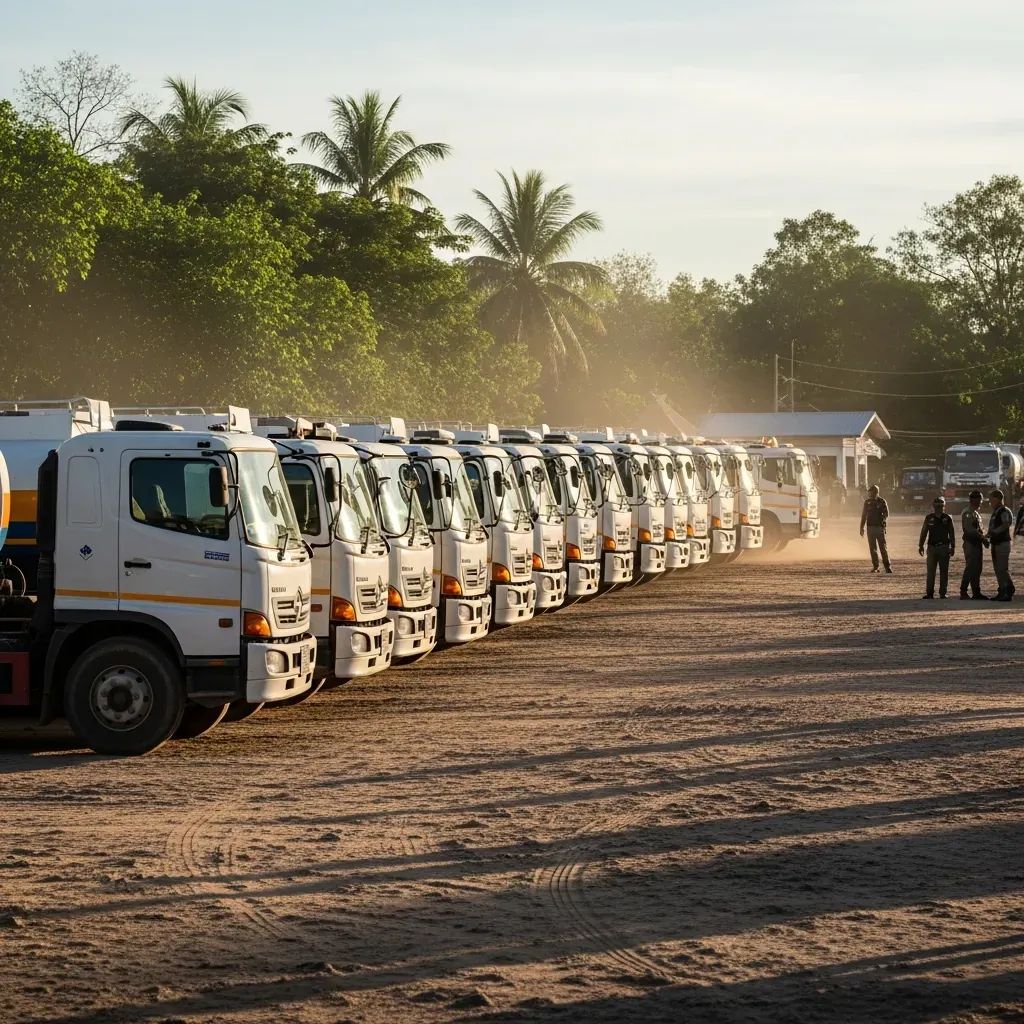
BANGKOK, Oct. 12, 2025 — Thailand’s social feeds erupted this week with claims that convoys of Thai petrol were still rolling into Cambodia. A quick reality check shows the story unravels under scrutiny: the country’s two largest fuel players, Bangchak and PTT, have no active shipments across that border and haven’t had any since June 2025. Below is what actually matters for motorists, investors and anyone keeping an eye on Thai-Cambodian relations.
Key Points at a Glance
• Zero exports confirmed – both Bangchak and PTT stopped sales to Cambodia in mid-2025.
• Fuel now classed as a “strategic asset” by Bangkok; any cross-border movement needs high-level sign-off.
• False posts surge as border tensions flare; Energy Ministry urges the public to verify sources.
• Cambodia diversifies supply, tapping Vietnam and Malaysia, but faces higher freight costs.
• No immediate impact on Thai pump prices, though regional logistics premiums may firm in Q1.
Border Tensions Ignite the Rumour Mill
Military skirmishes in June along the Aranyaprathet–Poipet corridor transformed gasoline into a geopolitical chess piece. Within days, Bangchak tankers were rerouted, and PTT invoked an internal “national security” protocol that freezes deliveries to any flash-point zone. On Thai TikTok, however, drone clips purporting to show fuel trucks sneaking into Cambodia went viral. Customs data tell a different story: export volumes fell to zero by July, the steepest single-month drop on record for that route.
Companies Draw a Line in the Sand
Bangchak insists its overseas lifts proceed only when “complete commercial documentation” is stamped by Thai and destination customs. Executives note that fuel heading for Laos or Myanmar cannot be “on-forwarded” to Cambodia without triggering insurance breaches. PTT, meanwhile, says its trading arm issued a blanket suspension on 15 June 2025 and has since rejected every Cambodian inquiry. Both firms publicly back soldiers and police stationed near the frontier, emphasising the need to protect domestic energy security.
Government Actions: Petrol Becomes a Strategic Asset
The Energy Ministry, guided by the National Security Council, now treats refined products on par with rice and medical supplies—items critical to state stability. Under a July directive, any cargo that might land in Cambodian ports requires an inter-agency licence and real-time GPS monitoring. Provincial energy offices along Sa Kaeo, Surin and Ubon Ratchathani have bulked up patrols, checking for illegal mini-tankers using back roads or Mekong ferries. Authorities say seizures since August equal roughly 2.7M litres, a tiny share of Thai output but a stark signal to smugglers.
Impact at Thai Pumps and on Your Wallet
For Bangkok commuters, the immediate effect is muted. Domestic refiners still enjoy ample throughput, and retail prices remain cushioned by the Oil Fund’s 4-baht-per-litre subsidy. Analysts at Krungsri Securities nonetheless flag a potential uptick after the New Year if freight insurance across the Gulf of Thailand keeps climbing. Every US$1 added to shipping costs could translate into a 0.15-baht rise at the nozzle, they estimate.
Fact-Check Corner: Spotting Fake Fuel News
Separate truth from fiction by following these tips:
Cross-reference customs figures on the Thai Excise Department dashboard.
Check corporate releases on the SET’s electronic filing system rather than screenshots.
Beware posts lacking time-stamped vessel tracking or official waybills.
Look for confirmation from independent energy analysts, not anonymous Telegram channels.
Regional Ripples: How Phnom Penh Is Coping
Cambodia, which once sourced as much as 55% of its petrol via Thai depots, pivoted quickly. Phnom Penh has boosted imports from Dung Quat (Vietnam) and Kuantan (Malaysia) and is courting Chinese traders to anchor floating storage off Sihanoukville. Energy Minister Keo Rottanak admits the shift adds US$4–5 per barrel in logistics, but insists retail supply remains adequate. Cambodia’s central bank is monitoring the inflationary pass-through into transport fares and food staples.
Expert Voice: When Energy Meets Security
Dr. Sasipong Lertchai, a Chulalongkorn security-energy scholar, calls the Thai freeze-out a “textbook demonstration” of how commodity flows can be weaponised. “If fuel were still leaking across, Thailand would be undermining its own deterrence posture,” he says. Yet prolonged restrictions could also erode ASEAN cohesion, pushing Cambodia to tighten energy ties with China and possibly Russia’s Far East refineries.
The Road Ahead
Bangchak and PTT stress that exports could resume “within days” if Bangkok lifts its moratorium and the border quiets down. Until then, motorists can expect steady domestic supply, but the episode is a reminder that in Southeast Asia’s combustible politics, even a humble litre of octane-95 can carry strategic weight.


