
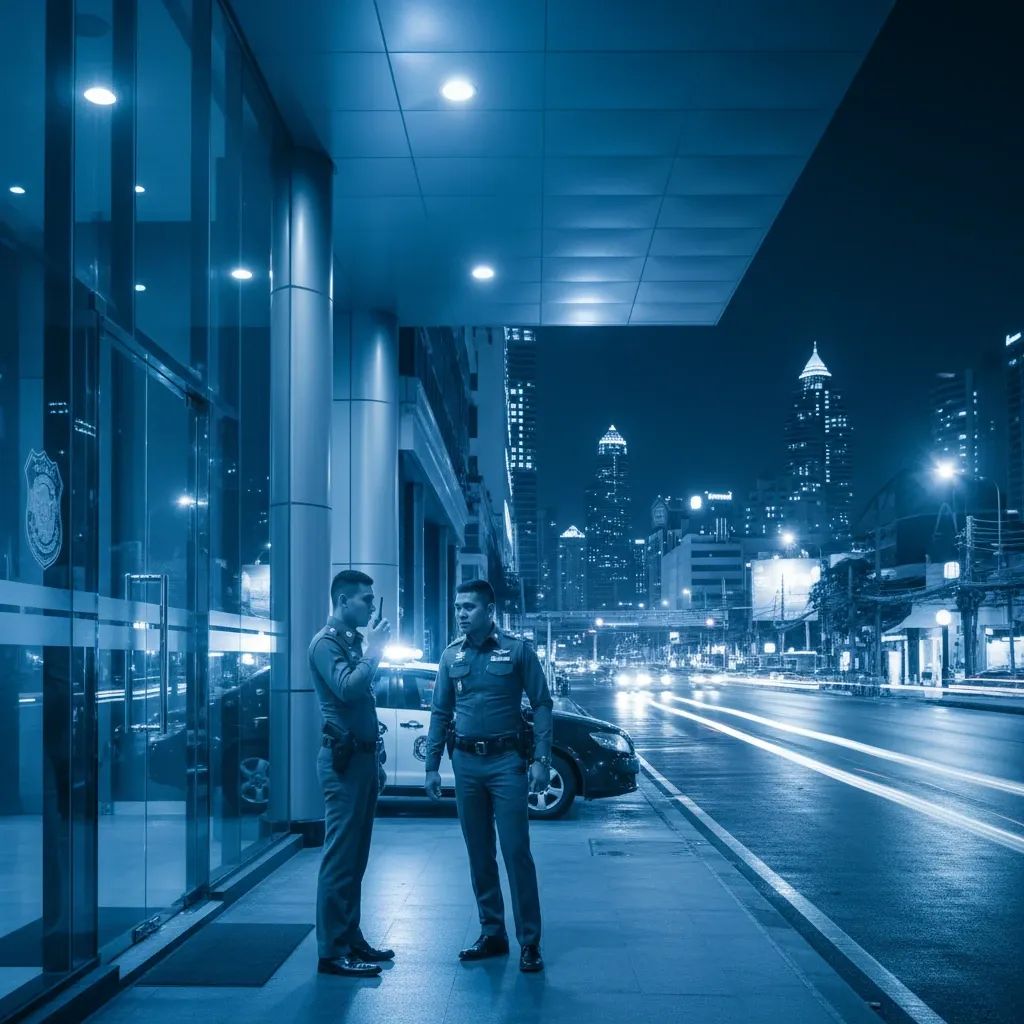
The northern narcotics crackdown is redefining drug movement patterns across Thailand's frontier. Recent interceptions suggest heightened enforcement focus, with law enforcement intensifying border checkpoint operations during peak agricultural seasons.
Why This Matters
• Checkpoint effectiveness is real: The Pa Tung drug screening station in Mae Lao District blocked a major shipment in July, disrupting established smuggling corridors.
• Business logistics face scrutiny: Transport companies and farmers must expect longer delays at border checkpoints; legitimate commerce may require advance documentation to avoid misidentification.
• Highway safety concerns: Desperate evasion attempts—including vehicle ramming and gunfire—pose genuine risks to civilian travelers, particularly on Routes 1 and provincial roads north of Chiang Rai city.
The July 24 Interception
On 24 July, Thailand Border Patrol Police Region 3 stopped a commercial cassava transport at the Pa Tung checkpoint in Mae Lao District, discovering 58 kilograms of crystal methamphetamine secreted in a compartment behind the driver's cabin. Two occupants were arrested. Street value estimates exceed ฿20 million, based on regional wholesale rates.
This seizure reflects broader enforcement intensity in the region. On 21 July, Border Patrol Unit 327 in Mae Chan District seized 520.5 kilograms after a driver abandoned the truck near the Myanmar border. These incidents underscore law enforcement's sustained focus on northern trafficking routes during the monsoon season.
Smuggling Methods: Adaptation and Detection
Modern trafficking in northern Thailand employs sophisticated logistical planning. Cassava trucks, palm shipments, and fuel tankers—commodities with lower inspection thresholds—have become preferred vectors. Smuggling networks invest in cab-mounted compartments, false bulkhead walls, and hollow-panel modifications.
Beyond vehicle engineering, Thailand Royal Police reports that trafficking organizations employ scout vehicles to probe checkpoint gaps and coordinate alternate routes. The concentration of recent seizures suggests increased law enforcement coordination and intelligence-sharing, making traditional smuggling corridors less viable.
Spillover effects are visible across the region. When direct routes tighten, some traffickers divert through alternate terrain. Residents near Mae Chan have reported finding discarded drug packages in fields—symptomatic of hurried jettisoning when checkpoints tighten unexpectedly.
Enforcement Context
Chiang Rai sits squarely within the Golden Triangle where Thailand, Myanmar, and Laos converge. That convergence—combined with porous borders, remote jungle trails, and active river crossings—makes Chiang Rai a key entry point for methamphetamine produced in Myanmar's illicit labs.
Enhanced intelligence-sharing with Myanmar and Laotian authorities has contributed to recent enforcement successes, though cross-border cooperation remains challenging due to political complexities in Myanmar's Shan State. Thailand Border Patrol Police Region 3 continues coordinating operations with provincial forces to maintain pressure on trafficking networks.
Impact on Residents and Legitimate Commerce
For those living in border districts, the enforcement intensification presents a dual reality. Heightened police presence reduces the likelihood of armed confrontations spilling into populated zones, yet simultaneously creates tangible friction for everyday commerce.
Logistics companies face operational challenges. Transport firms must conduct structural inspections before accepting agricultural or bulk commodity shipments, and allow additional transit time during peak harvest months. Documentation standards have become more rigorous to facilitate smooth checkpoint passage.
Rural communities bear ambient risk. Village headmen in Mae Lao District have warned residents—particularly children—about finding discarded drug packages near agricultural fields and water channels. The Thailand Public Health Ministry has allocated additional funding to rehabilitation and addiction treatment centers in Chiang Rai, supporting public health responses to enforcement operations.
Highway travelers should remain vigilant. The 24 July cassava truck stop and recent ramming incidents underscore that desperate couriers pose collision and ballistic risks. Police recommend reporting suspicious vehicles via the Thailand Royal Police hotline (191) or provincial crime-stoppers programs, which offer anonymity and rewards for actionable intelligence.
Seasonal Patterns and Checkpoint Operations
Agricultural seasons structure trafficking rhythms. Harvest months—particularly July through September—generate legitimately high truck volumes, creating statistical camouflage. Checkpoint officers must inspect exponentially more vehicles, and interdiction becomes dependent on behavioral anomalies, documentation inconsistencies, or informant tips.
Recent enforcement activity coincides with the monsoon harvest season when checkpoint delays are expected. Residents should anticipate continued checkpoint operations and allow additional travel time on Highway 1 and provincial roads during peak agricultural periods.
What Travelers and Residents Should Expect
Law enforcement will maintain active checkpoint operations through the monsoon season and into September, when agricultural traffic remains elevated. Thailand Customs Department and Border Patrol Police are coordinating year-round operations.
Residents should expect: checkpoint delays on Highway 1 and provincial roads, occasional road closures during active interdiction operations, and heightened police presence in border districts. For those conducting legitimate business in agriculture, logistics, or cross-border trade, the calculus is straightforward: invest in transparent documentation, ensure hiring legitimate transport companies with proper inspection practices, and allow additional transit time during peak harvest months.


