
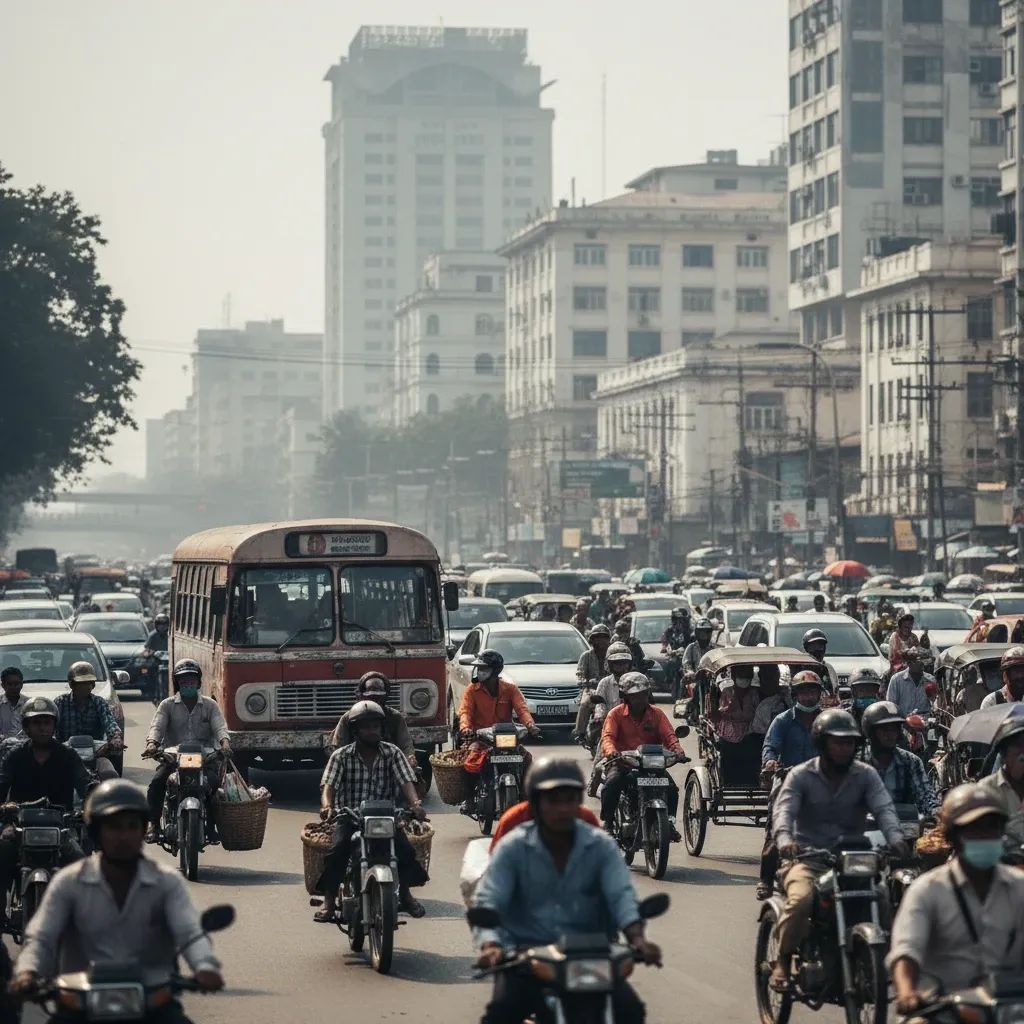
Nearly 2,000 fuel depots and petrol stations across Cambodia have temporarily shuttered operations this week, a consequence of global supply disruptions triggered by the ongoing Middle East conflict. For Thailand-based businesses and expatriates with regional interests, cross-border fuel dynamics are shifting rapidly.
Why This Matters
• Regional supply squeeze: Thailand has imposed an oil export ban with exceptions only for Cambodia and Laos, signaling tighter fuel availability across Southeast Asia.
• Price volatility: Between March 8 and March 11, petrol prices surged 14.2% and diesel jumped 33.7% in Cambodia, despite government subsidies of 6.5 cents per liter.
• Cross-border implications: Cambodia's fuel crisis is driving increased demand at Thailand border stations, particularly near Aranyaprathet and other crossing points, as Cambodian buyers seek alternatives.
• Recession risk: Experts warn that prolonged disruptions could trigger a regional economic slowdown affecting trade, logistics, and manufacturing across mainland Southeast Asia.
The Closure Wave
As of March 11, Cambodia's Commerce Minister confirmed that roughly one-third of the nation's 6,300 fuel stations and depots have ceased operations temporarily. In Svay Rieng province, which borders Thailand, 69 out of 256 stations—approximately 25% of the provincial network—have halted sales due to depleted stocks. In Phnom Penh, suburban outlets including two TOTAL-branded locations along National Highway 3 suspended services on March 9 after exhausting inventory and awaiting fresh deliveries.
The Cambodia Ministry of Commerce has launched an investigation into whether operators are deliberately withholding inventory in anticipation of further price escalation. Officials have threatened license revocations and fines for businesses found hoarding fuel or exploiting the shortage for speculative gain. The ministry issued a directive on March 6 urging both the public and station owners to refrain from stockpiling and to adhere strictly to technical safety standards for storage and sale, citing elevated fire risks associated with improper handling.
What Caused the Shortage
Cambodia's fuel economy is almost entirely import-dependent, relying on petroleum products shipped from Singapore, Thailand, and Vietnam. The country possesses minimal refining capacity—a planned domestic facility in Kampot province is expected to satisfy over 70% of national demand once operational, but completion remains years away.
The immediate crisis stems from disruptions in the Strait of Hormuz, where escalating tensions between the United States, Israel, and Iran have destabilized shipping schedules, driving up freight costs and contributing to global price volatility. These international pressures have cascaded into Cambodia's market, where retail prices are now climbing faster than the government's subsidy mechanisms can offset.
Thailand's decision to ban oil exports—except for shipments to Cambodia and Laos—reflects a broader regional scramble to secure domestic supply. For Thailand residents and businesses, this policy shift underscores how quickly cross-border energy flows can be disrupted during crises, potentially affecting everything from manufacturing input costs to logistics overhead.
Government Response and Enforcement
On March 10, the Cambodia Ministry of Commerce issued a priority directive requiring remaining operational stations to allocate fuel first to essential services: ambulances, fire trucks, public transport vehicles, and those involved in agricultural production, manufacturing, and logistics supply chains. This rationing approach mirrors strategies deployed during past energy crises in the region, where governments prioritize economic continuity over consumer convenience.
Keo Rottanak, Cambodia's Minister of Mines and Energy, said the country maintains a 21-day fuel reserve even if imports were completely halted, and that daily shipments continue to arrive. However, the Commerce Ministry has been more direct, warning that legal action will be taken against operators found violating price caps or refusing to sell available stock.
Price controls remain in effect, with the government setting retail ceilings and extending a subsidy of 6.5 U.S. cents per liter approved by Prime Minister Hun Manet in early March. Despite these interventions, fuel prices have risen sharply: petrol increased 14.2% and diesel climbed 33.7% in just three days. The Cambodia Ministry of Economy and Finance has pledged to hold electricity tariffs steady, even as generation costs climb, but officials have cautioned that further price increases are likely if geopolitical tensions persist.
Impact on Thailand Border Crossings and Businesses
For Thailand-based expatriates, logistics operators, and companies with regional supply chains, Cambodia's fuel shortage carries immediate implications. The oil export ban imposed by Thailand signals that domestic stockpiles are being prioritized, which could presage tighter availability or price adjustments at home if the crisis deepens. The exemption for Cambodia and Laos indicates that Thailand authorities view regional stability as critical—any further deterioration in Cambodia's energy situation is already prompting Cambodian buyers to flood Thailand border markets, driving up local demand near crossing points such as Aranyaprathet and Poipet-Klong Luek.
Diesel prices are the primary concern for cross-border logistics operators, whose freight costs track directly with fuel availability. The 33.7% surge in diesel over three days in Cambodia is creating price swings that are beginning to ripple through regional trucking and distribution networks. Companies reliant on just-in-time inventory models are adjusting delivery schedules and cost contingencies.
Historically, during past shortages in Cambodia, residents living near the Thailand border have crossed into Thailand to purchase cheaper fuel—a pattern that recurred in 2023 when power outages in Poipet forced residents to rely on petrol generators and buy fuel in Aranyaprathet. If station closures persist in the coming weeks, a similar cross-border flow is likely, with potential knock-on effects for Thailand retailers and regulatory scrutiny of bulk purchases by foreign nationals.
Regional Recession Concerns
The broader Southeast Asian energy landscape is under considerable strain. Analysts warn that prolonged disruptions could trigger a localized recession, particularly if manufacturing hubs in Thailand, Vietnam, and Cambodia face sustained increases in energy costs. Fuel-intensive industries—garment manufacturing, food processing, and logistics—operate on thin margins, and a sustained period of elevated diesel prices could force production slowdowns or relocations.
The Cambodian government's directive to prioritize fuel for agricultural and production chains reflects acute awareness of these risks. Cambodia's export-oriented economy depends heavily on reliable energy inputs; any extended shortage could delay harvests, disrupt factory output, and undermine the country's competitiveness in global supply chains. For Thailand-based investors or businesses with Cambodian operations, these vulnerabilities are drawing close monitoring and contingency planning.
Official Timeline and Next Steps
The Cambodia Ministry of Commerce has mandated that fuel stations provide one day's advance notice to authorities before suspending sales or running out of stock, a transparency measure designed to help officials coordinate emergency imports and prioritize distribution. The ministry is collaborating with the private sector to accelerate shipments from Singapore, Thailand, and Vietnam, though the success of these efforts depends on the persistence of maritime disruptions in the Strait of Hormuz.
In the near term, Thailand border communities are experiencing continued price volatility, potential rationing, and increased scrutiny of bulk fuel purchases. The Thailand government's export ban is likely to remain in place as long as global supply chains are under pressure, and any escalation in Middle Eastern tensions could prolong the crisis. Cambodia's 21-day reserve provides a buffer, but the immediate test will come if daily imports fail to keep pace with demand in the weeks ahead.


