
A Bangkok-based collective is hosting a provocatively simple gathering this Saturday: invite people to a park and sit still for one hour—30 minutes of silence followed by an optional 30-minute discussion—without purpose, direction, or output. Commons & Bonfire is organizing the event at Lumphini Park on Saturday, July 4, 2026, from 5:00 PM to 6:00 PM, billing it as "นั่งเฉยๆ ไม่ทำเหี้ยไรเลย"—a deliberately profane Thai slang phrase roughly translating to "just sit and do absolutely nothing." The choice of crude language in the event's Thai title is notably unconventional in Thai public culture, where formal politeness typically dominates event naming. This deliberate vulgarity signals the event's sharp critique of Bangkok's commercialized wellness industry.
What You Need to Know: Practical Attendance Information
When & Where: Saturday, July 4, 2026 | 5:00 PM – 6:00 PM | Lumphini Park
Two designated zones for gathering:
• Monitor lizard statue area (riverside side)
• Lawn near the Chinese pavilion
Arrival: Come 15–30 minutes early to find a comfortable spot on the grass or by the riverside.
What to bring: Your own mat or cushion recommended; the event occurs outdoors regardless of weather.
Hard participation rules during the 30-minute silence phase:
• No phones, no books, no music, no conversation
• Optional 30-minute discussion circle follows for those wanting to reflect aloud
Cost: Free. No registration or tickets required.
Park regulations: Participants must follow Lumphini Park rules—no smoking, no alcohol, no littering.
Getting there: Lumphini Park is accessible via BTS Skytrain (Lumphini Station, Silom Line) or BRT Sanam Luang/Sathorn routes. Street parking available on peripheral roads.
The Event as Cultural Critique
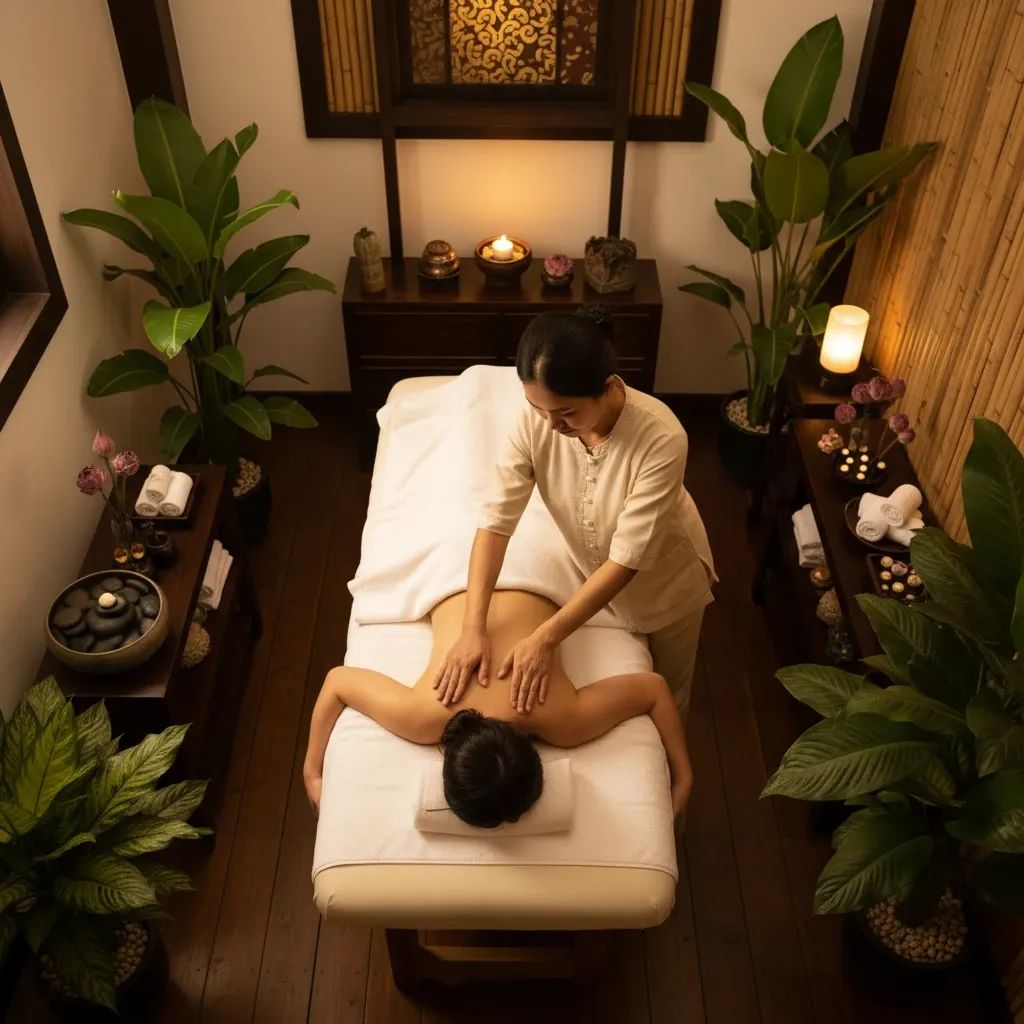
It's a blunt satire of the Bangkok wellness machine that has transformed even rest into a productivity metric. Step into the city's wellness ecosystem and you encounter traditional Thai massage studios alongside clinics offering cryotherapy, IV drips, and epigenetic testing. Hotels market "sleepcations" with blackout curtains and magnesium baths. Fitness classes flood Lumphini Park's evenings. Even meditation has acquired schedules, measurable outcomes, and performance goals. The underlying message is consistent: your time should generate value, whether physical, mental, or spiritual.
This commercialization of wellness isn't uniquely Bangkok, but the city has perfected it. Thailand's wellness sector has grown substantially, attracting international investment and media attention. Government bodies encourage the industry's growth, and premium pricing is commonplace. The government has begun requiring that clinics and wellness providers back claims with clinical data rather than marketing alone—a regulatory acknowledgment that the market has outrun the evidence.
Against this backdrop, Commons & Bonfire's event functions as cultural resistance, using the momentum of productivity culture to flip it on its head. The deliberately profane title in both English and Thai serves a precise messaging function rather than mere shock value. By refusing the coded language of wellness—words like "optimize," "unlock," "transform," "flow"—the event exposes how deeply that vocabulary has infiltrated public life.
Why Demand for This Event Has Been Surprising
The gathering has generated unexpected social media amplification. Participants are drawn to the fundamental proposition: an opportunity to simply exist without guilt or expectation. Bangkok residents—expat and Thai alike—navigate economic uncertainty, political volatility, and relentless digital stimulation. The city's calendar overflows with structured activities promising solutions. For many, the problem isn't lack of activities; it's the inability to do nothing without guilt. The event offers collective permission to simply exist for an hour without producing, achieving, or becoming.
This aligns with emerging global trends toward what some researchers call "mindful idleness"—a deliberate rejection of what critics term "grind culture." The Dutch practice of "Niksen" (intentionally doing nothing without purpose) and the Chinese Taoist concept of "Wu Wei" (effortless action flowing with natural conditions) have entered Western wellness vocabulary. Quietly, they're reshaping how people think about rest. It's not laziness; it's resistance to a system that has commodified every moment.
Lumphini Park as Venue: Symbolism and Practicality
Lumphini Park, the 142-acre green space in central Bangkok, is precisely where the wellness machinery operates most visibly. Every evening, hundreds gather for aerobics classes that have become a notable cultural phenomenon—the park's evening fitness energy represents one of Bangkok's most authentic community expressions. The park hosts festivals, Songkran celebrations, art exhibitions, and music performances year-round.
Hosting a "do nothing" event here carries both practical and symbolic weight. The organizers are not claiming private space or creating a retreat. They're repurposing existing gathering infrastructure for an alternative assembly—one that asks nothing except presence and restraint. By occupying the same ground where optimization typically happens, the event highlights the contrast between different ways of sharing public space.
What This Moment Reveals About Bangkok Living
For residents accustomed to scheduling every hour, the event presents an unfamiliar proposition. It offers no wellness credential, no transformative narrative, no metrics of success. You cannot optimize doing nothing. You cannot prove you did it well. There is no before-and-after comparison to share online.
That absence of purpose is the central point. Thailand's deeper cultural traditions emphasize inner balance, harmony, and acceptance of natural rhythms—values that predate the wellness industry's appropriation of self-care language. The event attempts to reclaim that ethos by stripping away transaction. It asks: What if rest didn't have to justify itself?
The contrast with Bangkok's dominant wellness language is stark. Where cryotherapy promises "enhanced recovery" and personalized longevity plans promise "data-driven aging," this gathering promises nothing. No one will emerge measurably healthier. You will not acquire a hidden skill. Your nervous system won't be optimized. You simply will have sat.
The Design: Minimalism as Message
The structure itself communicates the critique. Thirty minutes of silence followed by an optional 30 minutes of discussion creates two distinct phases. The silence isn't imposed meditation—participants may daydream, lie down, or simply observe. There's no guidance, no instruction, no timed bell. The discussion that follows isn't a therapy or sharing circle with predetermined outcomes; it's space for people to speak if they wish.
Commons & Bonfire has emphasized the event's replicability. Anyone can organize their own gathering, anywhere, anytime. This democratization of the concept—rejecting intellectual property or control—mirrors the event's core message. Rest belongs to everyone. The act of sitting belongs to no system.
What Comes Next
Whether this becomes a recurring gathering or remains a one-off provocation remains to be seen. The organizers have not announced plans for repetition. In a city where every successful event is immediately monetized, franchised, or turned into a brand, Commons & Bonfire is leaving the outcome open-ended.
For anyone in Bangkok feeling overwhelmed by the relentless calendar of self-improvement—by the sense that every hour should yield measurable returns—Saturday's gathering is available. It costs nothing. It requires no preparation. It promises no outcome. In a city built on productivity, that distinction stands out.


