
Why This Matters
• A persistent threat worsening: Thai residents fielded 173M fraudulent contacts across calls and text messages last year, marking a steady climb in scam volume despite law enforcement operations.
• Domestic operations expanding: Chinese-led call centers are no longer confined to remote border zones—they're now running from Thailand's populated central regions, closer to potential victims.
• Asset recovery signals profit motive: The confiscation of 14M baht in a single raid underscores how lucrative these operations have become and why criminal groups continue to invest.
• Government treating it as a national issue: Thailand and China are coordinating dedicated task forces, setting up regional cybercrime hubs, and planning cross-border intelligence sharing to dismantle these networks.
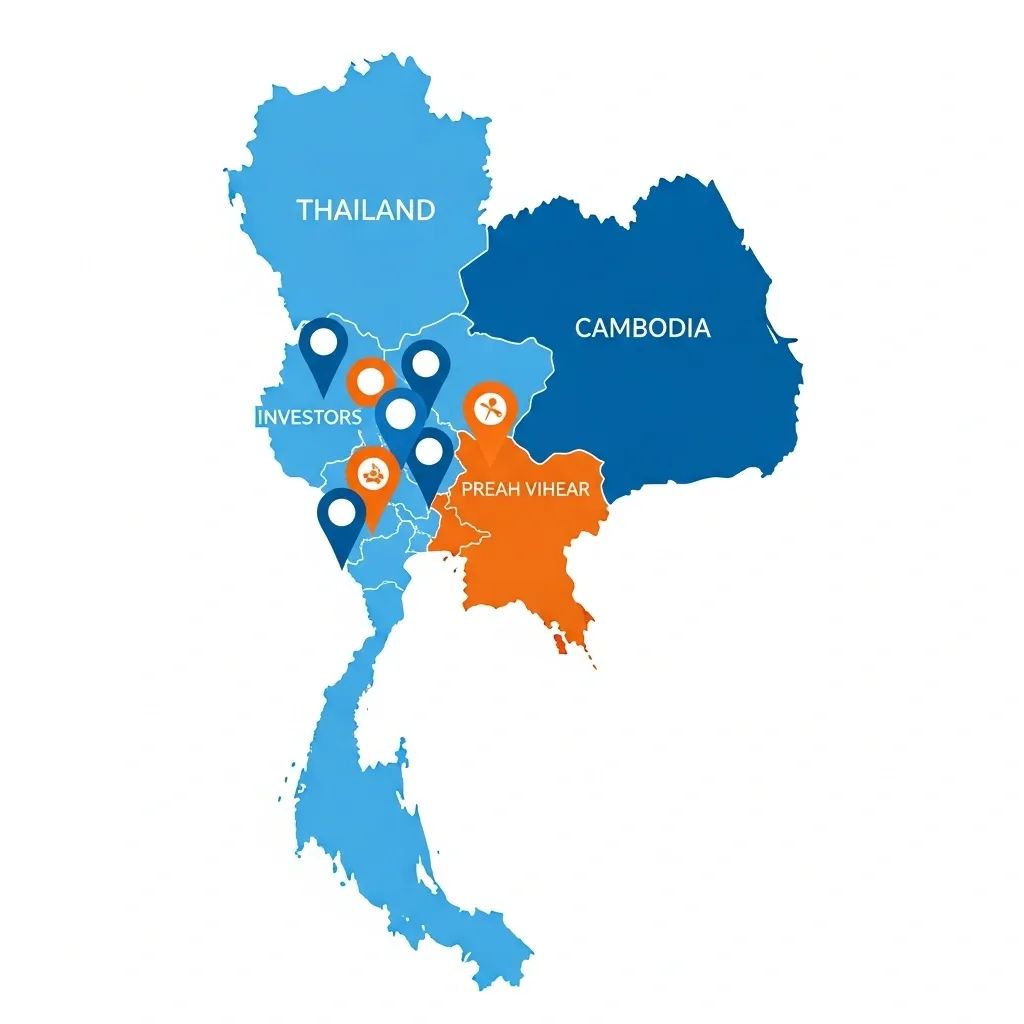
The Thailand Provincial Police Region 1 and partner agencies executed a raid on March 20, 2026, that exposed the deepening reach of international telecom fraud syndicates. Six suspects—believed to include Chinese nationals and local facilitators—were arrested in connection with a call center operation accused of extracting millions from Thai victims. Authorities seized 14M baht in assets, marking one of several operations dismantling these networks in recent months.
What distinguishes this bust from earlier crackdowns is its location. Rather than targeting remote facilities near the Myanmar or Cambodia borders, investigators found organized fraud infrastructure operating from central Thailand's heartland. This shift reflects a strategic adaptation by criminal organizations: as enforcement tightens at border crossing points, networks are relocating inland, embedding themselves in urban and semi-urban environments where they blend more easily and maintain operational flexibility.
The Human Cost Behind the Numbers
The scale of fraud victimization in Thailand has become difficult to ignore. Over the past year, Whoscall—a caller-identification service widely used in Thailand—logged 173M fraudulent contacts, consisting of 39M phone calls and 134M SMS messages. This represents a 3.16% increase from the previous year, a trajectory that shows no signs of stabilizing despite enforcement efforts.
One particularly brutal case illustrates the psychological manipulation at play. In November 2025, callers impersonating Thai government officials and police convinced a 19-year-old university student that he was implicated in a financial crime. The fraudsters then persuaded him to smash open his mother's safe and transfer 6.8M baht worth of jewelry, gold, and religious amulets. A 31-year-old Chinese national was apprehended in Bangkok's Huai Khwang district, though accomplices remain at large.
Another victim, a 63-year-old retired civil servant in Nonthaburi, lost over 9.5M baht in February 2026 after being told his bank account was compromised. Scammers claiming to represent telecom providers and police convinced him to file a fake online report and hand over cash in person at designated pickup points. The psychology is consistent across cases: create urgency, invoke authority, threaten consequences, then extract payment before the victim can verify the story independently.
The Infrastructure: Technology and Human Networks
These operations require more than just phone lines and scripts. Criminal networks deploy SIM boxes—devices that route international calls through legitimate Thai phone numbers to evade detection—and maintain extensive money-mule networks. In November 2025, Provincial Police Region 1 dismantled a Thai money-laundering cell that channeled scam proceeds into bank accounts, converted the cash to cryptocurrency, and funneled it to Chinese handlers operating from abroad. Eight suspects were arrested in that operation, illustrating the willingness of some Thai nationals to participate as support staff. For residents, this means traditional bank fraud protections may not apply once funds are converted to crypto, making initial prevention even more critical.
The use of cryptocurrency creates a secondary complication: traditional asset-tracing methods stumble when funds move through decentralized ledgers. Thai law enforcement is still adapting investigative tactics to handle this shift, a gap that sophisticated criminal organizations have exploited.
What Residents Must Do Immediately
The most practical response is layered personal defense. The Thailand Cyber Crime Investigation Bureau and Whoscall recommend concrete steps:
Block inbound international calls by dialing *138*1# and pressing call—though this service and exact codes vary by carrier, so check with your specific provider (AIS, True, dtac) for the precise codes available to your account. Scammers frequently use prefixes like +697 or +698, which are routed through internet-based calling systems and are particularly common in fraud rings.
Never provide identification numbers, ATM PINs, or banking credentials over the phone, regardless of who claims to be on the other end. No legitimate Thai bank, government ministry, or utility company solicits this information via unsolicited calls. If someone claiming to represent a state agency calls, hang up and dial the official number yourself.
Install caller-screening apps like Whoscall, which flag known scam numbers and provide instant context before you answer. The Cyber Check app, operated by the Thailand Cyber Crime Investigation Bureau and available in Thai and English, allows you to cross-reference suspicious numbers and report scams in real time. This is a Thai government resource available to residents across the country.
Verify through independent channels: Use the website checkgon.com—a Thai government resource—or the Cyber Check mobile application to investigate unfamiliar numbers. Many Thai residents now google phone numbers before responding, a simple habit that prevents engagement with fraudsters.
Report immediately: Forward scam messages and numbers to the Thailand Cyber Crime hotline at 1441 or through your mobile carrier's customer service line. Data forwarding helps authorities identify patterns and locate infrastructure more quickly.
Avoid public Wi-Fi for financial transactions: Fraudsters establish fake hotspots in cafes and malls to harvest login credentials and one-time passwords. Use your mobile data network for sensitive activity.
How Police Are Reorganizing: The Regional Hub Strategy
Recognizing that traditional reactive policing—investigating individual complaints after they occur—cannot keep pace with industrial-scale operations, the Thailand Provincial Police Region 1 launched an institutional redesign in November 2025. Technology Crime Case Management Centers are now operational in 9 central provinces, including Nakhon Sawan, Phetchabun, Phichit, and nearby jurisdictions. These hubs centralize victim reports, integrate databases with Royal Thai Police headquarters in Bangkok, and accelerate investigation timelines by eliminating geographic delays.
This decentralization serves a strategic purpose. By positioning investigative capacity closer to where fraud operations are migrating, police can respond to emerging patterns without routing all intelligence through the capital. The centers also serve a deterrent function: criminals cannot operate unnoticed indefinitely when multiple regional units are monitoring the same telecommunications infrastructure and payment flows.
Thailand-China Cooperation: A Bilateral Response
In recent months, the Thai Cabinet formally designated combating telecom fraud a national agenda item, acknowledging that unilateral enforcement is insufficient. Thailand and China announced plans to establish a joint coordination center to share intelligence, coordinate raids, and pursue extradition of suspects where legal treaties permit. The Thai component is housed at Royal Thai Police headquarters in Bangkok, while China plans a counterpart facility in Mae Sot district, Tak province—a key border crossing with Myanmar's Myawaddy region, where many scam operations are reportedly headquartered.
This cooperation is pragmatic rather than sentimental. China faces its own epidemic of telecom fraud originating from cross-border syndicates, and both nations recognize that criminal organizations exploit weak points in bilateral law enforcement. By creating a formal coordination mechanism, authorities hope to compress the investigation timeline between arrest and information-sharing, which historically has been a bottleneck.
The Cumulative Toll: 80B Baht and Counting
Since 2022, the Thailand Cyber Crime Investigation Bureau has recorded cumulative losses exceeding 80B baht from online fraud. Romance scams—schemes that blend emotional manipulation with fake investment pitches—account for over 33B baht alone. These scams typically involve establishing fake romantic relationships with Thai victims, gaining their trust over weeks or months, then introducing a fabricated investment opportunity (cryptocurrency trading, business ventures, lottery schemes) requiring upfront capital.
The sophistication has escalated with artificial intelligence. Criminals now use AI to generate personalized lures tailored to each victim's interests, employment history, and family structure—all data drawn from 94% of Thai personal information that has leaked or been sold on dark-web markets. A 40-year-old engineer in Bangkok might receive an AI-crafted message about a lucrative tech startup, while a retiree receives one about retirement investment funds. The targeting is no longer random.
Why Enforcement Gaps Persist
Despite aggressive policing, several structural obstacles limit the effectiveness of law enforcement. First, criminals adapt faster than regulations. When one set of SIM cards is blocked, replacements appear within days. Second, cryptocurrency transactions remain difficult to trace without international cooperation involving financial intelligence units in multiple countries—cooperation that has historically moved slowly. Third, extraditing Chinese masterminds from third countries like Myanmar or Laos often stalls in diplomatic limbo, as these nations lack formal extradition treaties with Thailand or prioritize their own law enforcement needs.
Additionally, many victims hesitate to report losses due to shame or fear of follow-on fraud. Criminals have capitalized on this by posing as "recovery agents," falsely claiming they can retrieve stolen funds for an upfront fee—compounding the damage with a secondary victimization.
The Visibility Test: Is This Sustainable?
The March 20 raid and the larger crackdown suggest that Thailand Provincial Police Region 1 and central government are taking the threat seriously. By establishing regional cybercrime hubs, integrating databases, and partnering with China, Thailand is constructing an enforcement architecture designed to sustain pressure over years, not months.
Yet the numbers tell a different story. 173M fraudulent contacts in a single year implies that technology and public awareness must evolve in tandem with police work. Every resident can employ the defensive tactics outlined above, but only a fraction of the population has access to Cyber Check apps, caller-screening software, or the digital literacy to verify suspicious contacts independently. Bridging that gap requires sustained public education campaigns, improved digital literacy in schools, and technological mandates on carriers to block obvious fraud patterns at the network level—measures that move slower than criminal innovation.
Until comprehensive reform takes hold, residents should treat every unexpected call or unsolicited message as potentially fraudulent, verify independently before acting, and remember that no legitimate government agency demands immediate cash transfers over the phone.


