
A Viral Food Phenomenon
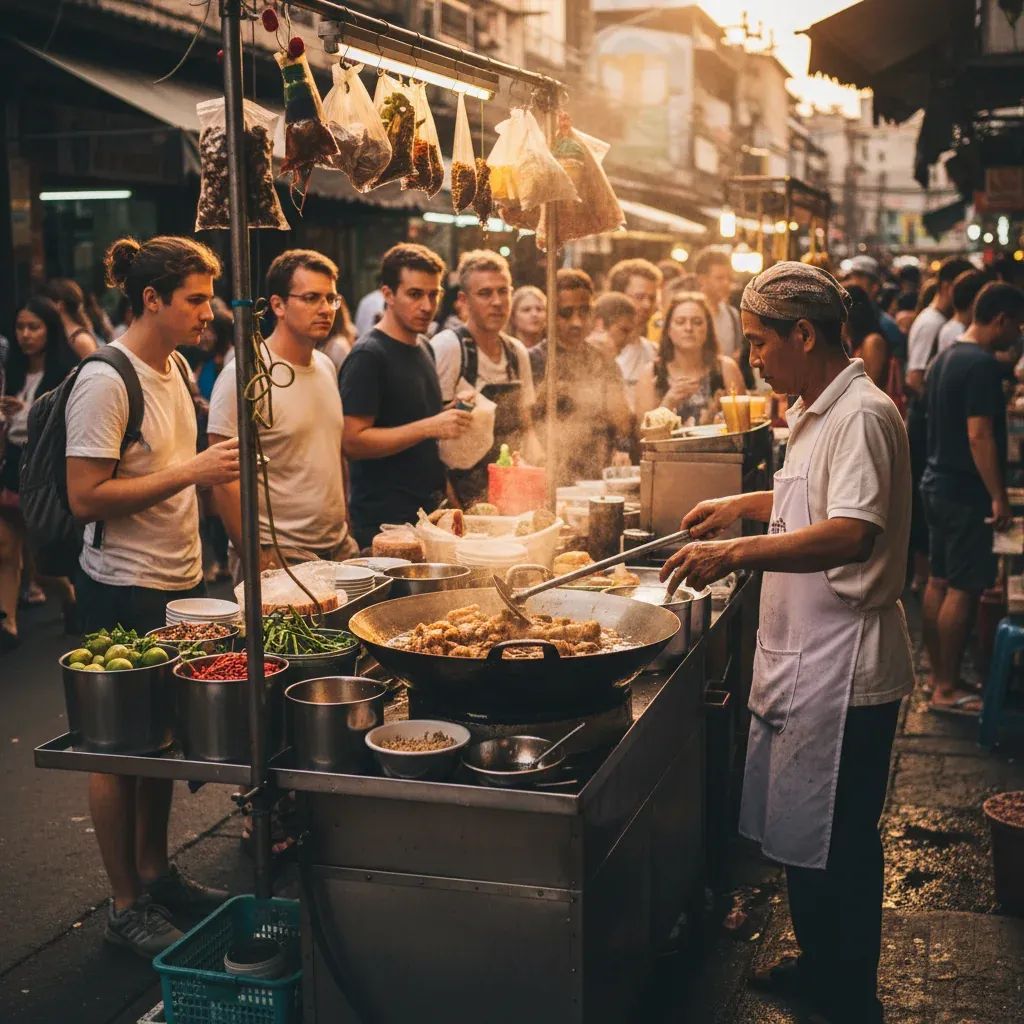
Walk through the alleys of Khlong Toei, and you'll encounter something remarkable—a modest food stall where customers routinely queue two to three hours for a single dish. The proprietor is Jarus Phomraeng, a 62-year-old cook known as Chef Ka. His reputation rests on one item: a six-layer crispy pork, prepared in a style influenced by Yunnan culinary traditions.
This is no longer a neighborhood secret. International tourists, Bangkok food media, and social media influencers have collectively transformed a humble stall into a destination that people specifically visit when traveling to Thailand.
What Makes the Pork Special
Chef Ka's signature dish represents a specific cut and cooking philosophy. The six-layer pork comes from pork belly, where natural alternating layers of fat and lean meat create complexity when handled correctly. His approach emphasizes restraint—salt, chili, and little else. The philosophy trusts the ingredient itself rather than heavy sauces or elaborate spice profiles.
The preparation demands precision. The cut must come from the correct region of pork belly to ensure those distinct layers remain intact. Seasoning is applied simply: coarse salt rubbed into the skin and meat. The cooking requires constant attention and temperature control. Chef Ka personally manages every stage, tasting as he goes, adjusting based on the cut's thickness and daily humidity conditions.
Once cooked to his standard, the pork is plated simply—sometimes with rice, sometimes with soup, always with that restrained salt-and-chili accompaniment that lets the pork speak for itself.
The Reality of Success
Chef Ka remains the sole staff member. He buys ingredients, prepares them, cooks them, plates them, and collects payment—all personally, every day. The multi-hour queues mean he's working continuously, managing the physical and mental demands of constant demand.
This success presents real challenges. Expansion through hiring introduces costs: training time, ongoing supervision, recipe protection concerns. Mechanization is impractical for a product demanding artisanal attention. Raising prices might reduce queues but would betray the affordability principle that attracted locals before international attention arrived.
Practical Information for Visitors
For people living in Bangkok considering a visit, practical advice applies:
• Expect 2-3 hour waits, especially on weekends and public holidays
• Arrive early before peak times if your schedule permits
• Bring water and wear shoes suitable for standing
• The portion is priced affordably, but the time investment significantly increases the true cost of the experience
• The stall is located in Khlong Toei, Bangkok's largest fresh market area
The Broader Context
Khlong Toei is simultaneously a working-class neighborhood, Thailand's largest fresh market, and an increasingly visible culinary destination. The district operates as a vital artery for Bangkok's entire restaurant industry—supplying fresh produce, seafood, and specialty proteins to establishments from street stalls to fine dining rooms.
Street vendors like Chef Ka represent a knowledge tradition that values craft, flavor precision, and community embeddedness. For now, the queues persist. Chef Ka continues frying his pork in single batches, one precise batch at a time, while customers wait under the Bangkok sun. His story reflects the intersection of tradition and contemporary commercial pressure in Thailand's modern urban food landscape.


