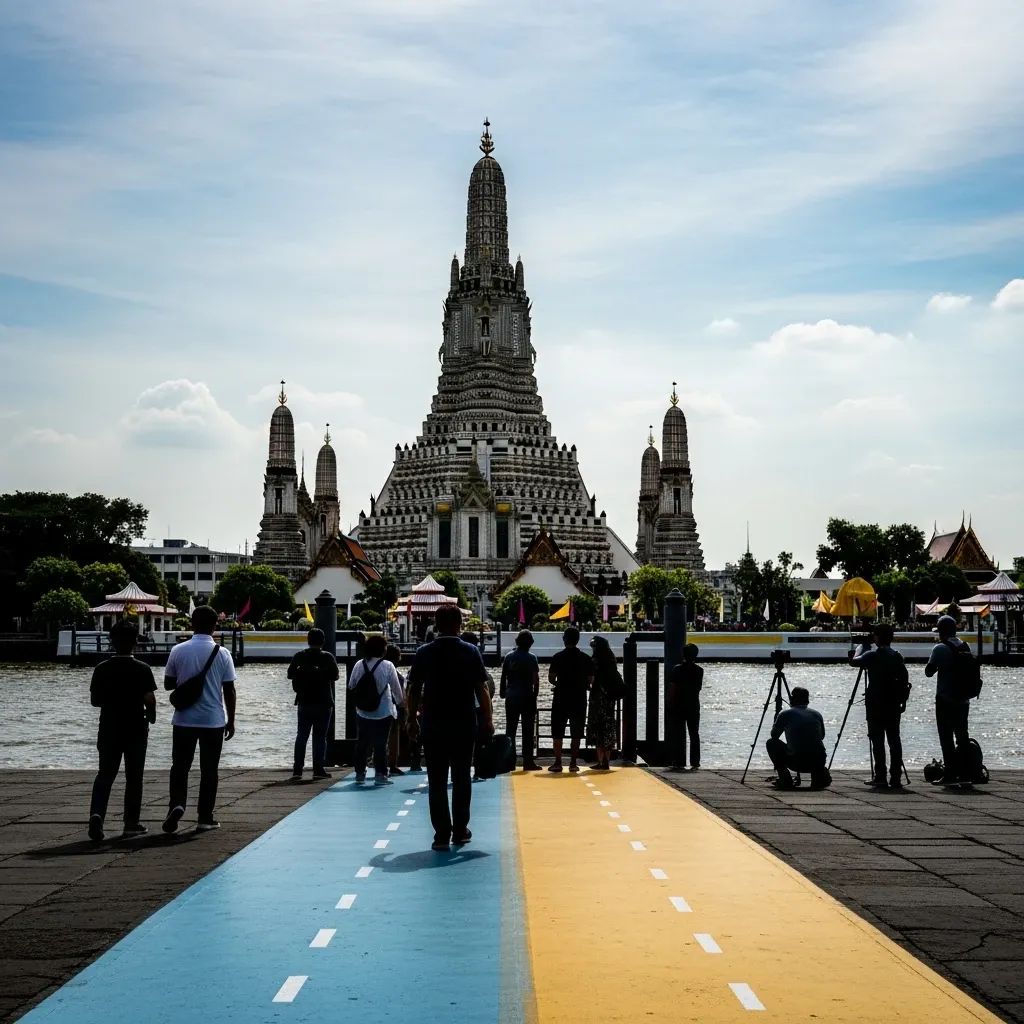
Tourists arriving at the riverfront pier this week may notice something new at Wat Arun: a line on the ground quietly separating ordinary sight-seers from professional photo crews. The temple – a postcard icon for Bangkok’s tourism brand – is racing to calm a storm after social media videos showed pushy photographers herding visitors away from the best backdrops.
Snapshot of a Dispute
• Location: Wat Arun Ratchawararam, Thon Buri side of the Chao Phraya River
• Trigger: Freelance photographers linked to Thai-costume rental shops accused of clearing crowds for paying clients
• Viral voice: Entertainment executive Krisda “Pond” Witthayakhajorndet called out the behaviour on X
• Official reaction: Tourist Police Bureau orders round-the-clock patrols and joint talks with the temple committee
• Goal: Draft a “fair-use” code before the Chinese New Year rush swells visitor numbers again
Why the Temple Became Bangkok’s Catwalk
The 79-metre central prang of Wat Arun is more than an architectural wonder; it has evolved into a runway for heritage-themed selfies. A decade-long boom in costume-rental studios, many clustered near Sanam Chai MRT, feeds a global appetite for “dress like a local” experiences. Data compiled by the Tourism Authority of Thailand show that in 2025 about 62 % of Chinese visitors to Bangkok booked at least one traditional-dress photo package, and Wat Arun ranked as their top backdrop.
Behind the scenes, the business model is simple: outfits rent for ฿300–฿800 per session, while photographers earn ฿4,000-฿6,000 per hour shooting, editing and cloud-delivering images. That income stream, however, collides with the temple’s identity as a public sacred site where entry fees are capped at ฿100.
Where Public Space Meets Private Profit
Eyewitness clips circulated on 3 January show photographers waving tourists aside at the "white-window arcade" and the gate guarded by the yaksha giants. Some exchanges grew loud enough to drown out the temple’s hourly prayer chants. The incident exposes three overlapping tensions:
Commercial use of a site managed by the monastic sangha.
Lack of a clearly marked photo-permit zone.
Rising visitor volumes forecast to exceed 3 M arrivals to the temple in 2026.
Local vendors interviewed by the Bangkok Biz Standard said they were torn: the costume craze drives snack and ferry sales, yet aggressive crowd control “makes Thailand look unfriendly.” A Chinese couple from Chengdu told us they felt “pushed around” and cut short their visit. A Bangkok university photography club, meanwhile, defended most freelancers as “professionals who get smeared by a noisy few.”
Authorities Draft a New Rulebook
Tourist-Police chief Pol Lt-Gen Saksira Phueak-um has assigned a 12-member task force to work with the abbots and district officials. Early proposals include:• Registration badges for approved photographers• Time-slot booking via a QR code system similar to that used at Rome’s Colosseum• A “three-strike” policy with fines up to ฿10,000 and loss of badge• Clear floor markings that preserve merit-making lanes for worshippers
Temple treasurer Phra Kru Palad Ronnarit told reporters the committee wants rules “that let people earn a living without chasing away the dhamma.” Implementation is targeted for 1 March, giving stakeholders seven weeks to comment.
What the Law Already Says – and Doesn’t
Thailand’s primary instrument, the 2004 Department of Fine Arts regulation on filming in historical monuments, requires permits for any commercial shoot but exempts casual tourists. Because Wat Arun predates 1910, it qualifies as a protected monument. In practice, however, small-scale photo jobs rarely file paperwork. Tourism lawyers argue that clearer definitions of “commercial” – perhaps using equipment size or client payment as thresholds – would help rangers enforce rules without stifling creativity.
Lessons from Overseas Shrines
Experts point to best practices adopted at Fushimi Inari (Japan), Angkor Wat (Cambodia) and Spain’s Mezquita-Catedral:
Zoned corridors separating ritual traffic and camera traffic.
Online fee systems that funnel revenue into conservation.
On-site cultural guides who politely manage queues while sharing context.Bangkok-based urban planner Nattaporn Aksorndee suggests Wat Arun pilot a similar hybrid model: “Charge a modest ฿200 photo permit that bundles a cultural briefing – tourists learn more, the temple funds restoration, and freelancers keep working legally.”
Voices From the Pier
• Photographer guild spokesman: “We welcome badges; it protects our reputation.”• Long-tail boat captain: “If tourists leave angry, they skip the river tour – everyone loses.”• Tourist from Frankfurt: “I would pay extra for an organised slot; uncertainty is worse than price.”• Local street-food vendor: “Just don’t block the pathway to my coconut-ice stall.”
What Happens Next
A follow-up meeting between the Tourist Police and temple board is set for 5 January. Draft guidelines will then be posted in Thai, English and Chinese for public feedback. For Bangkok residents contemplating a weekend photo outing, the advice is simple: arrive early, stay on the visitor paths – and if a camera crew waves you aside, remember the space belongs to everyone. The flash may fade, but Thailand’s hospitality reputation is on the hook long after the shutter clicks.