
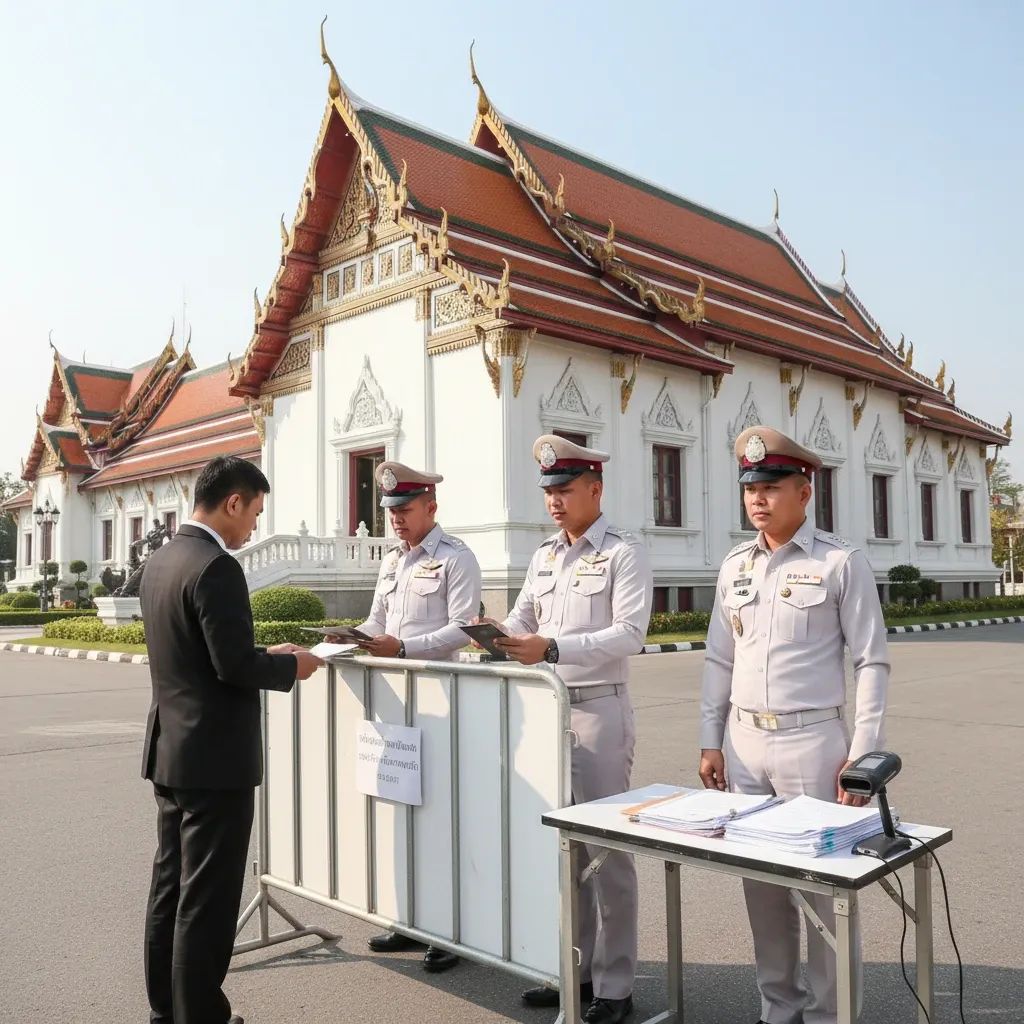
The Thailand Royal Police Arrest Two Ugandan Nationals in Surat Thani Province
The Thailand Royal Police arrested two Ugandan nationals on Koh Phangan in Surat Thani Province after uncovering an operation that reportedly generated ฿500,000 per person each month from sex work targeting foreign tourists, a case that underscores enforcement challenges and the legal risks facing foreign nationals working illegally in Thailand's resort islands.
Why This Matters
• Legal exposure for residents: Foreign nationals working illegally in Thailand face deportation and bans, a stark reminder that visa overstays and unauthorized employment carry serious consequences.
• Tourism zones under scrutiny: Authorities are ramping up enforcement in tourist hotspots like Koh Phangan, signaling increased immigration oversight and workplace inspections for all foreign nationals.
• Economic scale: The arrest reveals monthly earnings equivalent to 10 times the Thai minimum wage, highlighting the underground economy's profitability and its appeal to migrants from economically disadvantaged countries.
The Sting Operation
Authorities in Surat Thani Province detained Janat Nakalema, 32, and Mariam Namatovu, 29, at a residence in Moo 2, Koh Phangan subdistrict on late Sunday evening. The operation was triggered by a complaint from an Israeli tourist who reported being robbed while using their services. Thailand police arranged contact via WhatsApp, with plainclothes officers posing as clients and agreeing to pay ฿5,000 for services. Upon meeting, both women were taken into custody.
Under questioning, the pair admitted to offering sexual services on the island for over two months, servicing approximately 180 clients during that period—almost entirely foreign nationals. Both confirmed they wired the bulk of their earnings back to family members in Uganda. They are currently being processed at Koh Phangan Police Station under charges related to prostitution and immigration violations.
What This Means for Residents
For expatriates and long-term residents, this case is a stark reminder of the legal red lines that persist in Thailand's gray zones. While prostitution remains widespread and tolerated in practice, it is explicitly illegal under the Prevention and Suppression of Prostitution Act B.E. 2539 (1996), which bans solicitation in public and the operation of brothels. Conviction can lead to fines, imprisonment, and immediate deportation for non-citizens, with bans on re-entry.
Immigration enforcement has intensified in recent months, particularly in tourist hubs like Phuket, Pattaya, and the southern islands. Phuket Immigration has conducted sweeps targeting foreign sex workers whose presence is seen as damaging provincial reputation. For residents, this means increased scrutiny at checkpoints, more frequent visa audits, and zero tolerance for employment outside authorized categories.
Enforcement Challenges and Policy Debate
Despite robust legislation—including the 2008 Anti-Trafficking in Persons Act and its amendments—enforcement remains inconsistent. Corruption, insufficient staffing, and the underground nature of the trade hinder prosecution. Local officials in tourist zones often turn a blind eye, either for economic reasons or due to informal arrangements. Thailand's National Police have acknowledged that online platforms and encrypted messaging services like WhatsApp have made monitoring and interdiction far more difficult.
Thailand's Ministry of Social Development and Human Security has protocols to assess whether arrested sex workers are victims of trafficking; if so, they may receive shelter, legal aid, and repatriation assistance rather than prosecution. However, voluntary migrants who entered on tourist visas are typically processed as immigration violators.
What Happens Next
Both detainees face charges under the prostitution act and immigration law. If convicted, they will likely be deported with multi-year bans on re-entry. The case also signals a broader enforcement trend. Phuket authorities have increased raids on entertainment venues in tourist zones, focusing on workplace compliance and immigration status verification.
For foreign nationals living and working legally in Thailand, this serves as a reminder: the distinction between tolerated and legal is real, and the penalty for crossing it—especially for non-citizens—is swift and unforgiving. The underground economy operates at constant risk of exposure, and those caught in its web face not just legal consequences, but the possibility of being barred from the country indefinitely.


