
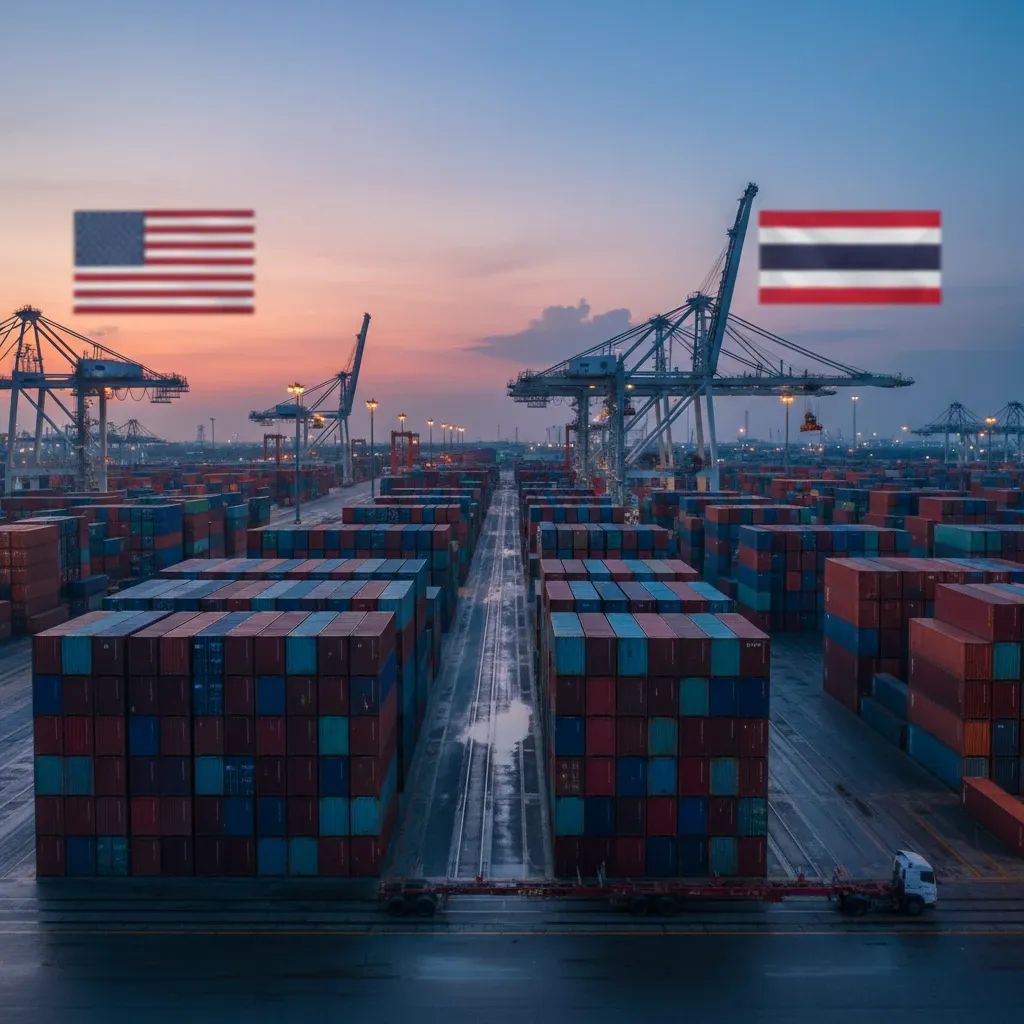
The Trump administration has invoked an obscure Cold War-era statute to impose import duties that started at 10% and were rapidly increased to 15%—a move that follows recent judicial constraints on prior tariff frameworks but creates significant operational challenges for anyone conducting cross-border commerce.
Why This Matters
• Tariff rate escalated quickly: The tariff began at 10% on February 24 and was swiftly increased to 15%, leaving businesses in Thailand scrambling to adjust cost projections and pricing strategies.
• Legal basis faces challenges: Courts have already rejected prior Trump tariff frameworks; this one faces similar challenges from companies and trade associations already filing suit.
• Exemption list creates classification complexity: Some sectors are exempt from the levy while others face full exposure, meaning costs depend on how US Customs and Border Protection categorizes shipments.
The Statutory Shift and Legal Context
Four days before the initial tariff announcement, the US Supreme Court invalidated the administration's previous trade strategy. On February 20, the Court ruled that the International Emergency Economic Powers Act (IEEPA)—the legal foundation for prior tariff rounds—does not grant the President authority to impose duties. That decision invalidated billions in levies already collected, forcing policymakers to pursue alternative justification.
The administration then invoked Section 122 of the Trade Act of 1974, a provision rarely used since adoption. Designed to address "fundamental international payments problems," the statute targets scenarios resembling the 1970s currency crisis. Trade law specialists have expressed concern about whether current circumstances genuinely meet this threshold, as the original provision contemplates temporary, crisis-driven interventions rather than routine trade management.
This legal approach carries implications for Thailand-based companies because it signals policy instability. If courts determine Section 122 does not apply here, the tariff regime could collapse, potentially triggering refunds. Alternatively, if challenges succeed partially, specific product categories might be exempted or reclassified, shifting cost burdens unexpectedly.
What Faces the 15% Tariff—And Thailand's Exposure
The administration released an exemption list that reveals sectoral priorities: USMCA-compliant goods from Mexico and Canada, pharmaceuticals, critical minerals, energy products, aerospace components, passenger vehicles, certain electronics, and staple agricultural items are tariff-free.
For Thailand, one of the top US import sources, this creates substantial exposure. Thailand's primary exports to the United States include:
• Electronics and semiconductors – Partially exempt depending on classification and origin, but components assembled in Thailand face tariff risk
• Automotive parts – Heavy tariff exposure unless classified as USMCA-compliant, affecting Thai automotive suppliers significantly
• Rubber and rubber products – Not on the exemption list; Thai rubber faces full 15% exposure
• Processed foods and seafood – Agricultural exemptions apply selectively; Thai processed foods and seafood products face tariff pressure
• Apparel and textiles – Not exempt; Thai garment manufacturers absorb the full 15% rate
For manufacturers in Thailand assembling consumer electronics, automotive components, or processed foods, the 15% tariff fundamentally alters economics. A single shipment may contain taxed and untaxed components depending on US Customs classification—a determination that can take weeks and generate disputes lasting months. The administrative cost of navigating these rulings often exceeds the tariff itself.
The rapid escalation from 10% to 15% compressed decision-making timelines. Companies that factored 10% into pricing now face margin pressure from the higher rate taking effect immediately.
Market Impact and Financial Implications for Thailand
The announcement triggered sharp market movements. Following Trump's tariff announcement, the Dow Jones plummeted 821 points (1.7%), the S&P 500 fell 1%, and the Nasdaq dropped 1.1%. The sell-off drove capital reallocation toward safe-haven assets: the US dollar weakened, gold prices surged, and emerging-market currencies absorbed pressure as investors retreated.
The Thai baht experienced downward pressure against the dollar as foreign investors reduced emerging-market exposure. For expats in Thailand holding baht-denominated assets or relying on dollar income, the currency volatility creates both risks and opportunities. Those earning in dollars benefit from a weaker baht, while those spending in dollars face higher costs. Managing this exposure requires active currency monitoring and potential hedging strategies.
For expat investors holding US equities or dollar-denominated bonds, the market whipsaw underscores the importance of diversification and scenario-based hedging in an environment where trade policy shifts abruptly.
Economic Consequences: The 15% Impact
Economists project that the 15% Section 122 tariff, combined with existing Section 232 duties on steel and aluminum, will compress US GDP by approximately 0.3-0.4% annually. Consumer prices are expected to rise 0.8-1% in the near term, with cumulative household costs reaching $300 to $800 annually per family as retailers pass through tariff expenses.
For Thailand's export-oriented sectors, the impact is material. The higher 15% rate (versus the initially announced 10%) increases cost pressures on Thai exporters and reduces margins. Companies with significant American customer bases—particularly in automotive components, rubber products, processed foods, and electronics—should expect:
• Volume pressure as US importers reduce purchasing to manage costs
• Margin compression as tariff costs cannot be fully passed to price-sensitive US retailers
• Increased competition from tariff-exempt jurisdictions
Practical Implications for Thailand-Based Businesses and Expats
For export-oriented companies:
First, immediately classify your product portfolio against the exemption list with precision. Products in exempt categories maintain competitive positioning; those facing the 15% rate require urgent pricing and strategy reviews. Engage customs brokers experienced in US Customs and Border Protection methodology to challenge questionable classifications and document processes for potential refund claims.
Second, stress-test financials under realistic scenarios. Calculate margin impact assuming the 15% rate persists through 2026. For companies with US customer contracts, review renegotiation clauses or force-majeure provisions to determine available cover for tariff-induced cost increases—these must be invoked promptly.
Third, diversify sourcing where feasible. The 15% tariff creates temporary cost advantages for competitors sourcing from non-US suppliers or exempt jurisdictions. Evaluate whether shifting production or input sourcing to Vietnam, India, or other lower-tariff jurisdictions yields net savings after accounting for logistics and quality factors.
For expats importing goods or managing cross-border finances:
Those importing personal or business goods from the US into Thailand should expect 15% tariff costs on non-exempt items. Plan accordingly for items purchased from US suppliers, particularly electronics, automotive goods, and luxury items. Document all shipments and retain tariff documentation in case refunds occur following litigation.
Those receiving US dollar income benefit from baht weakness against the dollar but should monitor currency fluctuations carefully. Consider hedging strategies if dollar income represents significant household budget components.
For all stakeholders:
Monitor litigation closely. Trade-focused legal publications and customs counsel track court filings on Section 122 challenges. A favorable judgment could eliminate the tariff retroactively, creating opportunities for refund claims. This timeline is critical for businesses planning long-term commitments to US export relationships.
Looking Ahead: The Test-and-React Trade Environment
The February 2026 episode exemplifies an established pattern: sweeping executive action, judicial response, and rapid policy adjustment. The assumption that trade schedules and tariff rates remain stable reference points for years has diminished. Instead, global commerce now operates under conditions where rules shift faster than supply chains can reoptimize.
For Thailand, a nation where US trade represents a significant economic component, this volatility requires structural adaptation. Maintain operational flexibility through diversified sourcing and tiered pricing mechanisms. Develop adequate liquidity reserves to absorb unexpected cost increases. Monitor US regulatory developments with the same attention applied to Thai government announcements.
The predictable, rules-based trade system of the post-World War II era operates under increasing strain. What emerges remains uncertain, but the requirement for active adaptation is clear: waiting for policy clarity is not a viable strategy. The time to adjust operations, pricing, and financial positioning is now.


