
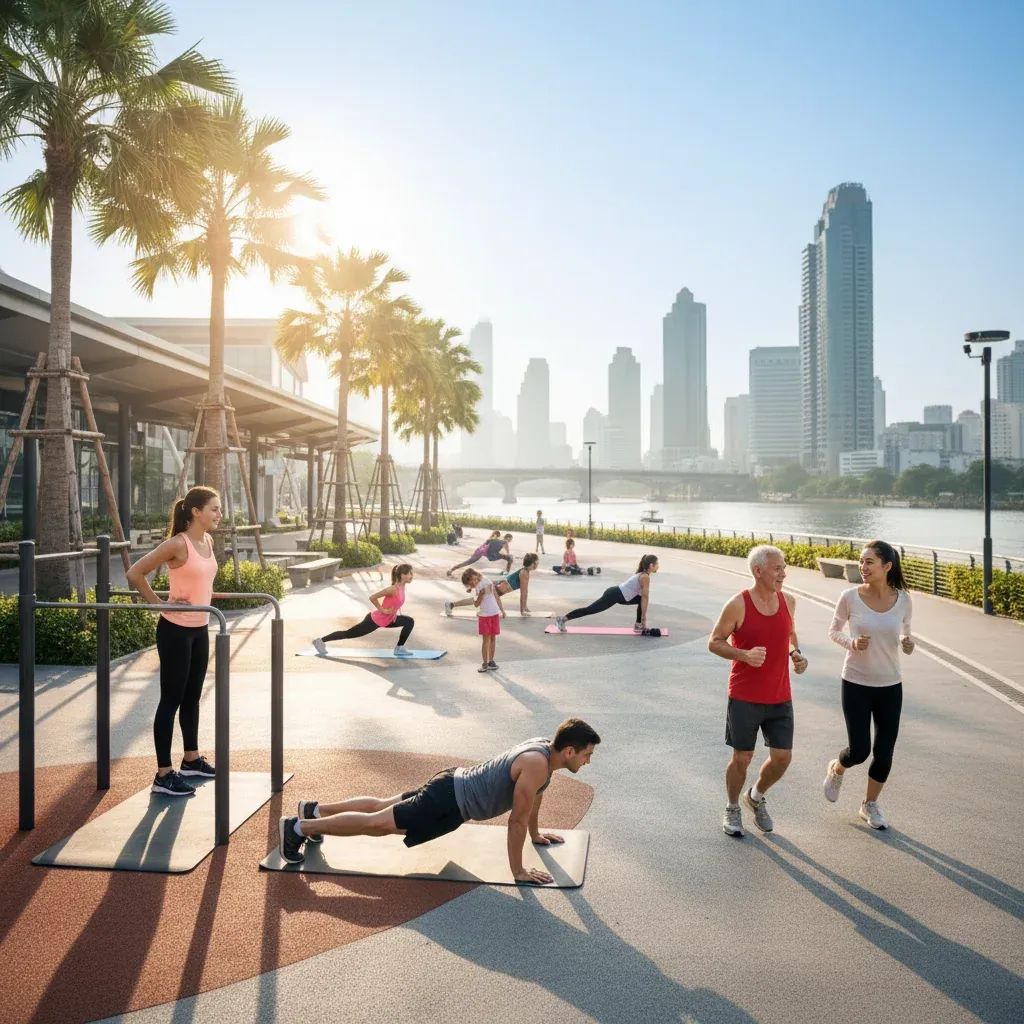
The Thailand fitness and sports sector is thriving despite the nation's economic slowdown, with crowded gyms, packed public parks, and record-breaking event turnouts signaling a significant shift in consumer priorities. As Thailand's overall GDP growth stalls at projections between 1.5% and 2.5% for 2026, Thai residents are channeling discretionary spending into health and wellness at accelerating rates—a counter-cyclical trend that underscores the cultural priority now placed on fitness.
Why This Matters:
• Healthcare economics: 65% of Thais now prioritize wellness, viewing fitness spending as a practical measure against rising medical costs and insurance premium increases.
• Spending patterns: Average annual sports expenditure reached ฿8,893 per person in 2025, up from ฿8,590 the previous year—representing a consistent upward trend even as economic growth slows.
• Market growth: The Thailand health and wellness sector is projected to expand from $15.22B in 2024 to $21.12B by 2033, even as household debt remains a persistent national concern.
• Social infrastructure: Public parks have evolved into vital community health resources, particularly for residents seeking affordable fitness alternatives.
The Economic Paradox: Fitness Thrives as Wallets Tighten
Krungthai Card Public Company Limited (KTC) reported a 20% surge in fitness-related card spending during 2025, a growth trajectory sustained over three consecutive years despite broader economic uncertainty. This pattern reflects a clear behavioral shift among Thai consumers, who increasingly treat physical activity as essential investment—comparable to utilities or healthcare rather than luxury spending.
The financial rationale is straightforward for many residents: investing in gym memberships (typically ฿800-2,500 per month depending on facility and location), athletic wear, and proper footwear annually costs substantially less than managing preventable chronic conditions in Thailand's increasingly expensive healthcare system. Medical inflation and rising insurance premiums have created an economic situation where fitness spending represents prudent health planning rather than indulgence.
Southeast Asia's health and fitness club market, which includes Thailand as a major component, reached an estimated $2.93B in 2026 and is accelerating at 9.24% annually through 2031. Personal training services are expanding even faster at 11.78% annually, demonstrating that Thai consumers are actively seeking professional guidance and structured fitness strategies.
Activity Patterns Reveal Cultural Evolution
The composition of sports participation tells a nuanced story about Thailand's changing fitness culture. Strength training has overtaken cycling as Thailand's third most popular activity, reflecting growing awareness of muscle preservation for long-term health. This shift marks a transition from predominantly cardio-focused exercise practices toward more comprehensive fitness approaches.
Social racket sports have surged in popularity, with badminton participation rising 116% and tennis climbing 65%, according to activity tracking data. These sports offer dual appeal in Thai culture: genuine cardiovascular benefit combined with social and networking opportunities that strengthen community connections.
Meditation activities jumped 148%—a figure reflecting the integration of mental wellness into contemporary Thai health philosophy. Pilates grew 35%, particularly among urban professionals seeking low-impact strengthening compatible with Bangkok's office-focused work environment. Running and walking retain dominance as foundational activities, supported by Thailand's expanding public parks and pedestrian-friendly zones.
The 2026 Buriram Marathon drew over 100,000 participants—more than triple the 30,000 runners in 2023. The Laguna Phuket Marathon in June 2026 anticipated 8,000+ runners from 50+ countries, generating substantial tourism revenue alongside community health benefits.
Public Parks Transform Into Vital Economic Equalizers
As Thailand's household debt situation persists, public parks have emerged as critical resources in the nation's fitness landscape. A reported 71% of Thais now prefer exercising at home or in outdoor natural settings—a preference driven by economic considerations, post-pandemic health awareness, and Bangkok's air quality challenges during certain seasons.
Bangkok metropolitan authorities are aggressively developing "forest parks" and "pocket parks" to address chronic green space scarcity in the capital. These initiatives recognize an essential point revealed during COVID-19 lockdowns: access to urban green spaces correlates directly with mental health outcomes. Research conducted during Bangkok's pandemic restrictions found that visitation to accessible parks was significantly associated with improved psychological well-being.
The economic function of these spaces is crucial for residents managing financial constraints. Zero-cost access to quality exercise venues effectively subsidizes health maintenance for lower and middle-income households, reducing barriers to fitness participation while maintaining engagement across different income levels. Popular parks in Bangkok operate with dawn-to-dusk activity, with retired residents using morning hours for tai chi, followed by lunchtime runners, and evening family gatherings.
What This Means for Residents
The fitness sector's resilience creates several practical implications for people living in Thailand:
Fitness Costs Are Becoming More Accessible: Gym membership pricing in Thailand ranges widely—from budget chains at ฿300-600 monthly to premium facilities exceeding ฿3,000 monthly—giving residents multiple affordability options. The maturing Thai sportswear market increasingly features domestic brands offering competitive products at accessible price points, typically 30-40% less expensive than international labels while maintaining acceptable quality for casual and intermediate athletes.
Regional Context on Fitness Spending: Thailand's annual sports expenditure of ฿8,893 per person positions the nation competitively within Southeast Asia, reflecting strong regional engagement despite economic constraints. This spending covers gym memberships, equipment, apparel, footwear, and participation fees—demonstrating genuine financial commitment to health across diverse income segments.
Specialized Nutrition Markets Are Expanding: The Thailand sports nutrition sector is projected to reach $725.8M by 2033, growing at 11.6% annually. This expansion means improved product availability and competitive pricing for residents integrating structured training into daily routines.
Virtual Fitness Offers Practical Alternatives: Thailand's virtual fitness market is expanding at 26.1% annually through 2030, reaching an estimated $246.4M. For residents juggling Bangkok's notorious commute times or provincial work schedules, digital platforms provide practical alternatives—particularly relevant as economic pressures increase time constraints.
Traditional and Modern Fitness Merge: While modern gym culture expands rapidly, traditional Thai fitness practices like Muay Thai remain central to the nation's athletic identity. This cultural continuity ensures diverse fitness options suited to different preferences and economic situations, from low-cost community Muay Thai camps to sophisticated modern training facilities.
Major Events Generate Local Economic Benefits: Thailand's 2025-2026 sports calendar—including the 33rd SEA Games (December 9-20, 2025) with 12,506 athletes from 11 nations, the 13th ASEAN Para Games (January 20-26, 2026 in Nakhon Ratchasima), and the MotoGP Thai Grand Prix which drew 224,634 attendees in 2025—creates spectator opportunities and economic activity that filters through local hospitality and service sectors.
Demographic Divides Persist Despite Growth
Not all population segments participate equally in Thailand's fitness boom. A 2022 assessment found that only 37% of Thai children and youth engaged in organized sports—a concerning decline from prior years. Gender disparities remain pronounced, with boys participating substantially more than girls, particularly in adolescent cohorts where cultural norms continue discouraging vigorous outdoor activity for young women.
This participation gap represents both a public health concern and an economic opportunity. As fitness culture expands across demographics, addressing these barriers could unlock additional market growth while improving population health metrics that ultimately affect national healthcare costs and productivity.
Structural Resilience in Uncertain Times
The broader Thailand economy faces genuine challenges—moderate growth forecasts, elevated household debt, and global trade uncertainties. Yet the fitness and sports sector's consistent performance suggests that health consciousness has achieved critical mass as a cultural priority, insulating these industries from economic pressures that typically curtail discretionary spending.
Government policy increasingly recognizes sports as core national infrastructure rather than optional amenity. The "Amazing Thailand Grand Tourism and Sports Year 2025" initiative and Thailand's aggressive pursuit of international sporting events—from UTMB trail running competitions to the FIVB Women's Volleyball World Championship (August 22 - September 7, 2025 across four cities)—demonstrate strategic commitment to athletic development.
For residents, this sustained investment translates into improving facilities, expanding event opportunities, and growing community resources that support active lifestyles. For those navigating economic pressures, public fitness infrastructure and affordable gym options provide genuine quality-of-life benefits. As Thailand's population ages, these investments in health infrastructure may prove among the nation's most strategic decisions for long-term public health and national productivity.


